-

Reasons for Few Flower Spikes on Phalaenopsis Orchids and Methods to Make Them Produce More Spikes
The most frustrating thing about growing Phalaenopsis orchids is waiting eagerly for a long time, only to get one or two flower spikes. I've stepped into plenty of pitfalls myself when growing them, so today I'll analyze the reasons for few flower spikes, and then share a few little tricks for a "spike explosion"! Why so few spikes? The first "culprit" may be unsuitable temperature. Phalaenopsis
-

Reasons and Care Methods for Leaf Drop and Softening in Post-Bloom Phalaenopsis Orchids
When Phalaenopsis orchids bloom, they are as graceful as dancing butterflies and stunningly beautiful, but after the flowers fade, many growers find that the plants develop leaf drop and soft leaves. These phenomena not only affect the plant's appearance but may also signal problems in care. Only by deeply understanding the underlying causes and taking scientific care measures can post-bloom Phalaenopsis
-

A Detailed Guide to the Flowering Conditions and Flower-Promoting Fertilization Methods for Phalaenopsis
The Phalaenopsis (moth orchid) has an elegant posture and brilliant colors, making it an excellent choice for indoor ornamental flowers. However, under what conditions can a Phalaenopsis successfully bloom? And what kind of fertilizer should be applied to make the flowers bloom more abundantly and vibrantly? A deep understanding of these questions is the key to cultivating a Phalaenopsis that blooms in profusion. Temperature is an important factor affecting the
-
Causes and Treatment Methods for Succulent Plants Turning to Water
In the process of caring for succulent plants, turning to water is a relatively common and troublesome problem. If not dealt with in time, it can very easily lead to the death of the plant. 1. Symptoms of Succulents Turning to Water When a succulent turns to water, the most typical feature is that the leaves take on a semi-transparent appearance, with a texture like jelly; the leaves fall off extremely easily when touched, and the wound is accompanied by a moist, sticky feeling.
-
How to Fertilize Phalaenopsis Orchids: A Detailed Guide to Fertilizing Time and Methods
I believe many people who have seen a Phalaenopsis orchid in bloom cannot help but be drawn to it, because its flowers are truly special, like butterflies about to take flight at any moment, both beautiful and ethereal. However, if you want it to stay beautiful, you need to understand how to apply fertilizer at different stages. Phalaenopsis orchids at different stages have different rhythms of
-
How to Grow and Care for Phalaenopsis Salat Gold: Methods and Precautions
Phalaenopsis Salat Gold, also known as Lawrence, has petals around 5 cm across and is a highly charming waxy small-to-medium-sized variety. Its petals are a warm golden yellow, while the lip is tender pinkish-white, and it also gives off a faint, elusive fragrance. Most delightfully, its flowering period lasts as long as six months, and this exceptionally long ornamental period makes it a favorite among orchid
-
Reasons and Methods for Air-Drying the Roots of Phalaenopsis (Moth Orchids)
The thick, fleshy aerial roots of Phalaenopsis are most vulnerable to waterlogging and pathogen infection. Air-drying the roots allows the wounds from pruning to dry quickly and form scabs, reducing the risk of black rot, while also regulating root moisture to suit care needs across different seasons. 1. Air-drying after pruning: 1. Root trimming: Use sterilized scissors to cut off brown, soft, rotten roots and hollow roots, keeping the healthy
-
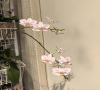
What causes Phalaenopsis orchids to drop their buds, and what methods prevent bud drop when they have just been brought home?
Friends who grow Phalaenopsis orchids all know that the growing medium is very important to them. If, during care, the medium accidentally gets too much water, or too much fertilizer is applied, the soil's drainage will worsen, and its aeration will be affected as well. The final result, of course, is that the plant ages rapidly. This is because Phalaenopsis belongs to a type whose roots are especially sensitive.
-

Reasons Why Phalaenopsis Grows Slowly and Management Methods for Normal Growth
The beauty of the Phalaenopsis can be considered among the finest in the floral world, which is why in recent years it has become the "white moonlight" of many flower lovers, especially during the Chinese New Year period, when everyone at the flower market is happy to spend a lot of money to buy a few beautiful pots to place at home. However, after bringing it home, how should it be cared for in daily life? When first growing flowers, if you haven't mastered Phalaenopsis
-

Repotting Care and Watering Methods for Phalaenopsis After Root Induction
Phalaenopsis orchids have an elegant form, and repotting after root induction is a key part of their care, directly affecting their subsequent growth. Below are the specific steps and care points: 1. Choosing a pot: For weak seedlings, a root-control pot is recommended; if you do not have one, you can make your own by evenly punching holes in the sides and bottom of an ordinary plastic pot. When repotting, never cut the lignified
条件筛选