-

Garlic-Ginger Intercropping Brings Good Returns: A Full Analysis of the Planting Advantages
In the history of Zhucheng City, Shandong Province, ginger was mostly grown as a sole crop. Trials and demonstrations of garlic-ginger intercropping began in the 1980s and achieved relatively good economic returns. However, because the intercropping techniques were not fully matched, for example no intercropping rows were left, the intercropped ginger bulbs became smaller, and some even failed to meet export standards, which dampened ginger growers' enthusiasm for intercropping. In order to explore the cultivation techniques for garlic-ginger intercropping, the author carried out multiple trials and survey analyses from 1992 to 1995 in Chengguan Town, Lubiao Township and other places, and summarized a matched set of techniques suitable for local garlic-ginger intercropping. After extension, a double
-
What are the characteristics of the yew? A comprehensive analysis of its main features
The characteristics of the yew are: 1. Strong adaptability and a wide range of adaptation. 2. Fast growth and a short cultivation cycle for medicinal use. 3. Easy to propagate and a high survival rate for afforestation. 4. Strong resistance to pests and diseases. 5. High paclitaxel content, and the whole plant can be utilized. 6. It combines both economic benefits and landscaping and ornamental value.
-
Analysis of Taxus Planting Techniques and Extension Key Points
Taxus, also known as yew, is an evergreen coniferous plant of the genus Taxus in the family Taxaceae. It mainly grows and is distributed in North America, northern Europe, and China's Yunnan-Guizhou Plateau, Qinghai-Tibet Plateau, Greater Khingan Mountains, Taihang Mountain range, Qinling Mountain range, Funiu Mountain range and other regions. The main varieties include North American Media Taxus and Florida Taxus, as well as China's Yunnan Taxus, Northeast Taxus and southern Taxus, etc. I. Growing Conditions Taxus is a plant of the genus Taxus in the family Taxaceae. There are 11 species worldwide, all distributed in the Northern Hemisphere, and China
-
Harmful Characteristics and Pathogen Analysis of Robinia Mosaic Disease
Robinia mosaic disease is a common disease of black locust (Robinia pseudoacacia). It begins to occur in spring from April to May. Its symptoms manifest as systemic mosaic. The leaf color is uneven, with some leaves showing mottling of intermingled light green and dark green, and presenting blister-like spots. Some leaves are deformed; the leaf shape becomes narrower and longer, and in severe cases becomes linear. In some leaf axils, adventitious buds sprout and produce thin, weak small branches with extremely short internodes, and the leaves are narrow and small; the axillary buds of the small branches sprout again and produce small branches and leaves, and in this way they sprout and grow level by level, forming a clustered branch state with dense branches and leaves. This affects the normal growth of the tree. After young trees are affected, they gradually
-
What to Do When Fish Eggs Grow Mold? Cause Analysis and Prevention Methods
[Prevention and Control] 1. Add a few drops of gentamicin or a few drops of malachite green solution into the hatching tank to effectively prevent the fish eggs from growing mold. 2. Use a pipette to promptly remove the whitened fish eggs to prevent the mold from spreading. 3. Improve the water quality of the hatching water, such as raising the water temperature or using circulating water filtration equipment, to shorten the fish egg hatching time and reduce the chance of mold infection.
-
Analysis of Why a Shorter Rearing Period Is Better for Growing-Finishing Pigs
Under good feeding and management conditions, lean-type pigs generally need 100 to 120 days to go from 20 kg to the market weight of 100 kg. In China's intensive and standardized pig farms, it generally takes about 110 days to go from 20 kg to 100 kg, and the age of pigs from birth to the market weight of 100 kg is 160 to 180 days, greatly shortening the finishing period. The benefits of this are as follows. 1. High daily gain and high feed efficiency. Lean-type pigs grow quickly. If a complete feed with comprehensive nutrition is provided, their productivity potential can be fully
-
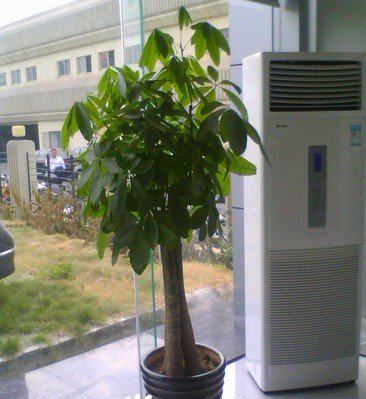
Why Is My Money Tree Losing Leaves? Analysis of 13 Main Causes
Malabar chestnut, also known as Pachira aquatica and money tree. It is an evergreen small tree of the Malvaceae family. Native to Mexico and Costa Rica. Palmate leaves with 7-11 leaflets; indoor money trees have oblong to obovate leaves. There is a horticultural variety, the variegated money tree. Because the name "money tree" is very popular with merchants and ordinary citizens
-
Research and Analysis of High-Efficiency Lotus Root Cultivation Models: A Case Study of Lotus Fields in Caidian District
Lotus root is one of the pillar agricultural industries of Caidian District, Wuhan City. In 2006, the planting area was 10,000 hectares, the total output was 200,000 t, and the total output value was 320 million yuan, accounting for 18.2% of the district's total agricultural output value. In order to improve the economic benefits of lotus fields, Caidian District promoted several high-efficiency lotus field cultivation models and achieved good results. In 2006, the promoted area of the models in the district reached 7,730 hectares, accounting for 77.3% of the district's lotus root planting area. The main models promoted and applied in recent years are introduced below.
-
How to control thrips in scallion fields? A full analysis of control methods
Thrips are one of the important pests damaging Welsh onions. Adult and nymph thrips use their rasping-sucking mouthparts to damage the plant's heart leaves, tender leaves and tender buds, sucking sap, causing many fine, densely packed, continuous silvery-white streaks to form on the leaves, with leaf tips drying up, and in severe cases making the leaves unfit for consumption, greatly affecting the yield and quality of Welsh onions. The thrips damaging Welsh onions mainly include onion thrips, tobacco thrips and rice thrips, etc. They often occur mixed together, and their peak damage period is from May to September. Thrips are tiny, ranging from light yellow to dark brown, and this insect can
-
How to grow foxtail millet? A full analysis of the key planting techniques
Foxtail millet prefers warmth and has strong adaptability; it withstands both drought and poor soil, and is not afraid of acid or alkaline conditions. It is grown in the arid and poor mountainous areas of both northern and southern China. Planting key points: (1) It should not be planted in continuous cropping; continuous cropping leads to severe disease and many weeds, so rational crop rotation is essential. (2) In spring, do a good job of harrowing, shallow plowing and rolling to preserve soil moisture, ensuring the water needed for foxtail millet germination and emergence. (3) Apply base fertilizer once before sowing in combination with plowing, mainly farmyard manure; the application rate per mu: for high-yield fields, 5000-7000 kg is suitable; for medium-yield fields, 1500-4000 kg; mix phosphate fertilizer
条件筛选