-
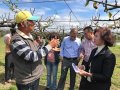
Pear scions damaged by low temperatures: Yilan County Magistrate Lin Zi-miao visits Sanxing to inspect
Yilan County suffered severe damage to pear scions due to low temperatures. County Magistrate Lin Zi-miao placed great importance on this and went to the fields yesterday (the 12th) to show concern for farmers in person. She also thanked the central government for its assistance in immediately opening disaster relief reporting, and called on farmers to go as soon as possible after the disaster relief announcement to...
-

How should peach trees be managed to achieve high yield and high quality?
High-yield and high-quality fruit tree management for peach trees
-

What remedial measures are there after a kiwifruit tree is damaged by freezing?
What to do if a kiwifruit tree is damaged by freezing
-

-

How are tulips cultivated and managed? These technical points need to be mastered
1. Preparation before planting First check whether the tulip bulbs have pests or diseases. If they are already infected or beginning to rot, they must be removed and burned. After removing diseased bulbs, soak the bulbs in a fungicidal solution for disinfection, for example, soak in a 600-fold chlorothalonil solution for 20-30 minutes. Around mid-August, cut open 3-4 tulip bulbs and observe the development of the internal nose (that is, the already differentiated flower stem). Those with a nose 3-4 mm long, ivory-colored and firm are good; whitish ones are not considered good, and flat ones are also not ideal. Choose a humus-rich
-
How Should Honey Be Packaged and Stored? Key Technical Points Explained
1. Packaging of honey. Honey is a weakly acidic liquid that can oxidize metals, so non-metallic containers such as vats, wooden barrels and plastic buckets should be used for packaging, and dedicated packaging containers must be thoroughly washed and dried. In areas with high honey yields, honey storage tanks can be established, and wooden barrels or water vats may also be used for storage; the barrels and vats used should be free of off-odours. Packaged honey must not fill the container completely; especially during transport, 25%-30% of the space should be left to prevent the honey from fermenting and overflowing, or from bursting the container when heated and shaken.
-
How should rice seedling beds be managed to cultivate strong seedlings?
I. Water management in seedling beds: For dry-raised seedlings, generally no supplemental water is needed during the seedling stage. Adhere to dry raising and dry management to improve the drought tolerance of the seedlings. At the same time, pay attention to watering well three times: water thoroughly with "bottom moisture water" before sowing, water well with "film-removal water" when removing the film, and water well with "leaf-rolling water" during drought. At the 1-2 leaf stage, control water appropriately to promote downward growth of seminal roots; at the 2-3 leaf stage, pay attention to supplemental water to prevent seedling death; after the 3-4 leaf stage, strictly control water and use dry raising to cultivate physiologically strong seedlings. To prevent excessive rainwater from making dry raising and dry management impossible, small arched sheds or greenhouses can be used to strictly control water for dry raising.
-
How to treat rice damaged by metsulfuron-methyl herbicide injury?
Remedial measures: After transplanting (or throwing) seedlings in fields where herbicides have been applied, field inspections should be strengthened. When herbicide injury occurs, measures must be taken immediately to reduce losses. 1. Re-transplant (re-throw) seedlings: If diagnosis confirms severe seedling injury, with more than 80% of seedlings yellowed and some withered, seedlings must be gathered for immediate re-transplanting (re-throwing). Method: First drain the field water, lightly harrow once, then drain the muddy water, then level the field and transplant (throw) seedlings. In recent years, sowing and transplanting (throwing) seasons have been advanced by 7-15 days compared to traditional seasons. From discovery of injury to re-transplanting is generally 5-10 days, so the seasonal conflict is not prominent. 2. Strengthen fertilizer and water management and intertillage: For fields where injury is found, first drain the field water that has been treated with herbicide and irrigate with fresh flowing water. Next, perform intertillage to break up the original herbicide liquid layer and turn the herbicide adsorbed by the surface soil into deeper soil, reducing the effect of the herbicide on rice roots. 2-3 days after intertillage, apply 2-4 kg of imported compound fertilizer per mu to promote root growth and leaf development and accelerate growth. 3. Apply rooting agent: After draining, intertilling and fertilizing, it is best to apply 200 kg per mu of rooting agent ABT at a concentration of 200 mg/kg, which has a good effect on promoting roots. The number of roots can increase by 25%-40%, growth speed accelerates, and the sufficient seedling stage is delayed by only 5-7 days.
-
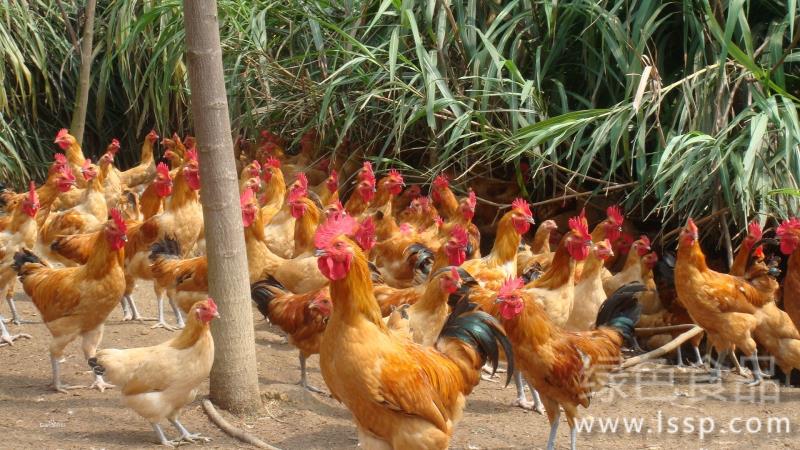
How should free-range chickens be raised and managed during the laying period to ensure the laying rate?
Key points for feeding and management of free-range chickens during the laying period to ensure the laying rate
-
Detailed Explanation of Key Techniques for Staged Sowing of Soybeans
Staged sowing can stagger the harvest period of fresh soybeans from that of corn, which helps extend the supply period, expand market capacity, and avoid the phenomenon of excessive supply caused by large-scale concentrated market entry, where large volume leads to low prices and increased production without increased income. It can also alleviate the labor conflict during the busy farming season to a certain extent. To do a good job in staged sowing, the key is to achieve the following four points. 1. Observe local market conditions. When growing fresh soybeans and corn, high yield is not the goal; high efficiency is what matters. "Rare things are precious," and market prices are always inversely proportional to
条件筛选