-

After twelve consecutive years of grain harvests, how should the grain strategy be optimized?
Grain output for 2015 was announced a few days ago, and China has joyfully achieved a twelfth consecutive year of bumper harvests on a high base. However, another piece of news about grain is also weighing on many people's minds: due to a sharp increase in stockpiles and falling prices, farmers in Anhui, Northeast China and other places are finding it difficult to sell their grain.
-
Grain harvests have been abundant for years, but strategic resolve must still be maintained
As China's grain harvests have been abundant for many consecutive years, major changes have taken place in the pattern of grain production and marketing, with phenomena such as high grain output, high procurement volumes and high stockpiles becoming prominent, and problems such as difficulties in operating grain enterprises and difficulties for farmers in selling grain emerging in some places. Domestic grain security is facing new
-
After a Grain Harvest Disaster, Who Will Ease the Farmers' Worries?
When people are diligent, heaven helps, and joy overflows through the skylight; when people are diligent but meet natural disaster, there is nowhere to pour out their grief. From ancient times to the present, "relying on heaven for the harvest" seems to be an insurmountable obstacle for grain farmers. Even in today's highly developed science and technology, people still cannot escape the harassment of natural disasters. In our country
-
After twelve consecutive years of bumper grain harvests, new challenges still need to be faced squarely
The development of agriculture has once again reached a moment for reflection. In the first half of the year, as the national economy faced sustained pressure from slowing growth, good news came once again from agricultural and rural development: China's summer grain production reached a total national summer grain output of 141.066 million tons (282.13 billion jin), an increase of
-
Spring sowing gets underway in Northeast China, intended grain planting area reaches 384 million mu
At present, land preparation in Northeast China is basically complete, and rice sowing is getting underway. According to agricultural situation monitoring by the Ministry of Agriculture and feedback from Northeast China, agricultural input supplies are sufficient this year, and soil moisture conditions are favorable for spring sowing. The Ministry of Agriculture estimates that the intended grain planting area in Northeast China is 384 million mu, on par with the previous year.
-
Grain production has had bumper harvests year after year, so why are grain prices still rising?
In 2014, China's grain output reached 1.21 trillion jin, achieving an "eleventh consecutive increase." Centering on China's grain security issue, at the joint group discussion meeting of the agriculture sector of the Chinese People's Political Consultative Conference, the committee members held a heated discussion. With inventories increasing year after year, is it possible to produce less grain? In grain
-
Why Promote the Staple-ization of Potatoes After Eleven Consecutive Years of Grain Increases
Recently, some media interviewed a scholar who has long paid attention to food security regarding the staple-ization of potatoes, which is a matter of public concern, and the scholar believes: this indicates that our country's grain reserves must have encountered problems. It is just that the central government does not say so explicitly and covers up the problem. Such a major issue concerning the national economy and people's livelihood
-
After potato becomes a staple grain, industrialization has great prospects
Editor's note: The nation's launch of the potato staple-grain strategy marks that, after wheat, rice and corn, the potato has been elevated to a major grain crop in our country, which has triggered a strong response in the potato industry. How to make the potato, which is both a vegetable and a grain, better highlight its value as a staple grain
-
After eight consecutive years of minimum purchase price increases for wheat, grain traders bet wrong this year
The National Development and Reform Commission recently announced that the 2015 minimum purchase price for wheat is 118 yuan per 50 kg (1.18 yuan per jin), unchanged from the 2014 level. As soon as the news was announced, grain traders who had stockpiled wheat at high prices in the hope of selling for a good price were stunned. One industry insider
-
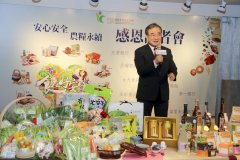
Fruit and vegetable prices generally fall after the Spring Festival; building dedicated cold-chain fruit and vegetable trains to prevent fruit and vegetable prices from falling
Last year, Taipei Agricultural Products Marketing Corporation saw overall vegetable auction prices drop by 30% due to multiple factors such as a surge in fruit and vegetable supply, weak consumption, and consecutive market closures. This year, subsidies are expected to help Taipei Agricultural Products Marketing Corporation build a cold-chain system to extend the freshness period of fruits and vegetables. Let's take a look. Connecting production areas, using cold chain
条件筛选