-

What plants are suitable for sandy soil, and can sand be added to flower potting soil?
There is a saying in gardening: "To grow flowers, first grow the roots; to grow the roots, first grow the soil." This means that to grow flowers well, you must first nourish the roots well, and for good roots, the soil at the base must be chosen well. Different flowers and plants have different soil requirements; some like soil containing humus, while others like granular soil. Today
-
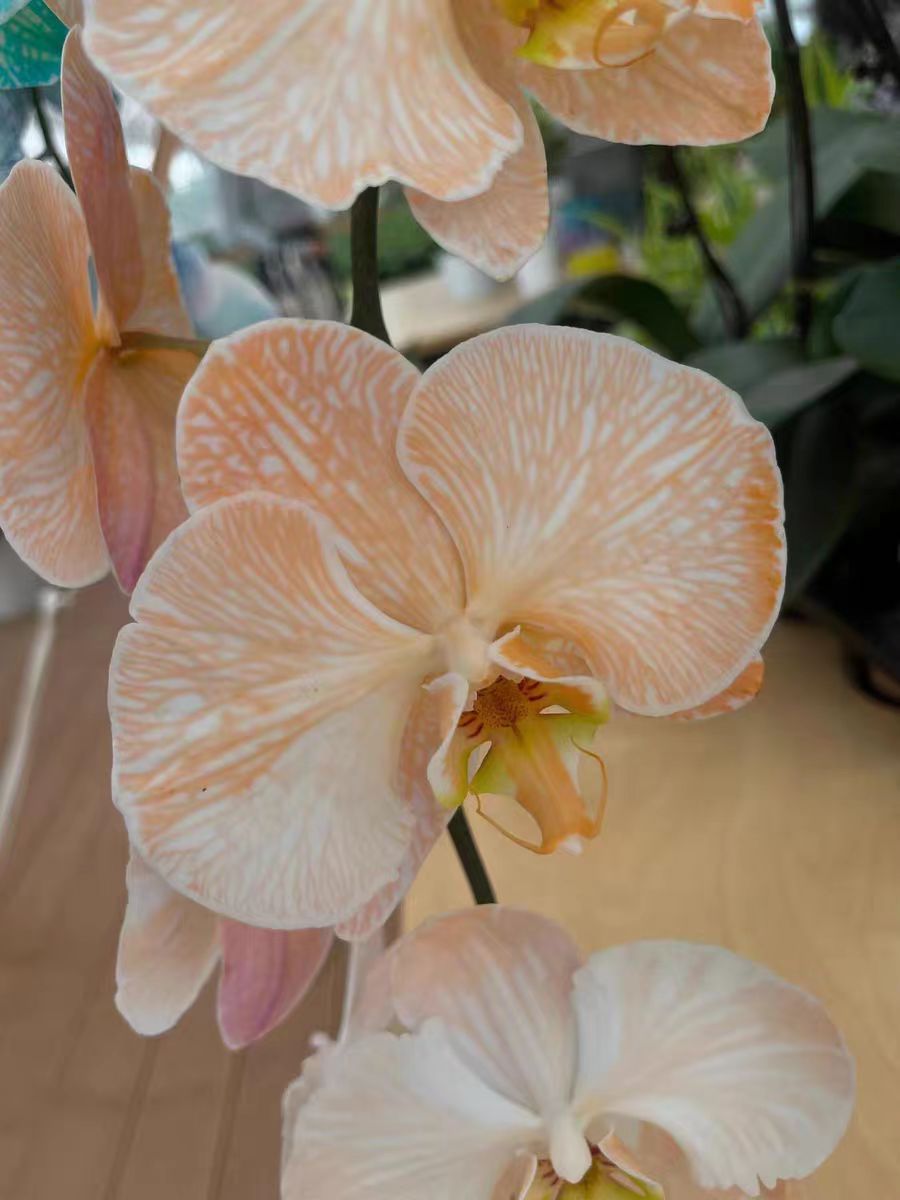
What can be added to garlic to water Phalaenopsis?
For Phalaenopsis, how to properly care for this beautiful orchid is a challenge faced by many flower enthusiasts. Today, we're going to share a simple and
-
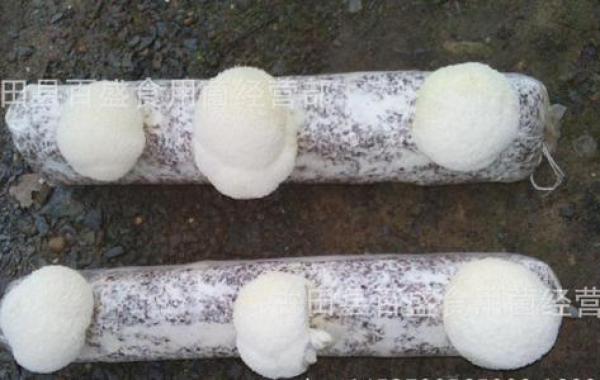
Can the concentration of nutrient solution added to edible fungi be too high?
Can the concentration of nutrient solution added to edible fungi be too high?
-

Can base fertilizer be added when repotting goldfish plant?
The goldfish plant has very high ornamental value, and is especially suitable for flower viewing, because its flower shape looks like a goldfish, very lively and cute, and particularly exquisite, with very eye-catching flower colors too. However, because its root system is relatively developed and its growth is also very rapid, it can easily grow
-
What is the difference between red ginseng and ginseng? Learn to tell whether sugar has been added
Red ginseng is a plant of the Araliaceae family and the Panax genus. It has the effects of greatly tonifying vital qi, restoring the pulse and stabilizing collapse, and tonifying qi to control blood. It is an excellent tonic for people with qi and blood deficiency who tend toward yang deficiency. It differs from ginseng by only one character, but it is a different traditional Chinese medicinal herb. So, the difference between red ginseng and ginseng
-
How to keep parrot fish, and should salt be added to the water?
When keeping fish, first keep the water, especially for more delicate fish species like goldfish. And because parrot fish like fresh water quality, some people try changing some of the water in the tank every day, but this is actually not a good method; no fish can have its water changed every day. Everyone should ⟦4 <p>When keeping fish, first keep the water, especially for more delicate fish species like goldfish. And because parrot fish like fresh water quality, some people try changing some of the water in the tank every day, but this is actually not a good method; no fish can have its water changed every day. If you want to keep your fish well, you should pay even more attention to regulating the water temperature, and the pH of the water especially must be balanced.</p><p></p><p><strong>How to keep parrot fish</strong></p><p>1. After small blood parrot fry are born, they do not have any of the characteristics of blood parrots at all; instead, they look somewhat like ordinary Central and South American cichlid species. After about 20 days of rearing, the appearance of the small blood parrots will gradually change, the muscles on the top of the head and back will gradually bulge, the thickness will also begin to increase, and the body color will slowly change from striped black to gray-silver.</p><p>2. Another characteristic of blood parrots is their cute, round, plump shape, but this is not caused by eating a lot of feed. If you want to cultivate such round and plump blood parrots, you should start from two major directions: first, provide sufficient food for their development during the fry stage, and second, choose feed with a protein content of around 32%, a high-protein feed.</p><p>3. Insufficient oxygen content in the water is the first thing blood parrots cry out for help about. Generally, blood parrots on the market are roughly divided into three grades: special A grade, A grade, and B grade. Of course, there will be different price differences according to different grades. The lifespan of blood parrots can be as long as 4 to 5 years, but a blood parrot around three years old is already considered old.</p><p></p><p><strong>Should salt be added to the water for keeping parrot fish</strong></p><p>1. If using salt, it is best to use coarse salt or special aquarium salt. Do not use seasoned salt containing additives, such as iodized salt; do not use seasoned salt. The salt should be dissolved in advance and roughly filtered before adding. The salt concentration should be gradually increased over 1-2 days to avoid causing osmotic pressure shock in the fish.</p><p>2. Safe concentration for using salt: the salt concentration must reach 0.3%-0.5% to play a role in regulating osmotic pressure. This concentration is very safe for the vast majority of fish. Some fish, for example some soft-water fish species and some catfish, are very sensitive to sodium chloride, so salt must be used carefully. Simply put, the role of salt is to regulate the osmotic pressure of the water. By regulating osmotic pressure, the condition of the fish is adjusted so that the fish can grow healthily.</p><p></p><p><strong>How to condition the water for parrot fish</strong></p><p>1. Temperature control: during the rearing process, it is best to keep the water temperature within the range of 25-28°C. The temperature difference before and after each water change should not exceed 0.5°C.</p><p>2. Water quality control: parrot fish relatively like new water, and as much as possible 1/5 of the new water should be changed every day. If the water quality is weakly acidic and clear, then do not change the water frequently. Due to genetic factors, the respiratory system of parrot fish is not complete enough, and its effectiveness is only half that of other fish, so parrots need much higher dissolved oxygen in the aquarium.</p><p></p><p>3. Because parrot fish are born with lips that cannot close, their ability to control the intake and output of water flow is relatively poor, the water flow passing through the gills is relatively small, and their ability to exchange oxygen through the water flow and gills is much worse than that of their paternal and maternal parents and other fish. Therefore, the water body for keeping parrot fish must have sufficient oxygen.</p><p></p><p><strong>What to pay attention to when keeping parrot fish</strong></p><p>1. Red parrots can be fed once or twice a day. There are several possibilities for parrot fish turning black or developing black spots. Parrot fish will also develop black spots when frightened, and they will disappear after a period of time. Poor water quality or unsuitable water quality can also cause this. When water quality is poor, water changes should be strengthened. If the water quality is unsuitable, the water should be changed immediately and the water quality adjusted well.</p><p>2. During this period, pay more attention to water quality and feed. If you want the red parrot's color to be more beautiful, feed more shrimp or red-enhancing feed such as Baozeng Hong. How much water to change each time and how often to change it depends on how dirty your water is. Most people change 1/3, and of course 1/4 is also acceptable; there is no fixed standard. If the fish tank filtration is good, then carrying out a partial water change (1/3) once a week is enough, and carry out a full water change once every one or two months.</p><p></p><p>There is no need to add salt to the water for keeping parrot fish, because it is a freshwater fish, and in their growth environment it is not like the ocean. However, if parrot fish become sick, then appropriately adding some coarse salt or special aquarium salt can change the growth environment of the fish somewhat and help the fish recover their health.</p>
-
Why should salt be added to the water when raising crucian carp?
Adding coarse salt or special salt to the water can serve many purposes: it can increase the concentration of ions in the water so that suspended particles sink to the bottom and the water is purified; it can also balance osmotic pressure, relieve the adverse reactions of fish when they enter a new environment, and replenish salt for wounds.
-
When to Plant Honeysuckle? Learn How to Process It to Increase Added Value
During the pandemic, because it was rumored to have a preventive effect, honeysuckle once sold out completely, and as for growers, their enthusiasm for planting the following year also increased greatly. So when is honeysuckle planted? How can processing increase its added value? Let's explain one by one below, just
-
Liquid green gold functional beverage made from edamame: highly nutritious, long shelf life, value-added use for tens of thousands of tonnes of off-grade product
A "liquid green gold" you can drink! Edamame crosses over into functional beverages, highly nutritious and long-lasting, adding value to tens of thousands of tonnes of off-grade product
-
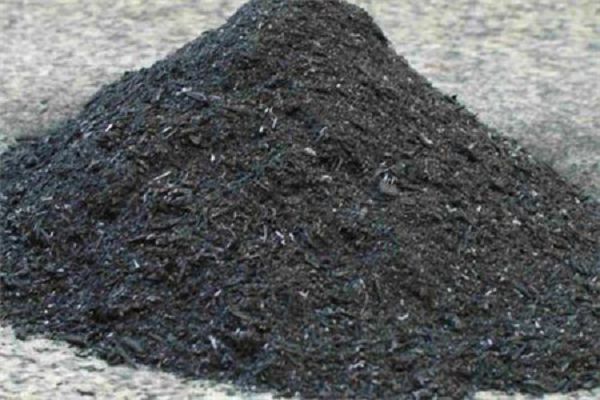
Can wood ash be added to orchid soil? Analysis of the correct usage
Can wood ash be added to orchid soil
条件筛选