-
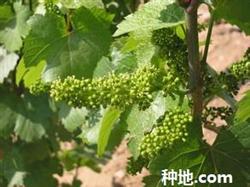
What are the key points to note during the flowering and fruiting period of Red Globe grapes?
What should you pay attention to during the flowering and fruiting period of Red Globe grapes? For the specific steps, you can refer to the following methods: Through flower and fruit management, control the size of the grape cluster. By removing secondary clusters and pinching off the tips of the clusters, save nutrients, reduce the workload of berry thinning, increase the fruit-setting rate, enlarge the berries, and improve fruit quality. Through cluster shaping, you can adjust the grape cluster according to your own requirements...
-

Detailed Explanation of Key Management Techniques for Oyster Mushroom During the Fruiting Period
Management Techniques for Oyster Mushroom During the Fruiting Period
-

What are the key management points for the fruiting period of the lion's mane mushroom?
Key management points for the fruiting period of the lion's mane mushroom
-

Detailed Explanation of Key Management Techniques for the Flowering and Fruiting Period of Olive
Management Techniques for the Flowering and Fruiting Period of Olive
-

What to Do When Mushrooms Fruiting in the Middle of Edible Mushroom Cultivation Bags
When cultivating oyster mushrooms in plastic bags, the wall-style cultivation method with fruiting at both ends is generally used. After mushroom primordia are found, untie the bag openings and stack them into a mushroom wall of 5 to 10 layers to let them fruit. Mushrooms fruiting in the middle of the plastic bag (generally more solitary mushrooms), the main reasons are: loose filling of the substrate, gaps between the substrate and the bag; the bag being punctured during work; unsuitable cultivation environment, such as excessive temperature difference, high relative air humidity, etc., all of which promote the formation of fruiting body primordia in the middle of the substrate bag. If small mushroom primordia appear, you should forcefully massage the small primordia with your hand a few times to make the primordia shrink, prompting fruiting from both ends
-
How to Choose the Mushroom Fruiting Site and Fruiting Method
Fruiting site and fruiting method for bag-cultivated oyster mushrooms: fruiting can be carried out indoors or outdoors. Indoor fruiting: generally, an idle room can be used for fruiting; choose a room with good air permeability, good heat preservation and moisture retention, and relatively sufficient light, preferably a room facing south. Outdoor fruiting: generally, above-ground or semi-underground plastic sheds are used for fruiting, with semi-underground plastic sheds being especially good, because semi-underground plastic sheds have good heat preservation and moisture retention, which is favorable for the formation and growth of fruiting bodies. Semi-underground plastic sheds are generally deep
-
Characteristics and Traits of the Jinzao Jujube, a Pendulous-Fruiting Jujube Variety
Jinzao (pendulous-fruiting jujube). Main producing area: both banks of the Jing River on the Weibei Plateau, Shaanxi. The fruit is cylindrical or long ovoid. Single fruit weight 34 g; the flesh is crisp and tender, moderately juicy, very sweet; sugar content is 28% in fresh jujubes and 82.4% in dried ones. The stone is small and slender. Grown mainly for drying. A traditional famous variety with strong adaptability. Ripening period: late September. Suitable growing areas are extensive. It is the main cultivar in the Weibei dry plateau region of Shaanxi.
-
Detailed Explanation of Key Management Techniques for Mushroom Fruiting
For mushroom production in October, the focus should be on mycelium colonization management. For those currently fruiting or about to fruit, management should be carried out promptly to ensure ideal fruiting. Early-autumn oyster mushrooms begin fruiting in early September, and by October most have completed 2 flushes, with some in the midst of managing a 3rd flush. Even those fruiting in mid-to-late September have at least 1 flush brought to market, and by October should enter 2nd-flush management. The management focus at this stage should emphasize one word: “water”. For conventional cultivation,
-
A Comprehensive Analysis of the Fruiting Habits of Goji Berry (Lycium barbarum)
1.1 The goji berry is a perennial shrub whose fruiting life can last as long as 50 years. Generally, around 10 years is the optimal fruiting period, of which years 1 to 2 are the young fruiting stage, years 3 to 4 the early full-fruiting stage, years 5 to 6 the full-fruiting stage, years 7 to 8 the late full-fruiting stage, and years 9 to 10 the fruiting decline stage. 1.2 Current-year and two-year-old fruiting branches have the strongest fruiting capacity; perennial branches have weaker fruiting capacity; and the best branch-producing ability is found in three-year-old and two-year-old spring shoots. Understanding these fruiting habits is an important guide for proper pruning.
-
Early winter management of Sichuan pepper brings better fruiting next year
Shaping and pruning: Winter is a great time to prune Sichuan pepper trees. When pruning, you must remove the "seven branches," namely: water sprouts, dead branches, diseased and pest-infested branches, overly dense branches, crossing branches, overlapping branches, and weak slender branches. Then gather the removed branches and burn them, which can eliminate pests and pathogens overwintering on the branches. Scraping off rough bark: Many insect eggs overwinter in the cracks of the rough bark of pepper trees, and mulberry white scale parasitizes the trunk. Scrape off the rough bark and gum oozing spots, gather and burn them, then apply a protective agent, and finally smear thin mud to cover the wounds, which can eliminate pathogens and insect eggs.
条件筛选