-

What preparatory work is needed for shaping lingzhi bonsai
1. Choose good shaping varieties. In addition to collecting wild lingzhi with odd shapes from nature, a large amount of raw material comes from cultivation. At present, the main varieties available for selection include red lingzhi, purple lingzhi, black lingzhi, pine-fir lingzhi, pine-fir tree lingzhi, tropical lingzhi, Neo-Japanese lingzhi, and more than ten other kinds that can be selected for matching. 2. Make shaping primordia. Bonsai lingzhi can be cultivated in bottles or bags (if conditions do not permit, production can be entrusted to a nearby cultivation site). Generally, bag cultivation has sufficient substrate and produces large fruiting bodies; bottle cultivation has limited substrate and tends to produce a single lingzhi.
-
Key Points for Preparatory Work Before Sowing Gastrodia elata Seeds from Sexual Reproduction
The sexual reproduction of Gastrodia elata uses hybrid seedling seeds of Gastrodia elata, which reproduce under the combined action of germination fungi and Armillaria mellea. The growth period of sexually reproduced Gastrodia elata is one and a half years, that is, planted in June-July of the current year and harvested at the end of the second year. Its characteristics are small investment, high success rate, and stable yield, and it is currently a relatively advanced high-yield cultivation technique for Gastrodia elata in China. 1. Selection of planting site. The growth of Gastrodia elata hardly requires sunlight, so it can be planted in basements, air-raid shelters, mountain streams, and other places with certain ventilation conditions, as well as in all idle land such as the edges of courtyards, fields, roads, slopes, forests, and bamboo groves. In areas with relatively high temperatures such as semi-mountainous and plain areas, indoor planting is advocated. For the sexual reproduction of Gastrodia elata, river sand, hemp-bone stone sand, etc. should be used as much as possible. In places where there is really no river sand, sandy loam soil with a sand content of more than 50% should also be selected.
-
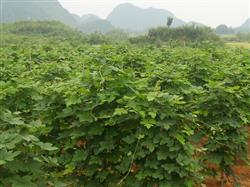
What pesticides work well for controlling kudzu diseases?
What pesticides are used to control kudzu diseases? The main diseases of kudzu include damping-off, downy mildew, and anthracnose; they can be controlled with a 600-fold dilution of 50% carbendazim, or an 800-fold dilution of 70% thiophanate-methyl wettable powder. At the same time, methods such as pruning diseased branches and leaves, or manual capture and trapping of pests, can also effectively...
-
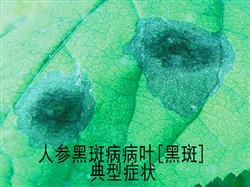
What fungicide works well to control ginseng black spot disease?
What fungicide should be used to control ginseng black spot disease? Please explain that ginseng black spot disease is caused by fungi of the genus Alternaria infecting the stems, leaves, flowers and fruits of ginseng. It spreads through the air. It occurs easily when there are many rainfall events, high air humidity and temperatures of 18°C-22°C, and spreads to surrounding plants. Stem spots mostly appear in mid-to-late May,...
条件筛选