-
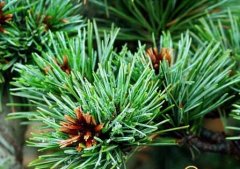
What are the characteristics and appearance of Taiwan five-needle pine? With pictures of common pine species
Taiwan five-needle pine is a plant of the genus Pinus in the family Pinaceae, and is a plant endemic to Taiwan, China. It is mainly distributed in areas of Taiwan, China at altitudes of 300 m to 2300 m. The leaves are needle-shaped, five needles per bundle, short and soft, hence the name "five-needle pine". It generally grows in mixed coniferous and broad-leaved forests, and has now been introduced and cultivated artificially.
-
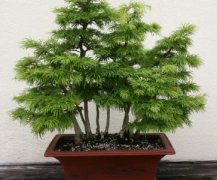
Does golden larch lose its leaves in winter, and is it a rare and precious plant? With bonsai pictures and seed prices
Does golden larch lose its leaves in winter? Yes, it is deciduous; this plant does lose its leaves in winter, because spring is the time when the plant sprouts new buds. Is it a rare and precious bonsai plant? Yes, it is a rare and precious bonsai tree species, and its ornamental value is very strong. It mainly grows at an altitude of
-
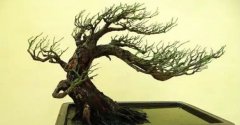
Is Chinese swamp cypress an evergreen plant? With bonsai pictures and protection level
Chinese swamp cypress is a pine tree of the Taxodiaceae family, belonging to the category of arbor trees. Is Chinese swamp cypress an evergreen plant? It is a semi-evergreen arbor plant. What are its main characteristics? Which protection level plant is it in our country? The trunk of Chinese swamp cypress has twisted grain; the bark forms irregular longitudinally fissured rectangles; the branches are
-
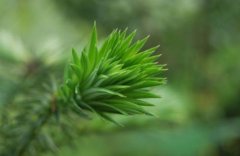
How much does grey fir wall cladding cost per square meter? With pictures of grey-leaf Chinese fir trees
Grey-leaf Chinese fir, called grey fir, also has other aliases such as kangsan, mangshan, and paoshan. It is a type of Chinese fir plant. Its distinguishing feature is its leaves, which are grey-green, sometimes blue-green, and have a noticeable white powder. This is a very obvious characteristic that distinguishes it from other Chinese firs.
-
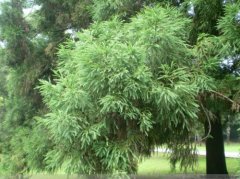
What are the characteristics of Cryptomeria japonica 'Nana'? With pictures and an introduction to cedar varieties
Cryptomeria japonica 'Nana' is a variety of cedar, belonging to the family Cupressaceae and the genus Cryptomeria. It is called by this name because, compared with other cedar varieties, its leaves are relatively small and short, so it is called short-leaved Cryptomeria. This
-
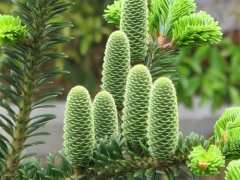
How many Baishanzu fir trees still exist, and where are they distributed? With pictures
The Baishanzu fir is a fir tree species and an endangered species. It is very precious. In its natural distribution area, only five trees remain, but one of them has weakened and one is growing poorly. It is endemic to the area above 1700 m above sea level on the south slope of Baishanzu in southern Zhejiang. Bai
-
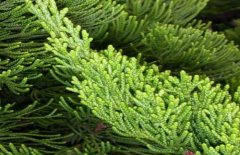
Chinese Arborvitae Leaf Benefits and Uses, Differences Between Chinese Arborvitae and Cliff Cypress with Pictures, and Sapling Prices
Chinese arborvitae is a cypress plant, and people often call this kind of cypress cliff cypress, but in fact these two cypresses are very different. In what ways do they differ? What are the benefits and uses of Chinese arborvitae leaves? How much does one cypress sapling cost? Chinese arborvitae is a very easy-to-grow kind of cypress.
-
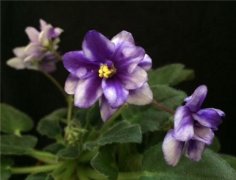
How many years can African violets be grown, what soil to use, and what is their flower language?
African violet is also known as African violet or Saintpaulia, and its flower language is "little love". In what kind of regions does it generally grow? Let's find out together! African violets, along with gloxinia, dolphin flowers, lipstick flowers, etc., are all common ornamental plants of the Gesneriaceae family in local flower markets.
-
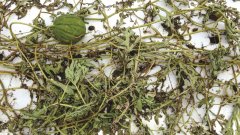
The middle section of the flower stem turns black and withers - it is black rot, what medicine can cure it
People who grow cucurbit plants all know that this kind of plant is prone to a disease, that is, the middle section of the flower stem turns black and withers along with fruit rot, and this disease is called gummy stem blight, also known as black rot. Geographic range: worldwide, but most common in temperate and tropical regions with higher rainfall and in greenhouses.
-
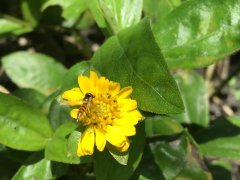
How to kill pests in farmland without pesticides? Environmental diversity can regulate pests
The ultimate purpose of farming is to produce food, yet before crops reach the dining table, they spend most of their time in the field serving as habitat for animals. Some animals living in the field do not affect the harvest, but some affect crop yield and quality, and these
条件筛选