How to kill pests in farmland without pesticides? Environmental diversity can regulate pests
The ultimate purpose of farming is to produce food, yet before crops reach the dining table, they spend most of their time in the field serving as habitat for animals. Some animals living in the field do not affect the harvest, but some affect crop yield and quality, and these are exactly what humans regard as pests. As for methods of reducing pests, besides relying on artificial application of materials for control, the most important thing is to rely on natural enemies in nature for help, achieving biological control effects through predation or parasitism. However, the effect of biological control varies from field to field, and the most critical reason is the environment of the farmland itself.
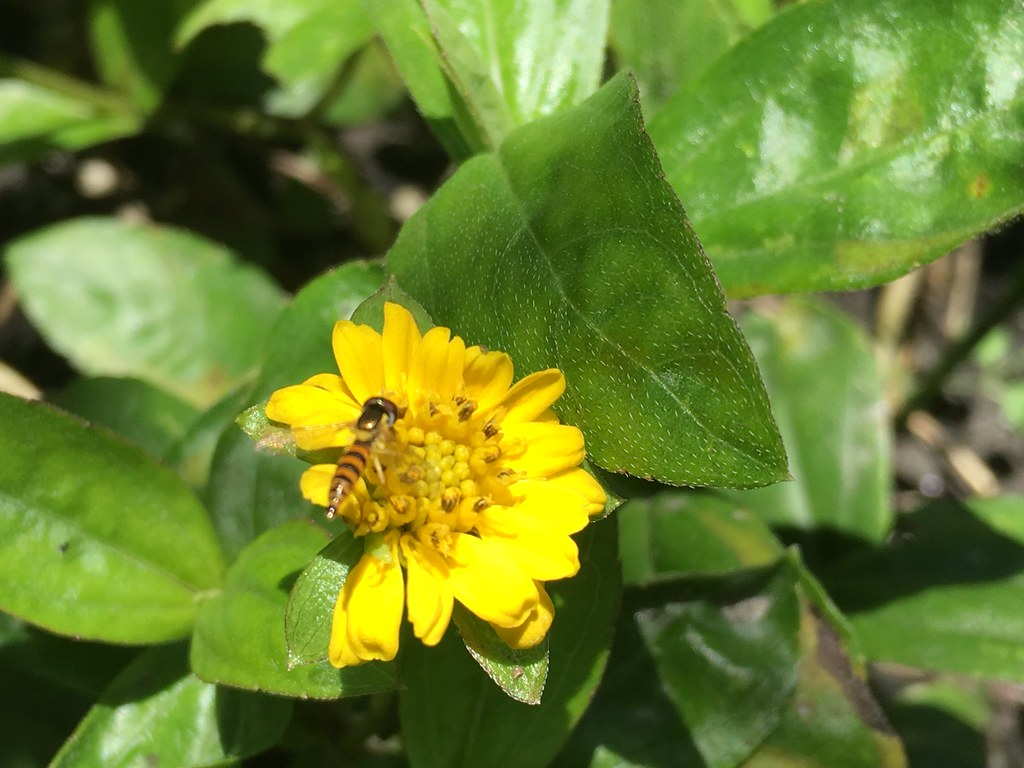
The Hualien District Agricultural Improvement Station once conducted a trial in a 60-hectare organic zone, selecting a one-fen cabbage field and sowing a row of marigold seeds in the middle. When the marigolds bloomed, they attracted large numbers of hoverflies, which also ate the aphids on the surrounding cabbages. At that time, hoverfly larvae and pupae could be seen everywhere on the cabbage leaves. However, when the same method was applied to another field surrounded by conventional farming operations, the blooming marigolds attracted few insects. It is evident that when diverse biological populations have been established in an environment where chemical substances have long been unused, appropriate conditions alone can lead to rapid aggregation and reproduction.
In another study, researchers surveyed pesticide-treated rice paddies in Village A and found more species and greater numbers of invertebrates and beneficial natural enemies than in the neighboring organic rice paddies of Village B, a result that surprised the researchers. Afterward, careful observation of the rice paddy environments of the two villages revealed that around the rice paddies of Village B, the traditional grassy field ridges had all been replaced by concrete ridges, whereas the rice paddies of Village A still retained natural grassy ridges. Therefore, even after several pesticide applications in one village's rice paddies, a certain proportion of beneficial natural enemy populations could still be maintained in the paddies. It is not difficult to understand why, because the surrounding grassy field ridges are long-term, stable vegetation habitat that provides beneficial insects with space to temporarily escape the threat of pesticides.
The main incentive for these beneficial natural enemies to appear in the field is "SNAP". S stands for Shelter, N for Nectar, A for Alternative food, and P for Pollen.
In the two parts of shelter and alternative food, diverse plants are usually needed to provide beneficial natural enemies such as arthropods with hiding and dwelling space, as well as diverse food sources. In the nectar and pollen parts, they can provide predatory and parasitic beneficial natural enemies with sufficient energy sources. Because most nectar contains 13-15 kinds of amino acids, including the essential amino acids needed for insect growth and development, they can obtain carbohydrates, nitrogen, lipids, vitamin C, potassium and sodium from nectar. Regarding the selection of flower types, research has indicated that to attract natural enemies such as parasitic wasps, Apiaceae (Umbelliferae) is most effective because of its abundant flowers, followed respectively by Asteraceae (Compositae), Fabaceae (Leguminosae) and Polygonaceae (Polygonaceae).
In subtropical Taiwan, China, Asteraceae plants are quite helpful for biological control functions in farmland. A research team from the Hualien District Agricultural Improvement Station once planted Taiwan, China native Asteraceae plants such as Kalimeris and Wedelia chinensis in the rows of a pomelo orchard, and found that these orchards had 2.4 times more parasitoid wasp species than ordinary orchards without grass cover. Moreover, if specific parasitic wasps are artificially released, their lifespan in the orchard can be extended, increasing the chances of pests being parasitized.
In another study, an attempt was made to plant a strip of about 200 m of flowering Asteraceae plants beside a rice paddy in a rice production zone. The relative abundance of parasitic insects in the paddy was 1.7-2 times higher than in other paddies, and it also made the density fluctuations of the main pests in the paddy gentler, so that pests no longer surged in a short period of time.
If the landscape scale of farmland is enlarged further, the landscape conditions within a radius of several kilometers are also factors affecting the biological control function of farmland. Japanese researchers found that if rice paddies are adjacent to woodlands, the semi-natural grassy zone at the boundary is usually a hotspot of biodiversity. Research in mainland China also found that at a large landscape scale, if crops and non-crop vegetation are arranged in an interwoven and staggered manner, it helps buffer the occurrence of pests, and it was suggested that to maintain the biological control function of nature in rice paddies, the field width should not exceed 200 m, and some different vegetation must be appropriately retained in the middle to maintain the pest regulation function.
In addition, similar research results also exist in Taiwan, China. The Hualien District Agricultural Improvement Station once compared the pest regulation function of rice paddies in a rice production zone surrounded by low hills and in a plain rice production area with a more monotonous environment. After one year and two rice crops, it was found that in the low-hill area with more diverse habitat conditions, when the density of planthopper pests rose, the number of its natural enemy ladybugs also rose immediately, and the planthopper density was thus controlled and decreased in real time. But in the large-area rice production zone, when planthoppers increased, the above effect did not occur.
In short, looking down from a larger landscape scale, the more diverse the vegetation landscape around farmland, the more helpful it is for exerting the effectiveness of biological pest control. This also means that farming in this environment has the advantage, compared with others, of being able to avoid pesticide use.