How many years can African violets be grown, what soil to use, and what is their flower language?
African violet is also known as African violet or Saintpaulia, and its flower language is "little love". In what kind of regions does it generally grow? Let's find out together!
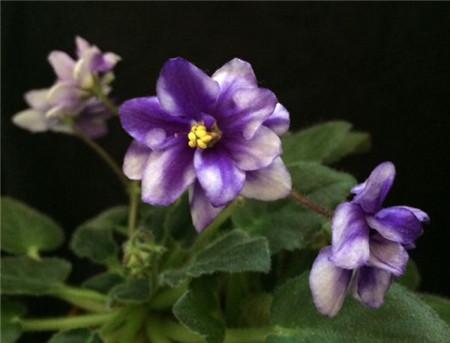
African violets, along with gloxinia, dolphin flowers, lipstick flowers, etc., are all common ornamental plants of the Gesneriaceae family in local flower markets, and the Gesneriaceae family has about 3540 species worldwide, about 152 genera, mainly distributed in tropical to temperate regions from eastern Asia, Africa, southern Europe, Australia, South America to Mexico, with 17 species native to Taiwan, China.
African violets originate from the highland forests of Tanzania in East Africa at an altitude of about 1500 m, growing in rock crevices in the forest. In 1892, the German colonial official Baron Von Saint Paul discovered it and gave it to his father in Germany, and later in 1893 the baron's father passed it on to the director of the Royal Botanic Gardens; when it bloomed the following year, it caused a great sensation. The original species of African violet mostly has blue or white flowers, but under artificial cultivation and hybridization, traits such as special colors, chimera patterns, and tubular flowers appeared, and since it can be propagated by leaf cuttings and tolerates transport, many enthusiasts began to exchange it by mail and hold flower-viewing events, causing a great craze in Europe and America, and later spreading to all parts of the world.
How many years can African violets be grown? Generally three to four years, and if well cared for, then the time will be longer. What soil is good for growing African violets?African violets likeloose, fertile, slightly acidic soil; using this kind of soil is the best.