-
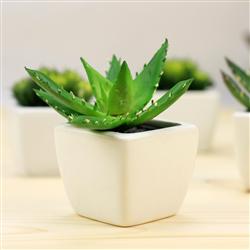
How should you water aloe? An introduction to the correct watering method
How should you water aloe when growing it? What else should you pay attention to normally? Please give an introduction. Aloe, in all its varied forms, is a perennial evergreen herbaceous plant that is deeply loved by people. Many flower enthusiasts report that during the process of growing aloe, the leaves often turn yellow and withered, starting from the lowest layer of leaves, first...
-

How to Water Plants When You're Not Home? Practical Watering Methods Shared
How to Water Plants When You're Not Home
-

-

Orchid Watering Methods: Handling Five Key Relationships Well
1. Watering and orchid species. Because each orchid species has different growth habits, its water requirements also vary. Cymbidium ensifolium likes moisture, but waterlogging in the growing medium must be avoided. Cymbidium sinense prefers dry over wet; too much moisture easily causes root rot and plant collapse. Cymbidium kanran has a well-developed root system and strong drought tolerance, so the potting soil should be kept on the dry side. Suxin orchids and leaf-variegated orchids require seven parts dry and three parts wet; too much moisture easily causes degeneration. 2. Watering and orchid pots. Clay pots have a rough texture and strong air permeability, and moisture evaporates easily, so water frequently, water generously, and water thoroughly. Plastic pots have low density and poor air permeability, and moisture is consumed slowly; in summer,
-
Master the correct watering methods for orchid care
Watering is an important part of the cultivation process, especially for artificially cultivated plants, which require even more attention to water supply, because a natural environment cannot be provided, so whether the owner's control of watering is appropriate will affect whether the plants can grow normally. The effect of water is related to the cultivation environment and the growing medium used; in addition, different seasons, different time periods, and the characteristics of the variety are all key considerations. There is absolutely no one-size-fits-all method. Every climate zone gives rise to many different varieties of orchids, but the growth of each kind of orchid follows a fairly regular pattern, even if not divided by season
-
How to Water a Phalaenopsis Orchid: A Detailed Guide to the Correct Watering Method
The Phalaenopsis orchid is a monopodial orchid without pseudobulbs that can store water; instead, it retains water through its powerful fleshy roots and succulent leaves. Because the Phalaenopsis orchid's succulent leaves and fleshy aerial roots are very fragile, potted plants are extremely prone to rot if they are exposed to rain or watered too much. Therefore, whether watering is done properly is the key to ensuring its normal growth. The correct watering method is as follows: when watering, try to avoid splashing the leaves, especially in winter, when it is most likely to cause leaf rot. During the growing season in spring and summer, water once a day
-
A Detailed Guide to Watering Phalaenopsis Orchids: Methods and Precautions
The key to growing Phalaenopsis orchids lies in the supply of water. The environment suitable for Phalaenopsis roots must have the following: warmth (15-30°C); moderate moisture with good ventilation; a weakly acidic pH; light fertilizer; and sunlight (some leafless or deciduous Phalaenopsis orchids carry out photosynthesis through their roots). In the wild, Phalaenopsis orchids cling to tree trunks or rocks with their roots, with leaves and flower stems hanging down, growing upside down. Abundant rainwater keeps the roots from feeling too dry; in fact, Phalaenopsis roots are not afraid of moisture. So when we use pots
-
Detailed Explanation of Fertilizing and Watering Methods for Alpine Rhododendrons
There are many opinions on the issue of fertilizing alpine rhododendrons. Based on our practice in recent years, the traditional Chinese method of concentrated fertilizing should be changed and replaced with "light fertilizer applied frequently," that is, balanced fertilizing with every watering, with special attention to the N:P:K ratio at different growth and development stages, because it has a relatively large impact. Every effort should be made to carefully test and analyze with each watering so as to formulate the most ideal pH value and EC value. We conducted a large number of experiments at different growth stages, for example, making 12 gradients from pH3.8 to 7.1
-
What are the principles of watering bonsai? Mastering these few points is very important
1. The principle of watering: "Do not water when dry, water thoroughly when dry" - this is the principle of watering bonsai. It should be noted that when watering, avoid only wetting the surface soil and giving "half-way water," also called "waist-cut water," meaning the amount of water is insufficient and the pot soil is wet on top and dry below. "Half-way water," because the lower part of the pot soil is not moistened, is extremely unfavorable for tree roots to absorb water. In short, when the pot soil is dry, water enough until the pot soil is moist throughout from top to bottom. 2. Watering methods [1] Water according to season: In early spring, tree stumps begin to grow, and the amount of water needed gradually increases, but it should not be too much. When branches and leaves
-
How to treat water quality when watering rhododendrons
When watering rhododendrons, pay special attention to water quality. It is best to use natural rainwater, because natural rainwater does not contain bleach powder and other chemicals and impurities. Next best are river water and pond water, and then tap water. Tap water is softened water that has undergone purification treatment, and it contains chemical agents such as bleach powder, liquid chlorine, and alum. If this kind of water is used for a long time, the alkalinity in the potting soil will gradually increase, which is not good for the growth of rhododendrons. Therefore, the water quality must be treated before use. The treatment method is to acidify it. For water that is neutral or slightly alkaline,
条件筛选