-
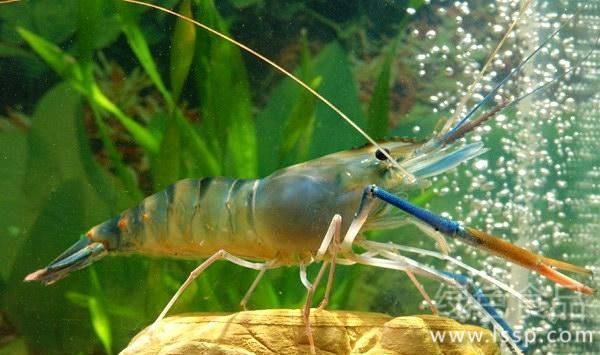
To achieve high yield and good profits from freshwater shrimp and river crabs, grasping six key points is very important
For high yield and good profits from freshwater shrimp and river crabs, grasping the "six key points" is very important
-

How to grow oyster mushrooms for higher yields? These six tips are very practical
First, casing soil. After the mycelium has grown throughout the substrate, cover the mushroom bed with 1 cm of sandy loam soil, which generally increases the yield by about 10%. Insert-sheet stimulation: after the mycelium of the mushroom bed is fully grown, insert small wooden pieces, bamboo pieces, glass pieces or metal pieces into the mushroom bed, and within 1 week mushroom buds will emerge in large numbers along the inserted pieces. Second, hormone stimulation. During the young bud stage, spray with 0.001‰ triacontanol, which can increase the yield by 10%-15%. Spray once with 0.5‰ ethephon solution at the oyster mushroom bud stage, young mushroom stage and cap expansion stage, per square
-
How to mix topdressing for oyster mushrooms? 6 practical formulas to share with everyone
1. Chicken manure water: Use 5 kg of chicken manure, add 20 kg of water, boil and filter, then add water to dilute to 100 kg, spray 0.5-1 kg per sq m, which can promote thick and strong mushroom growth. 2. Plant ash liquid: Use 5 kg of plant ash, add 20 kg of water and soak, take the filtrate and add water to dilute 5-10 times, spray 0.5-1 kg per sq m, which can effectively promote mycelial growth. 3. Rice washing water: Use 5 kg of rice washing water, after settling take the upper clear liquid, then add 100 g of glucose to make a mixed liquid, after picking
-
How to prevent garlic from sprouting? These methods are very practical
Garlic contains nutrients such as crude fiber, calcium, phosphorus, iron, salicylic acid, ascorbic acid, riboflavin, and protein, among which the volatile oil accounts for about 0.2%, with a spicy taste and a distinctive odor. Research has found that the allicin contained in the volatile oil has an obvious bactericidal effect, and has been proven to have therapeutic and preventive effects on infections caused by bacteria, fungi, or pests. Garlic just loves to sprout, and how to store it is a problem. Besides placing it in a dry, ventilated place, we might also store it by deep-frying golden garlic; the method is to wash the garlic, air-dry it, remove the outer membrane, and put
-
Technical Service Information for Tea Plant Frost Resistance and Post-Disaster Recovery
I. Remedial measures for tea plants after a disaster: 1. Scientific pruning: Because tea gardens with different varieties, different altitudes, and different slope aspects have different degrees of frost damage to their tea plants, generally tea gardens with large-leaf varieties, high altitude, and north-facing slopes suffer more severe frost damage to the tea plants. Timely and reasonable pruning should be carried out according to the degree of frost damage. After the temperature rises and stabilizes, observe the frost damage to the tea plants. For lighter frost damage, use light pruning, that is, cut about 3 cm below the leaf surface. For more severe frost damage, carry out deep pruning, cutting off 1/2-1/3 of the plant. For particularly severe frost damage
-
Tea plants are prone to banjhi (dormant buds) after autumn, so effective prevention and control are very important
Banjhi in tea plants refers to the phenomenon where tea buds are slow to grow, or bud break is delayed with a low sprouting rate and the new shoots produced are rather small. When tea plants are in the banjhi state, it is extremely favorable for flower bud differentiation, causing the tea plants to produce a large number of tea flowers from late October to mid-November, which consumes a great deal of nutrients, directly affects the growth of tea leaves the following year, and accelerates the aging of the plant. Therefore, preventing banjhi in tea plants is very important. To prevent banjhi in tea plants, the tea garden soil should be fully tilled 3-5cm deep in summer and autumn, so as to cut the soil capillaries and
-
How to prevent and control soft rot in oyster mushrooms? These methods are very practical
Dong Yushan from Ligou Town, Pingyin County, Shandong Province, wrote in: "The oyster mushrooms grown in my town and the surrounding townships develop small yellowish-brown spots during the fruiting stage, especially when the fruiting bodies are about 1 cm in diameter, which then rapidly expand, and finally the entire fruiting body turns brown, becomes soft and sticky, and ultimately rots. Even though the mycelium inside the mushroom log is still very dense and white, it is very difficult to get another flush. What disease is this? How should it be prevented and controlled? Host Yangguang replies as follows: The situation reported by this friend also occurs quite often in other areas. Judging from the described symptoms,
-
How do you raise pigeons? These practical little care tips are very useful
In the past, fanciers who had achieved race results often shared their experience of what they fed, and many of these things were quite bizarre, such as feeding insects, feeding snails, feeding tadpoles, and even letting pigeons drink human urine. Thinking carefully, pigeons do sometimes eat foods that do not belong to the grain and bean category. From a scientific point of view, some vitamins are not present in grains and beans. Although some can be synthesized in the pigeon's body, once there is a deficiency it will inevitably affect the pigeon's health. Some confined pigeons, when extremely deficient, will peck open and eat pigeon eggs, consuming the albumen and yolk. But truly for confined pigeons
-
How to keep fish fresh? These five methods are very practical
Fish is usually kept fresh in the refrigerator, but this often changes its original flavor. To solve this problem, there are five methods: 1. Perilla leaf preservation: wrap the fish in perilla leaves and place it in a cool place; this can extend the fish's freshness, but it should not exceed 24 hours. 2. Wet grass preservation: soak rice straw or other weeds thoroughly in water, place the live fish in the middle, sprinkle water once every 4 hours, and cover the fish's eyes; the fish can live for 12 hours. 3. Wine drop preservation: drop a few drops of high-proof liquor into the fish's gills or on both cheeks to make the fish drunk and fall over, then place it in a ventilated
-
How to prevent and treat pig lice disease? Methods every pig farmer must see
Pig lice disease, also known as pig blood lice disease, is an external parasitic disease caused by the pig liver louse parasitizing the surface of the pig's body. Although it cannot cause painful death, it still has a considerable impact on the growth and development of live pigs, especially a serious impact on piglets. The development cycle of pig lice is short and spread is rapid. After male and female lice mate, the female louse, after sucking enough blood, lays eggs, producing 3---4 eggs per day, which are attached to the hair and skin with secreted mucus; young lice hatch in 1215 days, and become adult lice in 1014 days, with a development cycle of 2332 days. Because
条件筛选