-

Key Technical Points for Autumn and Winter Management of Mulberry Trees, Tea Trees and Fruit Trees
I. Winter Management of Mulberry Fields Doing a good job of winter management of mulberry fields lays a solid foundation for the growth of mulberry trees in the coming year, and is also an important measure for improving the yield and quality of mulberry fields. 1. Clearing the field: After the mulberry leaves fall, collect all the residual leaves and weeds in the mulberry field to make compost or burn them, so as to eliminate pathogenic bacteria and overwintering pests hidden in the mulberry leaves and weeds. 2. Bundling: Before winter plowing, bundle the mulberry branches together with rice straw, which not only facilitates winter plowing and fertilizing, but also lures pests to hide in the bundled straw to overwinter, making it easier to capture and kill them.
-
Camellia uraku is a top choice for evergreen trees that bloom in winter in the green spaces of the Yangtze River Delta region
Camellia uraku, of the family Theaceae and the genus Camellia. An evergreen small tree. The plant can reach 5 m in height. The leaves are glossy, the flowers are single-petaled and pink, and the flowering period runs from December to March of the following year. Plants of the genus Camellia mostly prefer acidic soil, so when planting camellias in Shanghai, the soil often has to be replaced with acid soil such as hill soil. Camellia uraku is highly adaptable to the slightly alkaline soil of Shanghai, growing and flowering well, and is worth promoting.
-
What technical principles should be followed when thinning flowers and fruit on pear trees?
Thinning flowers and fruit is, on the basis of winter pruning, the regulation of flowers and fruit on trees that still have too many flowers or have set too much fruit; this is a means of achieving a reasonable crop load; its main functions: first, to overcome biennial bearing and stabilize both yield and tree vigor; second, to ensure that the current year's fruit is large and uniform, so that every fruit left on the tree develops into a qualified, high-quality marketable fruit and few culls are produced; third, to form a sufficient number of flower buds for the following year's crop and maintain strong vigor. Trees that are not thinned or that carry an excessive fruit load very easily develop biennial bearing. The essence of biennial bearing is that the fruit
-
Detailed Explanation of Key Techniques for Autumn and Winter Management of Persimmon Trees
Developing persimmon production is a good way for farmers to get rich, and based on years of experience, autumn and winter management is particularly important in persimmon production. The following points should be mastered: 1. Branch bending and pruning. 1. The best time for autumn branch bending is September. The main targets for bending are the main branches and auxiliary branches. The opening angle of the basal main branches should be about 90 degrees; bend downward if less than 70 degrees, bend upward if greater than 70 degrees, and bend left or right if the orientation is inappropriate. 2. Winter pruning of persimmon trees is beneficial for early fruiting of young trees, high and stable yields of mature trees, and renewal and rejuvenation of aging
-
Detailed Explanation of Key Points for Cold-Resistant Cultivation Techniques of Jujube Trees
Jujube cultivation in Liaoning Province is mainly concentrated in the Chaoyang, Huludao and Jinzhou areas. In recent years, the high price of jujube, especially the high returns from superior new varieties, has driven many growers in many areas to successively introduce and plant on a large scale, but most failed due to freeze damage. New development areas are limited to Dalian and Yingkou, and the varieties are only Pear Jujube, Jinling Round Jujube and the like. Other areas still have scattered courtyard plantings, and mostly with old varieties. To enable better development of jujube production in Liaoning Province, the author believes that attention should be paid to cold-resistant cultivation of jujube. 1 Cold-resistant variety
-
Eight Key Points of Winter Management for Sichuan Pepper Trees Explained in Detail
The first is "pruning", which means shaping and pruning. Winter is a great season for pruning Sichuan pepper trees. When pruning, the "seven branches" must be removed, namely: water sprouts, dead branches, diseased and pest-infested branches, overly dense branches, crossing branches, overlapping branches, and weak slender branches. Then the removed branches should be gathered and burned, which can eliminate pests and pathogens overwintering on the branches and trunk. The second is "scraping", which means scraping off the rough bark. Many insect eggs overwinter in the cracks of the rough bark of pepper trees, and mulberry white scale insects parasitize the trunk. The scraped rough bark and gummosis spots should be gathered and burned, then apply Liujiaowei and Suolibaer pesticides, and
-
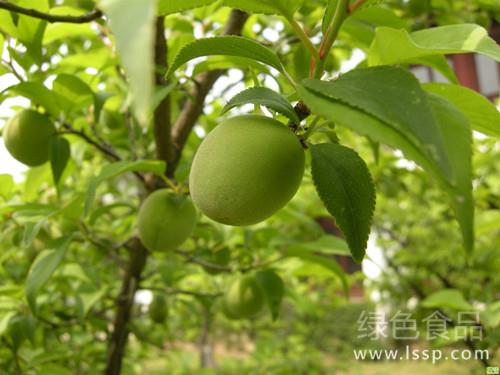
High-quality, High-yield Cultivation Techniques for Japanese Apricot (Green Plum) with Pollinator Trees and Bee Release at Blooming
Cultivation Techniques for High-quality, High-yield Japanese Apricot with Pollinator Trees and Bee Release at Blooming
-

Which parts of fruit trees are prone to frostbite in winter
Locations where fruit trees are prone to frostbite in winter
-

Detailed Explanation of Key Points for Spring Management Techniques of Plum Trees
Key Points for Spring Management of Plum Trees
-

Pruning Methods and Key Technical Points for Pomegranate Trees
Pruning Methods for Pomegranate Trees
条件筛选