-
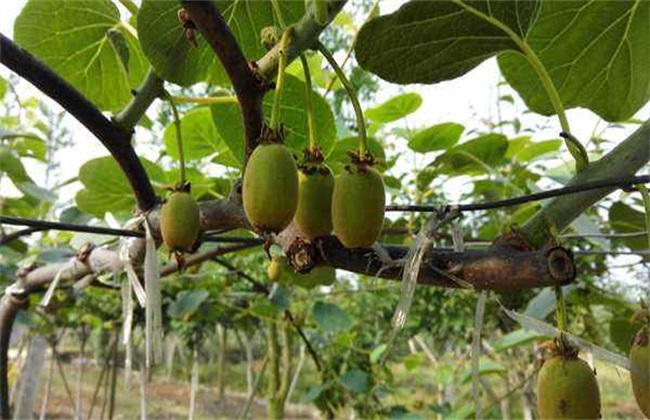
Detailed Explanation of the Key Points of Red-fleshed Kiwifruit Training and Pruning Techniques
Red-fleshed Kiwifruit Training and Pruning Techniques
-

What are the common problems in fruit tree training and pruning?
Common problems in fruit tree training and pruning
-

Detailed Explanation of Olive Tree Training and Pruning Methods and Techniques
How to Train and Prune Olive Trees
-

Detailed Explanation of Key Points of Jujube Tree Training and Pruning Techniques
The training and pruning of jujube trees is based on the jujube tree's unique branching habits and its strong light-loving characteristics. Through pruning, a fixed framework suitable for the jujube tree's growth habits is formed, thereby improving the transparency of the canopy, increasing the fruiting positions, achieving three-dimensional fruiting, improving jujube fruit quality and yield, and extending the fruiting years. There is no issue of retaining flower buds: the flower buds of most fruit trees are differentiated in the previous year, so during winter pruning the number of flower buds to retain must be determined according to the target yield, in order to reduce the consumption of large amounts of tree nutrients caused by flowering and fruit set.
-
Korla Fragrant Pear Open-Center Training Technique and Cultivation Key Points
In order to continuously raise the level of orchard industry development, the "dwarf, dense, early, high-yield" cultivation technique should be adhered to in fragrant pear orchard management, and management should follow the six-character policy of "slow, drop, control, promote, cut, even." 1. Conditions and methods for open-center reshaping. 1. Fragrant pear trees over 25 years old are basically the traditional three-main-branch delayed open-center form, and the tree form has already set. If the tree form is complete, the three or four main branches at the base are sound, and the canopy has already filled the space, the central leader can be directly dropped for open-center; if the lower main branches are incomplete, with only 1~
-
Detailed Explanation of Pruning and Training Techniques for Kernel Apricot
Apricot trees are extremely sun-loving. In other countries, tree forms with 2 main branches and no lateral branches on the trunk, or with 4 main branches and no lateral branches on the trunk, are often used. In China, the natural round-headed form or the open-center tiered form is usually adopted, and a few regions use the natural spindle form. In short, there should not be too many main branches, the spacing between tiers should be large, sunlight should be able to enter the inner canopy, there should be many small branch groups and few large branch groups, and then high yields can be achieved. 1. Pruning of young trees Young trees need to expand their canopy as quickly as possible. When pruning, moderately cut back the leaders of the main branches, remove competing branches, crowded branches and whorled branches, and let the main branch leaders grow outward at an angle as single leaders.
-
Selection and Training Methods for Peach Orchard Tree Structure
In northern China, peach cultivation is mainly based on the three-main-branch cup-shaped open-center form, with each main branch usually bearing 1 or 3 large secondary branches, at a height varying from 30-70 cm, scaffold branch angles of 30-80°, and tree height varying from 2-4 m; planting methods are also not uniform. Overall, there is a lack of relatively appropriate standards. In recent years, the author investigated peach orchards in Pinggu and in Mancheng, Laoting, and other places in Hebei, and offers the following views on peach orchard tree structure for reference. 1 Selection of peach orchard tree structure 1.1 Planting method
-
What tree shapes are suitable for almond? Key points of training and pruning techniques
According to the light-loving characteristics of almond, adopting a tree shape with an open canopy and good ventilation and light penetration makes it easy to obtain high yields. Suitable tree shapes include the round-headed shape, the tiered shape, the cup shape and the natural open-center shape, among which the natural open-center shape is used more often. After the young seedlings are planted, the trunk is headed at 60-100 cm. If the planted seedlings already have branches but these cannot be used as main branches, keep a few buds at the base of these branches and carry out relatively heavy renewal pruning; in the spring of the 2nd year, when the new shoots reach about 10 cm in length, select and retain 3
-

Detailed Explanation of the Key Points of Hawthorn Tree Training and Pruning Techniques
Hawthorn Tree Training and Pruning Techniques
-
Key Points of Pruning and Training Techniques for Densely Planted Chestnuts
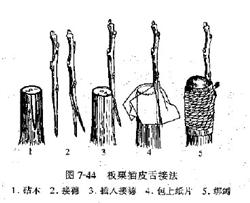
Selection of scions from superior varieties: Choose excellent local chestnut varieties with good performance. Select robust fruiting branches that are fully grown, with plump terminal and lateral buds and free of pests and diseases as scions. The length is generally 7-8 cm, with 3-4 buds retained. Scions should be collected and grafted immediately, or collected in advance, wax-sealed and stored at low temperature until use. Grafting period: one...
条件筛选