-
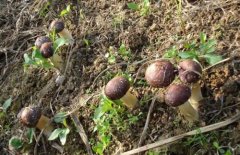
The Latest Cultivation Techniques, Formulas and Planting Times for Wine Cap Stropharia (Stropharia rugosoannulata): A Detailed Guide
Do you know how to grow wine cap stropharia? Would you like to grow it yourself? Below we introduce a simple yet high-yielding cultivation method. Let's take a look. 1. Substrate preparation: rice straw 100%, plus wheat bran or rice bran 10%, cornmeal 5%, gypsum powder 2%,
-
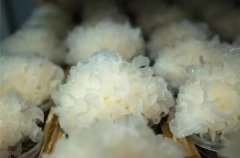
Tremella (white fungus) cultivation and growing techniques: how long can a mushroom bag be used, and how many times can it be harvested repeatedly?
There are three cultivation methods for Tremella: log cultivation, bag cultivation, and bottle cultivation. Today I will introduce the bag cultivation method. How long can a Tremella mushroom bag be used at one time? Bag-cultivated Tremella can generally be harvested 2 times. So can the Tremella mushroom bag be reused? Actually it cannot.
-
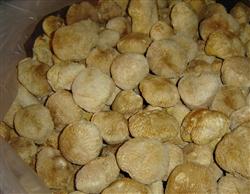
How to harvest lion's mane mushroom? Detailed explanation of harvest time and method
How to harvest lion's mane mushroom? Please advise: lion's mane mushroom generally takes 10-20 days from primordium formation to harvest, and harvesting at the right time gives the highest yield and the best quality. The signs that the lion's mane mushroom fruiting body is mature are: the mushroom body has basically reached full size, is firm, white in color, with fungal spines appearing on the surface, the spines being 0.5-1 cm in length, and no spores have been discharged; at this point...
-
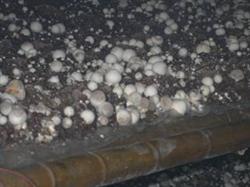
Summer cultivation of straw mushrooms is timely; the planting window must not be missed
1. Cultivation season: Straw mushrooms are a high-temperature mushroom species. The suitable temperature range for straw mushroom mycelium growth is 15-40°C, with the optimum temperature being 30-35°C. The fruiting body growth temperature is 26-34°C, with the optimum temperature being 28-30°C. Cultivation is generally carried out from June to August each year. 2. Cultivation materials: cottonseed hulls, rice straw, corncobs...
-

Mushroom fermentation agent helps mushrooms achieve high yield, high quality, and time savings
Using a fermentation aid to make edible mushroom growing substrate allows fast and thorough fermentation, working at both high and low temperatures, greatly shortening the fermentation production time, reducing labor intensity, and lowering production costs. It also has the characteristics of broad-spectrum fermentation and strong adaptability (it can ferment almost all organic matter that needs fermentation, and has relatively loose requirements for environmental conditions), and can be widely used for button mushroom (white mushroom), Agaricus edulis (double-ring mushroom), oyster mushroom (Pleurotus), Hypsizygus marmoreus (small oyster mushroom), straw mushroom (rice-straw mushroom, Chinese mushroom), silver-thread straw mushroom
-
When is the most suitable time to harvest wine cap mushrooms?
The wine cap mushroom (Stropharia rugosoannulata) is larger than common edible mushrooms. A common edible mushroom weighs about 10 grams per cap, while a wine cap mushroom weighs around 60 grams, with the heaviest reaching up to 2500 grams, and a diameter of 5-40 cm. It should be harvested in a timely manner according to its maturity and market demand. From pinning, that is, the appearance of the white primordium, to maturity, the fruiting body takes about 5-10 days, varying with temperature. At low temperatures it grows slowly, but the mushroom body is thick and fleshy and the cap is not prone to opening. Conversely, at high temperatures it presents a small cap shape and opens easily. Throughout the entire growing period, 3 flushes can be harvested.
-
Why oyster mushroom mycelium fails to fruit for a long time after fully colonizing the substrate, and how to fix it
In oyster mushroom cultivation, you sometimes run into bags or blocks whose mycelium grows very well but, after fully colonizing the substrate, produce no mushrooms for a long time. The main causes and remedies are as follows: 1. The oyster mushroom variety does not match the season. The temperature type of the spawn differs too greatly from the air temperature at cultivation time, which is to say the sowing time was chosen poorly. For example, if a medium-to-low-temperature oyster mushroom spawn is sown at the turn of spring and summer, the mycelium fully colonizes just as the hot season arrives, making fruiting very difficult. Remedy: dig a trench in a shady spot, arrange the bags in it and cover them with soil to oversummer; when the autumn cool arrives and conditions are suitable, dig away the soil cover and carry out fruiting management to reduce losses.
-
Simple preservation techniques for oyster mushrooms help you extend storage time
Under normal conditions, oyster mushrooms are difficult to store and have a short shelf life. Two days after harvesting, oyster mushrooms lose freshness sharply due to water loss, the caps turn yellow, and an off-odor appears. During peak fruiting seasons, large quantities of fresh mushrooms flood the market at once, causing mushroom prices to plummet; on the other hand, during off-seasons and in cities far from mushroom-growing areas, there is little mushroom supply and nothing to sell. For this reason, here is a brief introduction to research on oyster mushroom storage and preservation. Method: Harvest oyster mushrooms at 80% maturity, remove diseased, insect-damaged, and damaged mushrooms, place them in a clean, cool, ventilated area, and use an exhaust fan for 1-1.5 days of air-cooling pretreatment, then
-
Detailed Explanation of the New Technology for One-Time Massive Mushroom Flushing of Oyster Mushrooms
The so-called new technology for massive mushroom flushing refers to the use of a supporting set of techniques to force a one-time high yield at the first flush of mushrooms. This is a further improvement and strengthening of "simulated industrial cultivation technology," and practice has shown that the results are very good and that it can be promoted for use. This technology mainly consists of five steps: 1. Carry out virus elimination treatment on the spawn. "Good seed produces good seedlings" is a truth everyone knows, but indefinite preservation of spawn and continuous, unlimited subculturing can lead to problems such as trait degeneration or naturally carrying viruses and pathogens.
-
Detailed explanation of key points of mushroom preservation technology, easily extend storage time
Mushroom preservation methods include modified atmosphere preservation, low-temperature preservation, radiation preservation and brine preservation, etc. The methods are: modified atmosphere preservation uses simple modified atmosphere storage, within 3 to 5 days it can keep mushrooms fresh and tender without opening their caps, basically without browning, and with a water loss rate below 1%. At present, breathable plastic film bags are generally used for packaging, maintaining an oxygen concentration of 1% and a carbon dioxide concentration of 10% to 15% inside the bag, which can keep mushrooms white for 4 days with good freshness. Cold storage preservation: low temperature can keep mushrooms fresh and of high quality. During storage and transportation
条件筛选