-

How master gardeners water their plants - no wonder their flowers thrive more and more
As the saying goes, "three years to learn watering." That means even the seemingly simplest task of watering takes 3 years to master. Some plant lovers end up with yellow leaves and root rot, and in many cases it's because they didn't get this small task of watering right. Come and see how the plant pros water their plants!
-

-

Clivia and money tree: just pop them in water and their leaves and branches suddenly go wild
Gardeners who have grown money trees, clivias, succulents and the like surely know that they rot at the roots far too easily. Since that is the case, you might as well just toss them in water to grow - less likely to attract pests, cleaner to keep, and you never have to worry about root rot from overwatering again!
-

Pothos and clivia bloom and fill their pots year after year, and this is how a Shandong auntie cares for them
Many flower lovers have grown pothos and clivia, but if you want them to fill their pots year after year and grow leaves that are big and plump, it takes some real effort. Huahua knows a Shandong auntie who is not only beautiful but also especially good at growing flowers. Huahua asked her for lots of great flower-growing tips, and now I'll share them with everyone right away!
-

A Detailed Guide to Common Pests and Diseases of Oriental Lilies and Their Control Methods
It originated in the Himalayan region, and later it was grown quite widely in China. Because of its appearance, it is a very popular variety. However, if it suffers from pests and diseases, it will not look so beautiful. So, what pests and diseases does it have? How exactly do you prevent and control them?
-
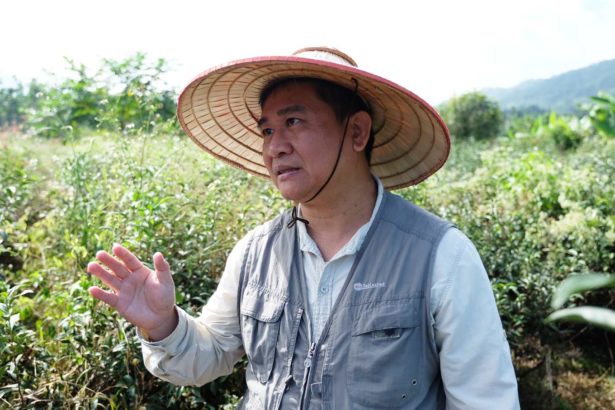
Liu Dongqi: Organic isn't just about being free of toxins; pruning, root care, and sod culture have their finer points - grow trees with vitality
Liu Dongqi: Organic isn't just about being free of toxins; pruning, root care, and sod culture have their finer points - grow trees with vitality
-
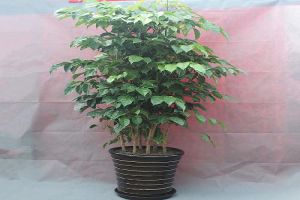
Common Pests and Diseases of the Radermachera hainanensis and Their Control Methods
It is also called the Hainan bean tree (Radermachera hainanensis). Its blooms are very large, very fragrant, and very showy, golden yellow in color, looking absolutely beautiful. Its ornamental value is extremely high, and it is planted in many gardens. If it encounters pest or disease damage during its growth and development, how should it be dealt with?
-
What are the common orchid viruses and their transmission routes?
I. Common orchid viruses 1. Cymbidium mosaic virus, abbreviated CyMV (1) Symptoms: Orchid plants infected with Cymbidium mosaic virus frequently tend to develop necrosis symptoms, such as black necrotic spots, necrotic stripes, etc. In addition to necrosis on the leaves and stems, infected plants also develop necrosis on the flowers, which is a symptom unique to Cymbidium mosaic virus. Orchid varieties that are easily susceptible include Cymbidium sinense, Cattleya, Oncidium, Cymbidium hookerianum, Vanda, and Phalaenopsis. Necrotic spots sometimes appear only on the lower surface of the leaves and not on the upper surface; this phenomenon occurs in Oncidium, Dendrobium, Vanda, and Phalaenopsis, and is therefore often mistaken by growers for a fungal infection. Some Cymbidium plants infected with Cymbidium mosaic virus, such as Cymbidium hookerianum, Cymbidium sinense, Oncidium, and Phalaenopsis, also develop yellow-green mottled mosaic or yellow chlorotic streak symptoms. In addition, some orchid species show no recognizable symptoms after infection.
-
How to care for orchids (cymbidiums) so their blooms reach their full potential
How to make cymbidium blooms reach their full potential. As the saying goes: "It is hard to get cymbidiums to bloom, and even harder to get them to produce fine flowers." Making orchids bloom better has thus become the eternal goal pursued by orchid growers. So how can orchid blooms be brought to their full potential? I believe six key elements are required. 1. The growing medium for orchids must have complete nutrients. The flowering and fruiting of plants requires large amounts of nutrients, and orchids are no exception.
-
What are the characteristics of Jianlan and Sijilan? Understand their care methods in one article
Sijilan is a type within the Jianlan series, also known as Xialan, Qiulan, and so on. Jianlan is mainly produced in Fujian, and Fujian was once hailed as the hometown of Jianlan. Jianlan is widely distributed, in areas south of the Yangtze River in China or along both banks of the Yangtze River basin, and on both sides of the central mountain slopes in Taiwan, China. In damp shaded places in forests or under mixed woods at altitudes below 1500 m, and in foggy places on south-facing mountain slopes...
条件筛选