-
-

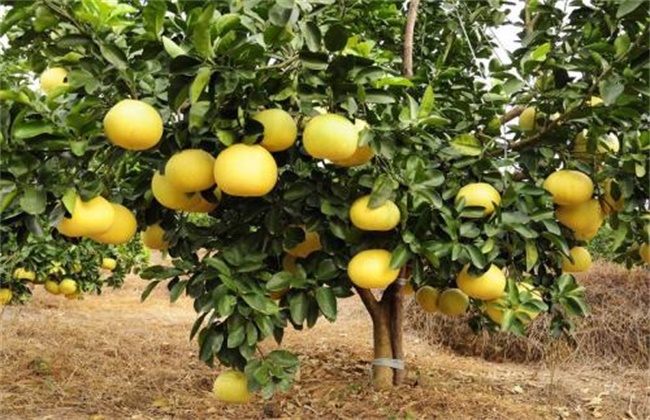
How can fruit trees effectively improve their fruit-setting rate?
How to improve the fruit-setting rate of fruit trees
-

When do Lingwu long jujubes ripen and hit the market? Their shelf life can be increased 10-fold
Yesterday, reporters learned from the Science and Technology Department of the Autonomous Region that the department, together with the Forestry Department, organized experts in forestry, fruits and vegetables, and food to conduct an on-site acceptance inspection of the room-temperature preservation research portion of "Key Technology Development and Research on Storage, Transportation and Preservation of Lingwu Long Jujubes," the region's first project tendered nationwide. The results showed that the shelf life of Lingwu long jujubes has increased 10-fold compared with before, achieving 30 days of room-temperature storage. It is reported that Lingwu long jujubes have long entered high-end markets such as the southeast coast and Hong Kong, China, but because Lingwu long jujubes are prone to losing
-
Introduction to Laishan honey peach varieties and analysis of their characteristics
Main characteristics Laishan honey peach originated from a bud sport of a seedling individual. The fruit is round and slightly tall in shape, with a round fruit apex, 300-700 g, bright red on the sunny side, creamy yellow background color, creamy white flesh, soluble solids content 16%, sweet and juicy, edible rate 96%. The tree is vigorous, with spreading branches, a lower germination rate than ordinary varieties, strong branching ability, and a low sprouting rate of secondary branches. Young fruiting trees mainly bear fruit on long fruiting branches, while mature trees mainly bear fruit on medium and long fruiting branches, with fewer short fruiting branches and bouquet fruiting branches. It has abundant pollen,
-
What are the medicinal values of peach blossoms? An analysis of their effects and actions
[Source]This product is the flower of the Rosaceae plant peach, Prunus persica (L.) Batsch. It is picked when it blooms in spring and dried in the sun. [Nature, flavor, and meridian entry]Bitter, neutral. [Functions and indications]Purging and relieving constipation, promoting diuresis and reducing swelling. Used for edema, ascites, and constipation. [Usage and dosage]1 to 2 qian. [Selected formulas]① To treat beriberi, chronic water retention in the waist, kidneys, and bladder, and phlegm-fluid retention: peach blossoms, dried in the shade, measure one large sheng, pound into powder. Mix with warm clear wine, take the whole dose at once, with free bowel movement as the standard; take on an empty stomach
-
8 common appearance problems of bagged Emerald pear and their solutions
Emerald is an excellent new pear variety bred by the Zhengzhou Fruit Research Institute, developed by crossing New Century and Zaosu. Since 2000, after 6 years of bagged cultivation through top-grafting to change the canopy in our city, we have found that this variety has a regular fruit shape, a smooth and glossy fruit surface, creamy white flesh, a crisp and tender texture with abundant juice, and few stone cells, making it an early-maturing pear variety of excellent quality. However, in production we have found that bagged pears often show abnormal phenomena such as black wrinkling, fruit russeting, tiger-skin markings, floral green coloration on the fruit surface, black spots, cracking, and deformities that affect the external quality of the fruit. For this reason we conducted an investigation and analysis and proposed solutions.
-
How should peaches be stored to extend their fresh, crisp period?
Prompt pre-cooling to prevent softening. Because the temperature is relatively high when peaches are harvested, especially for mid- and late-season varieties, if they are not pre-cooled promptly, the peaches will quickly soften, age, rot, and deteriorate. Therefore, after harvest, peaches should be pre-cooled to below 4°C as soon as possible. Generally, two pre-cooling methods are used: forced-air cooling and water cooling. Water cooling is fast: a peach with a diameter of 7.6 cm cooled in 1.6°C water for 30 minutes can have its temperature lowered from 32°C to 4°C. After water cooling, let the fruit dry before packing. Air cooling is slower and generally requires 8-12 hours or longer. Storage
-
Introduction to American almond varieties and their main characteristics
The most important cultivated variety in the United States, accounting for more than half of total US almond production. It has been introduced and cultivated in China and many other countries around the world. Its flowering period is medium-early, and in years with mild winters and in areas prone to late frosts, the flowers are susceptible to frost damage, though the early bud stage has some frost resistance. It enters the fruiting stage 2-3 years after planting, with stable and high yields. The nuts are large and uniform, with an average single nut weight of 1.3 g-1.5 g. The kernel is smooth, uniform, and attractive in appearance, light brown in color, with a shell as thin as paper (kernel yield 60%-70%). The nuts mature early, generally in late August and September
-
How to store pears in spring? Four methods to help you extend their shelf life
1. Chemical fumigation method. The fumigation method mainly prevents and controls diseases that invade the fruit. First, seal the pears with plastic film, then place a fumigant (such as acetaldehyde) inside the sealed plastic film so that the fumigant concentration inside the plastic film reaches 0.5% and is maintained for 180 minutes, or so that the fumigant concentration inside the plastic film reaches 1% and is maintained for 120 minutes. 2. Medicinal solution soaking method. This method mainly prevents pears from being infected by pathogens after harvest. Soak the pears in a 400-fold dilution of 4% Nongkang 120 fruit tree-specific solution for 50 minutes, then remove and air-dry, then package and store
-
Common Problems in Indian Jujube Production and Their Solutions
Although Indian jujube (Ziziphus mauritiana) has been successfully introduced and trial-planted across various parts of southern China, it is still in its early stages, and the area under commercial production is currently small. However, Indian jujube cultivation in China currently suffers from problems such as mixed and confused varieties, extensive and careless cultivation management, and poor marketing channels, all of which need to be further improved and resolved. 1. Weak regional planning for development and mixed, confused varieties. Indian jujube has the characteristics of early fruiting and high yield (planted in the same year, it bears fruit in the same year) and excellent quality with high prices. Combined with heavy publicity in the media by some fruit seedling suppliers, this has set off a wave of Indian jujube planting in several southern provinces in recent years.
条件筛选