-

What causes Phalaenopsis orchids to drop their buds?
Phalaenopsis orchids are prized tropical flowers, yet all too often the buds drop before the flowers even open. The reasons are: (1) Insufficient temperature. From bud formation to flowering, the temperature should be kept above 15°C; if it is too low, the buds easily drop and the leaves turn yellow. (2) Soil that is too wet. Watering too much and waterlogged potting soil can also cause bud drop. (3) Insufficient nutrients. After Phalaenopsis orchids form buds, they need top-dressing, 1-2 times every half month, to keep replenishing nutrients; otherwise the buds will gradually drop from the bottom upward.
-
How to store pears in spring? Four methods to help you extend their shelf life
1. Chemical fumigation method. The fumigation method mainly prevents and controls diseases that invade the fruit. First, seal the pears with plastic film, then place a fumigant (such as acetaldehyde) inside the sealed plastic film so that the fumigant concentration inside the plastic film reaches 0.5% and is maintained for 180 minutes, or so that the fumigant concentration inside the plastic film reaches 1% and is maintained for 120 minutes. 2. Medicinal solution soaking method. This method mainly prevents pears from being infected by pathogens after harvest. Soak the pears in a 400-fold dilution of 4% Nongkang 120 fruit tree-specific solution for 50 minutes, then remove and air-dry, then package and store
-
What treatment works well for chickens that crane their heads back to look at the sky and kneel on the ground?
In the process of raising chickens, you will often come across some chickens with strange, bizarre postures: the first is the head tilted backward, with both eyes looking up at the sky. The second is walking while kneeling on the ground. What disease are these two postures in chickens a sign of, and what methods are used to treat them? The first strange posture: head tilted backward, both eyes looking up at the sky. It is a sign that the chicken has VB1 deficiency. VB1, also known as thiamine, is a substance essential for carbohydrate metabolism in the chicken's body. Nervous tissue relies on the oxidation of carbohydrates to supply energy; if VB1 is deficient, then because of insufficient energy supply to its nervous tissue, nutritional disorders of the nerves will appear, leading to functional imbalance, and the sick chicken will show multiple neuritis. VB1 deficiency also slows the chicken's intestinal peristalsis, relaxes the intestinal wall, reduces appetite, and stunts growth. VB1 deficiency can occur in chickens of all ages, but chicks and young chickens are affected more often. Sick chickens have weakness in both legs and an unsteady gait; because of inflammation of the peripheral nerves, the head bends extremely backward, in a shape that looks like gazing at the sky. Prevention and treatment: First, supply enough VB1 in the chicken's diet; adding 0.8 to 0.9 mg per kilogram of feed for young chickens and adult chickens, and 1.5 mg per kilogram of feed for chicks, can prevent the occurrence of this disease; second, for chickens already affected, intramuscular injection of 5 mg of thiamine (the amount for one chicken), once a day, for five to seven consecutive days, gives an extremely good therapeutic effect.
-
Common Pests and Diseases of Golden Privet and Their Control Methods
Content: We have a large area of golden privet (Ligustrum vicaryi). Every year in the hot, humid season, the leaves drop in patches until the plants turn yellow and wither. What is the cause, and how can it be controlled? Reply: It may be "golden privet leaf spot" caused by a fungus. Once the plum rain season ends, it spreads everywhere, and affected golden privet quickly loses all its leaves. It is generally caused by planting density being too high, and in recent years it has appeared in large numbers in Shanghai. Control: spray with a fungicidal pesticide.
-
What are the reasons that azaleas drop their leaves and die after being watered with organic fertilizer?
After azaleas are watered with a liquid organic fertilizer that has been composted, abnormal leaf drop and death may occur for the following reasons: First, the eggshells and soybean residue may contain a small amount of table salt (sodium chloride), and the fine fibrous roots of azaleas are relatively sensitive to sodium ions, causing root rot, leaf drop, and death. Second, the 5% concentration may still be too strong for the fine hairy fibrous roots of azaleas, or the fertilizer liquid left at the end may have an even higher concentration, making it hard for the plant to withstand. Third, the timing of fertilization may be inappropriate, such as after the flowers fade, when new root tips have just emerged,
-
Analysis of the Causes and Handling Methods of Female Mink Eating Their Kits
Every year from June to September is the main stage of growth and development for mink kits. During more than 40 years engaged in mink production, the author has found that some female mink eat their kits. Through investigation, the causes and handling methods of kit-eating are introduced as follows: 1. Poor maternal instinct and vicious habits. Once discovered, the remaining kits should immediately be removed and given to another female mink to nurse. 2. Lack of nutrition and insufficient feed. This is caused by a deficiency of certain nutritional components in the feed, such as insufficient protein content, or by an inadequate amount of feed supplied; sufficient full-price feed should be provided.
-
Why Do Rabbits Eat Their Own Soft Droppings?
During the raising of domestic rabbits, we can see that the hard fecal pellets they pass are formed through a second round of digestion. Domestic rabbits eat grass and feed during the day, and at night or before dawn they pass soft droppings, and as soon as the soft droppings are passed, the rabbit immediately eats them. Through this second round of digestion and absorption, only the residue is formed into hard fecal pellets and passed out of the body. When domestic rabbits eat the soft droppings they have passed at night, it is not coprophagia caused by a lack of some nutrient in their bodies, but a normal physiological phenomenon. This instinct of domestic rabbits has two major benefits: first, it can keep the rabbit hutch,
-
Do Bighead Carp Eat Phytoplankton? An Analysis of Their Feeding Habits
Bighead carp mainly feed on zooplankton, but also consume phytoplankton. According to research by Professor Ni Dashu, the average ratio of zooplankton to phytoplankton in the diet of bighead carp is 1:4.5. In terms of quantity, phytoplankton predominates, but in terms of biomass it is far surpassed by zooplankton, since on average a single zooplankton is 10 times larger than a single phytoplankton or more. Therefore, from an analysis of the feeding habits of bighead carp, the occurrence rate of phytoplankton is not low, but it is still zooplankton that plays the main nutritional role. Given this situation, the original Guangdong experience still leaves room for improvement, namely that the ratio of bighead carp to silver carp
-
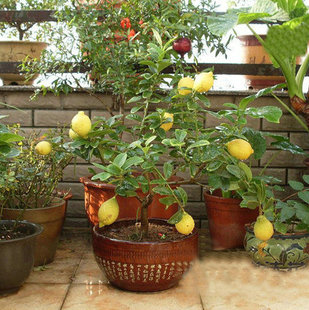
What to Do When Potted Lemons Drop Their Fruit? Causes and Solutions
Many gardeners love potted lemon trees. Not only can they serve as foliage plants, but gardeners also hope to see them covered with lemons. However, some gardeners have found that although their lemons set fruit, the fruit then drops off, and they do not know what to do. A gardener asks: The lemon I bought 3 years ago drops its fruit every year when the fruit reaches the size of a fingernail.
-
The magnolia flowers are delicate and beautiful, and their seeds are quite unusual too
Magnolia is a deciduous tree of the Magnoliaceae family, native to the Yangtze River basin of our country, and is a tree species unique to our country. Magnolia blooms before it leafs out, with flowers borne singly at the tips of the branches, extremely elegant. The flower color is jade white, and its fragrance is like that of an orchid, hence its name. It is also called white magnolia, Yutangchun, Wangchunhua, and so on. In the bright spring month of March, the magnolia flowers burst into bloom, standing gracefully at the tips of the branches, looking pure, plump and elegant. It is usually hard to see magnolia set seed, and fully mature seeds are seen even less often. The photo shows a young fruit that formed after pollination and has a red seed coat, forming about
条件筛选