-
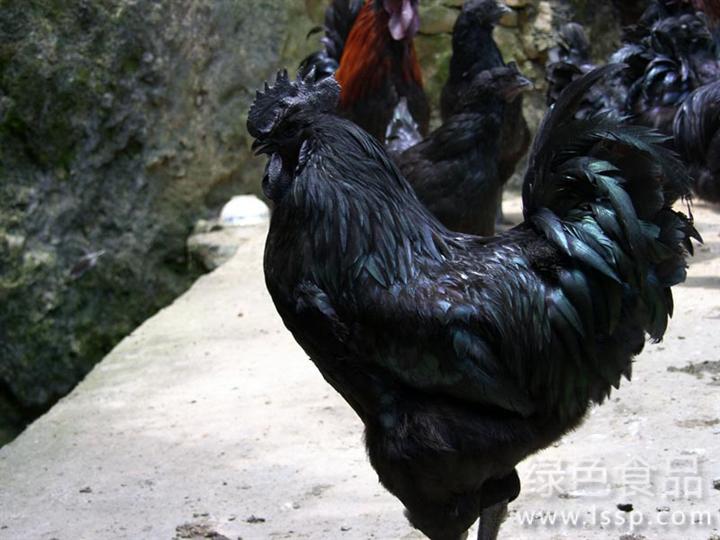
Silkie chickens have poor vitality and disease resistance; how can their survival rate be improved?
Silkie chickens have poor vitality and disease resistance; how can their survival rate be improved?
-

Introduction to Virus-Free Sweet Potatoes and Their Excellent Varieties
Virus-free sweet potatoes refer to sweet potatoes obtained through virus-elimination technology and confirmed by strict virus testing to be free of certain viruses, as well as their offspring bred in aphid-free and pathogen-free soil. At present, viral diseases have become an important cause of the degeneration of seed performance, yield decline and quality deterioration of sweet potatoes in Henan Province, while virus-free sweet potatoes can generally increase yield by more than 30%, and their quality and appearance are also improved. Therefore, selecting virus-free sweet potato seedlings is the prerequisite for achieving high sweet potato yields. Starch-processing sweet potato Xushu 18: virus-free
-
Detailed Explanation of Common Pond-Clearing Drugs and Their Effects
Drug-based pond clearing is the use of drugs to kill various predatory fish, wild trash fish and other harmful organisms in the pond that endanger fish, shrimp and crab fry, creating a safe environmental condition for fry rearing. This is an important measure for improving the survival rate of fish, shrimp and crab fry. The commonly used pond-clearing drugs and their effects are introduced as follows: 1. Quicklime pond clearing and its effects: The action of quicklime in pond clearing is that after quicklime meets water, a chemical reaction occurs, producing calcium hydroxide and releasing a large amount of heat. Calcium hydroxide is a strong base, and its hydroxide ions can raise the pH value of the pond water to above 11 in a short time, thereby killing wild trash fish and other harmful organisms.
-
Detailed Explanation of Three Fish Feed Formulas and Their Mixing Methods
(1) Grass carp feed formula (1) Rice bran 40%, wheat bran 38%, soybean cake 10%, fish meal 10%, yeast powder 2%. The feed conversion ratio of this formula is 1.9; if green fodder is added separately, the feed conversion ratio is 2.2. This formula was provided by the Pearl River Fisheries Research Institute. (2) Rice straw powder 80%, soybean cake 10%, rice bran 10%. This formula was provided by the Yangtze River Fisheries Research Institute, with a feed conversion ratio of 4.9. (3) Corn meal 70%, fish meal 10%, soybean cake powder 15%, wheat bran 5%. Its additives and binders are: sweet potato 12%
-
Common Diseases Causing Persistent High Fever in Pigs and Their Prevention and Treatment Methods
(1) Swine fever: The pig's body temperature rises to 40-42°C and does not subside persistently; appetite decreases or the pig stops eating, mental depression, shivering, lying prone and sleepy, huddling together or burrowing into straw; when standing and walking, the back is arched and the waist bent, limbs are weak, movement is slow, gait is unsteady and swaying, conjunctiva is red with purulent discharge, first constipation, then diarrhea; at the base of the ears, abdomen, inner sides of the limbs and other areas there are purplish-red bleeding spots that do not fade under finger pressure. Lesions: systemic lymph nodes are enlarged with peripheral hemorrhage, showing a red-and-white mottled marble-like appearance; the kidneys become pale with pinhead-sized bleeding spots on the surface; the spleen is enlarged and hemorrhagic, with the edge
-
What are the medicinal values of peach blossoms? An analysis of their effects and actions
[Source]This product is the flower of the Rosaceae plant peach, Prunus persica (L.) Batsch. It is picked when it blooms in spring and dried in the sun. [Nature, flavor, and meridian entry]Bitter, neutral. [Functions and indications]Purging and relieving constipation, promoting diuresis and reducing swelling. Used for edema, ascites, and constipation. [Usage and dosage]1 to 2 qian. [Selected formulas]① To treat beriberi, chronic water retention in the waist, kidneys, and bladder, and phlegm-fluid retention: peach blossoms, dried in the shade, measure one large sheng, pound into powder. Mix with warm clear wine, take the whole dose at once, with free bowel movement as the standard; take on an empty stomach
-
8 common appearance problems of bagged Emerald pear and their solutions
Emerald is an excellent new pear variety bred by the Zhengzhou Fruit Research Institute, developed by crossing New Century and Zaosu. Since 2000, after 6 years of bagged cultivation through top-grafting to change the canopy in our city, we have found that this variety has a regular fruit shape, a smooth and glossy fruit surface, creamy white flesh, a crisp and tender texture with abundant juice, and few stone cells, making it an early-maturing pear variety of excellent quality. However, in production we have found that bagged pears often show abnormal phenomena such as black wrinkling, fruit russeting, tiger-skin markings, floral green coloration on the fruit surface, black spots, cracking, and deformities that affect the external quality of the fruit. For this reason we conducted an investigation and analysis and proposed solutions.
-
High temperatures trigger heat stress in pigs, affecting their physical health
The high-temperature environment from June to September each year disrupts pigs' sex hormone secretion, throwing their normal estrus mechanism out of order, so that estrus symptoms become inconspicuous or the animals do not come into heat at all; high temperatures make pigs devote most of their energy to resisting heat stress, correspondingly weakening their other bodily functions, and for lactating sows and fattening pigs that need to eat large amounts of feed, this leads to insufficient nutrition and the phenomena of low milk output and slow growth; high temperatures make heat dissipation from the boar's testicles difficult, intensify sperm metabolism and shorten sperm lifespan, so that the motility of ejaculated sperm decreases or the sperm even die; high temperatures also increase the death of newly fertilized eggs and make implantation of the fertilized eggs more difficult, thereby lowering the conception rate of summer breeding.
-
Pests Harming Orchids and Their Control Methods (Part One)
Pests that harm orchids include scale insects, aphids, spider mites, thrips, whiteflies, leaf miners, snails and slugs, nematodes, caterpillars, cockroaches, ants, and others. 1. Scale insects Scale insects are one of the most common pests harming orchids. There are many species, mainly parasitizing the stems and leaves of orchids, and they can also be seen on the petioles and the membranous sheaths at the base of pseudobulbs, appearing as a white powdery substance. They feed by sucking plant sap with their piercing-sucking mouthparts. In mild infestations, they cause the affected organs to turn yellow and age, affecting the growth of the orchid plant; in severe cases, they cover the leaf surface in patches, consuming nutrients and affecting the orchid's
-
A Detailed Guide to the Harm Caused by Cotton Summer Aphids and Their Control Methods
Cotton summer aphids are the offspring of aphids that reproduce during the cotton seedling stage. Summer aphids begin to harm cotton after the onset of the dog days, and their harmfulness is far greater than that of seedling-stage aphids. The oily excrement excreted by summer aphids covers the cotton leaves, reducing leaf surface function, hindering the normal progress of photosynthesis, and obstructing the transport of nutrients, causing the tender leaves of cotton to curl and shrink, which in turn causes cotton squares and bolls to drop. Therefore, doing a good job in controlling summer aphids is an important measure for striving for high yields and early production of summer bolls. 1. Grasp the timing of control: cotton summer aphids usually
条件筛选