-

What are microecological preparations, what types are there, and what are their application scopes?
Applications of microecological preparations
-
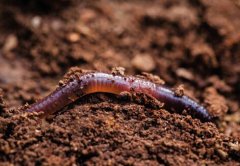
What benefits do soil animals bring to the soil? Their remains can also add fertilizer
Do you know what benefits soil animals bring and what they can be used for? Would you like to learn about it? Let's take a look together. Maybe it will help you with your planting in the future. Soil animals cultivate bacteria and fungi, take in and break down residues, and increase soil respiration
-
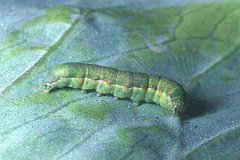
What do beet armyworm larvae and adults look like? A detailed breakdown of their morphological features
We know that the beet armyworm is a pest, but do you understand its ecological habits and morphology? Let's take a look together. Ecological habits: The adult beet armyworm hides by day and comes out at night, resting on the undersides of leaves or in dark places during the day, and beginning activity and mating after sunset.
-
Detailed Explanation of the Three Fertilizations for Rice and Their Application Techniques
Scientific fertilization is one of the important measures for achieving high quality and high yield in rice. However, rice fertilization is a highly technical task, and in practice it must be flexibly managed according to variety characteristics, soil fertility, climatic factors, and cultivation conditions. As is well known, the fertilizer requirements of rice are expressed in the nutritional period, the critical nutritional period, and the period of maximum nutritional efficiency. For example, early rice has a short growth period and relatively low fertilizer demand, so fertilization should be early and concentrated. Middle rice and late rice have longer growth periods, high fertilizer demand, and strong absorption intensity, so the number of topdressings should be increased and the proportion of topdressing raised.
-
What are the characteristics of tulips? A comprehensive analysis of their growth features
Tulips are also known as grass musk and foreign lotus. Their characteristics are: 1. They prefer warm, moist, sunny or semi-shaded environments. They have strong cold resistance, and in winter, with proper protection, the bulbs can overwinter in the open field. They dislike the intense summer heat, so from June to September the aboveground parts gradually wither and enter dormancy. The optimal growth temperature for tulips is 15-18°C, the rooting temperature needs to be above 5°C, and the suitable temperature for flower bud differentiation is 17-23°C; above 35°C it will be inhibited. About one month after the mother bulb blooms, it gradually withers, while new
-
Common Pest and Disease Species Infecting Tulips and Their Control Measures
Tulips originate from the Mediterranean coast and central Asia. Their Chinese names include caoshexiang, honglanhua, mudanbaihe, yanghehua, yangshuixian, and others. They are perennial herbaceous plants of the genus Tulipa in the family Liliaceae. The plant height is 30-50 cm; the bulb is flattened conical with a brown tunic; leaves number 3-5; the flower is solitary at the top of the stem, large, upright, cup-shaped, with the base often dark purple; the capsule bears flat seeds; the natural flowering period is March-May, and the fruit ripening period is April-June. Tulips are famous bulbous flowers, and their brilliantly colorful flower forms and colors are favored by the broad masses of visitors. However
-
What types of snakes are there? Learn about their medicinal and economic value in one article
Snake Farming Techniques Snakes belong to the animal kingdom, phylum Chordata, subphylum Vertebrata, class Reptilia, order Squamata, suborder Serpentes. The distribution of snakes is greatest in tropical and subtropical regions, followed by temperate zones, and least in cold zones. There are more than 2,500 species of snakes in the world, of which about 650 are venomous. China has more than 200 species of snakes, of which about 51 are venomous, mainly distributed in the southern and southwestern provinces, especially in Guangdong, Guangxi, Hainan and other provinces and autonomous regions. Medicinal and Economic Value The medicinal use of snakes is not limited to snake venom, snake meat, snake gall and snake slough
-
Detailed Introduction to Common Beekeeping Tools and Their Uses
1. Foundation Foundation is the base installed inside the frame for bees to build comb; it is a man-made sheet of beeswax pressed by a foundation mill, with a base plate having cells and cell walls. There is Italian bee foundation for keeping European honey bees; drone foundation for producing drone pupae; and Chinese bee foundation for keeping Chinese bees. Combs built with foundation are neat, flat, and sturdy, with few drone cells. 2. Veil The veil is a tool used when managing colonies to protect the operator's head and neck from bee stings. 3. Hive tool A special tool for beekeeping. One end is a curved blade, the other end
-
Introduction to Laishan honey peach varieties and analysis of their characteristics
Main characteristics Laishan honey peach originated from a bud sport of a seedling individual. The fruit is round and slightly tall in shape, with a round fruit apex, 300-700 g, bright red on the sunny side, creamy yellow background color, creamy white flesh, soluble solids content 16%, sweet and juicy, edible rate 96%. The tree is vigorous, with spreading branches, a lower germination rate than ordinary varieties, strong branching ability, and a low sprouting rate of secondary branches. Young fruiting trees mainly bear fruit on long fruiting branches, while mature trees mainly bear fruit on medium and long fruiting branches, with fewer short fruiting branches and bouquet fruiting branches. It has abundant pollen,
-
Detailed Explanation of Common Rice Diseases and Their Control Methods
Throughout the entire growth period of rice, common diseases include rice blast, bacterial leaf streak, bacterial leaf blight, sheath blight, rice false smut, and others. (1) Rice blast: It can occur from the seedling stage to the heading stage. According to the symptoms shown at different growth stages and on different parts of the plant, it can be divided into 5 types: seedling blast, leaf blast, node blast, panicle blast, and grain blast. 1. Main symptoms (1) Seedling blast: The diseased seedling turns grayish-black at the stem base near the soil surface, and the upper part turns light reddish-brown, causing the entire seedling to curl and die. (2) Leaf blast: On
条件筛选