-
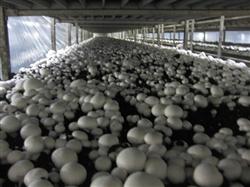
Why do mushrooms develop "acne" on their surface?
Most mushrooms cultivated in China are the white button mushroom (Agaricus bisporus), which is rich in protein, various amino acids, vitamins and other nutrients. It is known as a "healthy food for humanity" and has large sales both domestically and for export. Therefore, vigorously developing mushroom production plays a major role in developing rural sideline industries and increasing income. First...
-

A Detailed Explanation of the Common Causes of Deformed Mushrooms and Their Prevention and Control Methods
The manifestations of deformed mushrooms are diverse, and the main ones commonly seen in production are: landmine mushrooms, hollow mushrooms, big-butt mushrooms, hard opening and early opening, red roots, and water rust spots. Landmine mushrooms. The main cause of their formation is that the casing soil material is too coarse, the soil texture is somewhat hard, the casing soil is relatively thick, the surface layer of the casing soil contains relatively little water, while the temperature and humidity conditions of its lower part and the substrate are suitable for the occurrence and growth of fruiting bodies, so fruiting bodies are easily differentiated and formed on the surface of the substrate or in the middle and lower layers of the casing soil, and then emerge through the soil surface. Solution: select high-quality humus soil, and according to a certain ratio
-
Common diseases of the tea tree mushroom and their control methods
The tea tree mushroom is a rare mushroom variety that has become very popular in domestic and international markets in recent years, but because pest and disease problems occur rather frequently, growers often fail to accurately identify the symptoms and pathogens and blindly apply chemical pesticides, which damages the mushrooms and leads to poor cultivation returns. The symptoms, pathogens and control measures of common infectious diseases are described below: 1. Brown rot. Affected fruiting bodies stop growing, and the caps and stipes rot and give off a foul odor. The pathogen is Mycogone perniciosa, which causes disease mainly through contaminated water or through contact with the hands, tools and other items that have touched diseased mushrooms.
-
Causes of Mushroom Death During the Cultivation of Agaricus blazei and Their Prevention and Control
Agaricus blazei Murrill, also known as the Brazil mushroom, has seen rapid growth in artificial cultivation over the past 2 years. In the cultivation of Agaricus blazei, the phenomena of small mushrooms shrinking, turning yellow, and finally dying occur, and their causes are mainly the following. By addressing these causes and promptly taking countermeasures, relatively large losses can be avoided. 1 Excessive temperature: When the mushroom shed is above 30°C for several consecutive days, combined with poor ventilation, mushroom death is likely to occur. Prevention and control methods: During the fruiting period, closely monitor temperature changes.
-
Shiitake mushroom stems processed into shiitake mushroom floss see their value multiply
1. Raw material formula: 100 kg shiitake mushroom stems, 4-6 kg high-quality soy sauce, 3-4 kg white sugar, 2-3 kg peanut oil, 5 kg scallions, 0.2 kg monosodium glutamate, 4 kg yellow rice wine, 0.6 kg refined salt, appropriate amounts each of ginger, fennel, food coloring, and five-spice powder. 2. Raw material processing: Choose shiitake mushroom stems free of sawdust, insect damage, and mildew, cut them into 1 cm pieces, wash them clean with water, and soak them for 1-2 days so they fully absorb water and soften. 3. Precooking: Put the soaked mushroom stems into a pot and heat to a boil, then
-
Causes of Deformed Shiitake Mushrooms in Off-Season Cultivation and Their Prevention and Control Methods
The edible mushroom industry is an important part of agriculture. Vigorously developing the edible mushroom industry can not only promote a virtuous cycle of the ecosystem, but also increase farmers' income and improve agricultural efficiency, achieving an organic unity of economic, ecological and social benefits. With the development of the edible mushroom industry, although shiitake production ranks only second, the economic benefits it delivers should rank first. How to improve shiitake yield and quality is of great significance to the many practitioners in the field. In off-season cultivation of shiitake, deformed mushrooms often appear due to inadequate production management
-
Current Major Diseases of Northern Oyster Mushrooms and Their Control Techniques
1 Soft Rot Disease 1.1 Disease Symptoms The surface of the substrate or the mushroom bodies become covered with a layer of white cottony mycelial threads, fine and soft but growing very rapidly; the gradually infected mushroom bodies develop a light brown morbid condition spreading upward from the base of the stipe, and the mushroom bodies gradually soften and rot; about one week after infection, the mushroom bodies collapse on their own, or topple at the slightest touch, just like Chinese cabbage suffering from soft rot, but the soft-rotted mushroom bodies have no foul odor; mushroom bodies not yet soft-rotted grow extremely slowly, the caps gradually turn earthy yellow, lifeless and dull, clearly different from normal mushroom bodies; infected substrate no longer
-
What causes mushrooms to have a thin cap skin and open their caps prematurely?
Symptoms: The fruiting bodies have thin stems and thin caps, and open their caps prematurely. Causes: Excessive mushrooming density, too high a temperature in the mushroom house, insufficient relative air humidity, overly dry casing soil on the bed surface, and rapid growth of the fruiting bodies can all lead to a thin cap skin and premature cap opening. Preventive measures: Appropriately control the mushrooming sites, ventilate the mushroom house in the early morning and evening, lower the temperature in the mushroom house, and appropriately increase the moisture of the casing soil on the bed surface and the relative air humidity.
-
Physiological Disorders of Mushrooms and Their Control Methods
Mushrooms are relatively sensitive to their environment. A poor cultivation environment will hinder their normal growth and development, produce various abnormal phenomena, and lead to reduced yields and lower quality. Common physiological disorders of mushrooms include excessive mycelial growth, hard opening of the caps, thin-skinned early opening, and the appearance of ground-button mushrooms and hollow-stem white-core mushrooms. They are described below: Symptoms of excessive mycelial growth: after the casing soil of the mushroom bed is watered, the fluffy mycelium of the mushroom will continuously grow toward the surface of the fine soil, and in severe cases will form a fine, dense, water-impermeable mycelial mat, thereby delaying the time of fruiting and reducing the
-
Double mushroom showcase: two mushroom varieties each display their strengths
The Horticulture Research Institute of the Provincial Academy of Agricultural Sciences used single-spore hybridization, single-spore systematic selection and molecular marker-assisted selection techniques to breed the low-temperature-tolerant, high-quality, high-yield new brown button mushroom (Agaricus bisporus) variety "Zongxiu No. 1" and the new white button mushroom variety "Yingxiu No. 1", which have passed the first national batch of edible fungi variety certification. The new brown button mushroom variety "Zongxiu No. 1" has a cap surface of natural brown, with white stipe and flesh. The mushroom quality is excellent, the fruiting bodies are round and neat, the caps are thick and firm, and not sunken at the top; the flavor is delicious and the texture is tender. Because its cap is naturally brown, it requires no
条件筛选