-
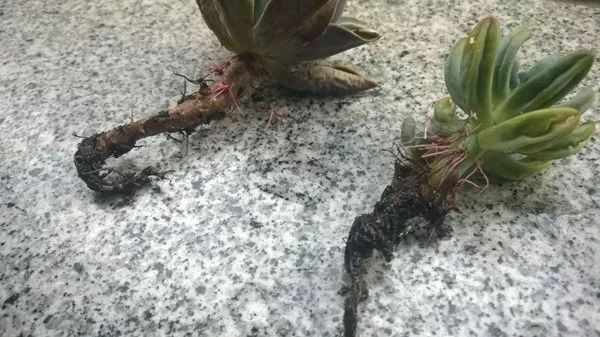
How do you tell if a plant has root rot? Four simple and practical methods to teach you
In the process of growing flowers, root rot can be said to be a headache for many flower lovers. Not only is it troublesome to deal with, but the subsequent repotting recovery and handling also take a lot of energy, and a single careless move can cause the plant to die, which is truly a pity. Related to flower...
-
This magical herb can tell fortunes, but using it in flower arrangements requires mind power
A couple of days ago, Siyue took a Qixi Festival quiz, and the result was that on Qixi I would be working overtime all alone until the end of time. Tsk tsk tsk, today's quizzes are really scarily accurate. Actually, divination doesn't have to rely on tar...
-

What do the blooming of a Radermachera sinica actually foretell?
What does it foretell when a Radermachera sinica blooms?
-

What Is the Difference Between Begonia and Crabapple? A Quick Guide to Telling Them Apart
The Difference Between Begonia and Crabapple
-
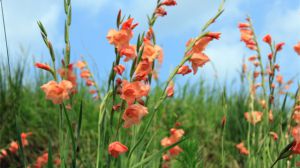
What is the difference between gladiolus and sweet flag? A quick guide to tell them apart
Plant form differences: The corm of gladiolus is oblate-spherical, covered on the outside by a layer of brown or yellowish-brown membrane. The rhizome of sweet flag grows horizontally and is slightly flattened, covered on the outside by a layer of yellowish-brown skin. Leaf differences: The leaves of gladiolus are shorter than those of sweet flag. Flower differences: Gladiolus flowers come in many colors such as red, yellow and white, while sweet flag flowers are mostly yellow-green.
-
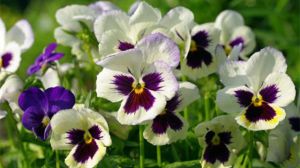
What is the difference between pansies and violas? A quick guide to telling the two flowers apart
Plant form differences: The stems of pansies have a single ridge, and some grow upright while others lean slightly. The stems of violas have four ridges and grow upright. Leaf differences: Pansy leaves are ovate, with relatively large stipules, while viola leaves are lanceolate or ovate, with relatively small stipules. Flower differences: Pansy flowers are larger than those of violas.
-
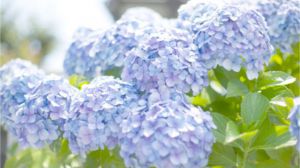
What is the difference between Ixora and hydrangea? A quick guide to tell them apart
Plant form differences: Ixora grows 0.8-2 m tall. Hydrangea grows 0.5-1 m tall. Leaf differences: Ixora leaves are lanceolate, with clearly visible veins. Hydrangea leaf surfaces are ovate, with the lateral veins not very easy to see. Flower differences: Ixora flowers are red or red-yellow. Hydrangea flowers are white or blue.
-
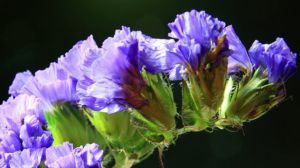
What is the difference between sea lavender and forget-me-not? A quick guide to telling them apart
Difference in appearance: sea lavender grows about 15-60cm tall, while forget-me-not grows 20-45cm tall. Difference in leaves: sea lavender leaves are obovate-oblong, while forget-me-not leaves are narrowly oblanceolate and narrower than those of sea lavender. Difference in flowers: sea lavender has a yellow corolla, while forget-me-not has a blue corolla.
-
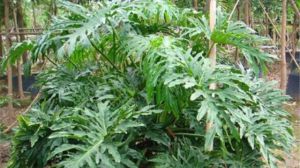
What is the difference between Philodendron and Thaumatophyllum bipinnatifidum? A quick guide to tell them apart
Stem differences: The stems of both are very short, but the Philodendron's is a bit sparser, while the Thaumatophyllum bipinnatifidum's is a bit tighter. Leaf differences: The Philodendron's leaves are relatively broad and large, shaped like a human palm, and rather thick and fleshy. The Thaumatophyllum bipinnatifidum's leaves are ovate-cordate, and when young its leaves are relatively thin.
-
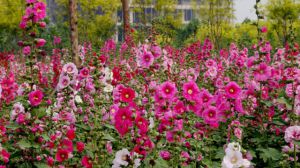
What is the difference between hollyhock and common mallow? Master these points to tell them apart easily
Plant form differences: Hollyhock can grow up to 2 m tall, and both its stems and flower branches bear bristles. Common mallow, by contrast, generally grows only 50-90 cm tall, and its branches bear some sparse coarse hairs. Leaf differences: The petioles of hollyhock are longer than those of common mallow. Flower differences: Hollyhock flowers are solitary or nearly clustered, while common mallow flowers are borne in clusters of 3-11 together.
条件筛选