-

What to Do About Rotted Peppers? Targeted Control Is Key
The rainy season has arrived, and under the influence of high temperature and high humidity, pepper vegetables (both greenhouse and open-field types) in the fruiting stage are suffering severe outbreaks of phytophthora blight, along with many other fruit rot and fruit drop problems caused by other pathogens. Regarding this situation, the author consulted relevant vegetable experts in Shouguang City. According to their analysis, rotten fruit in hot (sweet) peppers is a common symptom of multiple diseases, but the pathogens differ, the symptoms vary, and the control methods are also different. Sunscald fruit rot: In high-temperature weather, the sun-facing part of the fruit is exposed to direct sunlight, causing the skin to fade and harden, producing grayish-white
-
Detailed Classification of Wheat Seedlings: Targeted Management Is Key
After wheat seedlings emerge, various types of weak seedlings often form due to the influence of natural conditions and cultivation practices. To prevent weak seedlings and manage them according to their specific symptoms, the details are introduced below: Weak seedlings caused by soil drought mostly occur in wheat fields with insufficient subsoil moisture or where moisture escapes through cracks. Their characteristics are: slow tillering, grayish-green leaf color, short and small heart leaves, slow or stagnant growth (known among farmers as "shrinking-heart seedlings"), gradual yellowing and drying of the middle and lower leaves, and few and thin roots. Key management points: combined with irrigation, apply 15 kg of ammonium bicarbonate per mu.
-

What to Do About Rape Seedling Stunting? A Detailed Guide to Targeted Prevention and Control
After transplanting and seedling recovery, rape (Brassica napus) sometimes shows stunting in the early field growth stage, with symptoms such as reddened or yellowed leaves, curled leaf centers, slow or halted growth, and poor development. To prevent and control rape stunting, targeted measures must be taken based on investigating its causes. Stunting caused by drought or waterlogging - drought not only...
-
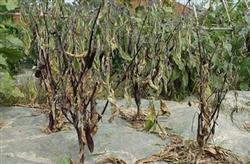
How to prevent and treat eggplant wilt? A detailed guide to targeted treatment
The main causes of eggplant wilt include Phytophthora blight, Sclerotinia rot, stem base rot, bacterial wilt, Verticillium wilt, root-knot nematode disease, fertilizer burn, and so on. The specific diagnosis is as follows: 1. Look at the field distribution. After fertilizer burn occurs, the plants generally wilt at noon on sunny days and recover in the evening, and in severe cases the plants may die. The other diseases above...
-
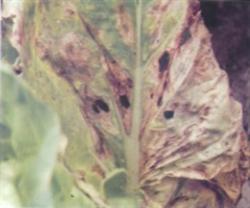
How to Treat Stunted Growth in Rapeseed with Targeted Control
[Distribution and Damage] It occurs in all rapeseed-producing areas, with more frequent occurrence in the Yangtze River Basin and South China. This disease is caused by Alternaria brassicae (Berk.) Sacc., A. brassicicola (Sehw.) Wiltshire, and A. raphani Gr. et S...
条件筛选