-

Where are the focal points for building a strong province with modern agriculture?
Focal points for building a strong province with modern agriculture
-
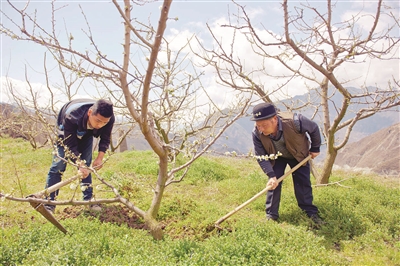
Zhang Haojie, disabled but strong-willed, blazes a trail to prosperity
Zhang Haojie: a man who grew rich against disability
-

Grow Clivias Well by Building a Strong Foundation: Seedling Cultivation Methods for Clivias
When doing anything, you should lay a solid foundation, and the same goes for growing flowers. Take the clivia as an example: if you want it to bloom and look beautiful, you must put in some effort, and you should start cultivating it properly from the seedling stage.
-

Latest Agriculture Oscar Awards announced! Flowers and miscellaneous grains shine internationally, free-range chickens and ducks strong in exports, fruits and vegetables, honey and oil tea impress
Latest Agriculture Oscar Awards announced! Flowers and miscellaneous grains shine internationally, free-range chickens and ducks strong in exports, fruits and vegetables, honey and oil tea impress
-
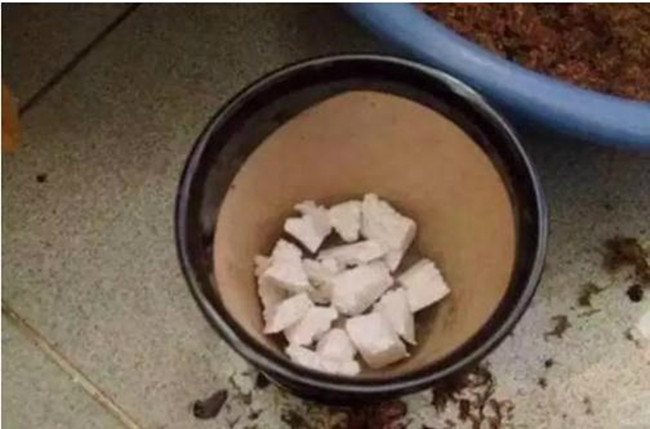
Using foam at the bottom of the pot for pothos: can it make roots strong and the pot overflow without root rot?
Pothos is found in many people's homes and is super easy to grow, usually in water. So can foam be used at the bottom of the pot for pothos? When we buy home appliances, there is a lot of foam padding inside. Cut the large pieces of foam into small pieces with scissors and place them at the bottom of the pot for pothos.
-
How to use paclobutrazol and uniconazole for raising strong rice seedlings
Paclobutrazol and uniconazole are both plant growth regulators. When applied in rice seedling raising, they have good effects on controlling growth and promoting tillering, preventing seedling stiffness and seedling rot, and increasing panicles, grains and yield. The method for using paclobutrazol is: when the seedlings have one leaf and one heart, evenly spray 100 kg of paclobutrazol solution at a concentration of 300 ppm per mu of seedling field, ensuring no missed spraying and no repeated spraying. When spraying, drain the water from the seedling field and keep the field surface free of standing water. The method for using uniconazole is: soak the seeds with uniconazole solution at a concentration of 50-200 ppm for 24-48 hours, with a ratio of seeds to chemical of 1:1.2-1.5. During soaking, stir 3-4 times so that the seeds absorb the chemical evenly. After soaking, rinse with clean water before sprouting. For seeds treated by soaking with uniconazole, soak and sprout 1 day earlier than conventional practice.
-
Key Technical Points for Cultivating Strong Seedlings in Rice Tray Nursing for Machine Transplanting
Economic Daily News: Raising small strong seedlings of tray-nursed machine-transplanted rice is an important part of achieving high quality and high yield in machine-transplanted rice. The specific technical points are introduced as follows: Tray soil preparation: select loam soil that is fertile, free of stubble, gravel, weeds, and free of contamination to seedlings, with a pH value of 4.5-5.5. If such acidic soil is not available, sulfuric acid or nitro humic acid can be used to adjust the acidity. To prevent damping-off and other seedling-stage diseases, apply 50-60 grams of dexon per cubic meter of tray soil. To fertilize the tray soil, add pure nitrogen, pure phosphorus,
-
New shrimp farming technique makes shrimp grow plump and strong
Xu Zhihua, a shrimp farmer in Fengma No. 1 Village, Hengli Town, Nansha District, Guangzhou, China, contracted 60 mu of ponds to raise whiteleg shrimp (Litopenaeus vannamei). In 2007, under the guidance of agricultural technicians, he used enzyme bacteria technology and fish-and-shrimp fertilizer, achieving a net income of 5000 yuan per mu. Xu Zhihua conducted comparative trials in two ponds. Pond No. 1 was sprayed with enzyme bacteria and fertilized with fish-and-shrimp fertilizer to enrich the water, with 50,000 shrimp fry stocked per mu. He applied fertilizer frequently and lightly, and throughout the whole process he used no water-purifying agents or bactericidal drugs, yet there was no shrimp surfacing or death, and the shrimp survival rate was above 95%. 4
-
Detailed Explanation of Key Techniques for Raising Strong Seedlings for Machine-Transplanted Rice
With the improvement of the level of intensification in rice production, mechanical transplanting has become an inevitable trend. One of the keys to machine-transplanted rice production is raising strong seedlings. The following measures can produce strong seedlings: 1. Apply strong seedling agent. The strong seedling agent is usually mixed with the subsoil. First mix a small amount of fine soil with the strong seedling agent evenly, scatter it on the bottom of the seedling tray, and then add the subsoil. This avoids uneven mixing and scattering due to too much subsoil, which leads to uneven distribution of the strong seedling agent, causing seedling dwarfing and failure to emerge where too much strong seedling agent is present, resulting in seedlings pulling loose during transplanting and affecting the quality of mechanical transplanting. 2. Cover with plastic film.
-
How should rice seedling beds be managed to cultivate strong seedlings?
I. Water management in seedling beds: For dry-raised seedlings, generally no supplemental water is needed during the seedling stage. Adhere to dry raising and dry management to improve the drought tolerance of the seedlings. At the same time, pay attention to watering well three times: water thoroughly with "bottom moisture water" before sowing, water well with "film-removal water" when removing the film, and water well with "leaf-rolling water" during drought. At the 1-2 leaf stage, control water appropriately to promote downward growth of seminal roots; at the 2-3 leaf stage, pay attention to supplemental water to prevent seedling death; after the 3-4 leaf stage, strictly control water and use dry raising to cultivate physiologically strong seedlings. To prevent excessive rainwater from making dry raising and dry management impossible, small arched sheds or greenhouses can be used to strictly control water for dry raising.
条件筛选