-

How to manage edible fungi during the mycelium-running stage? Five points to remember
Five points to note during the mycelium-running stage of edible fungi
-
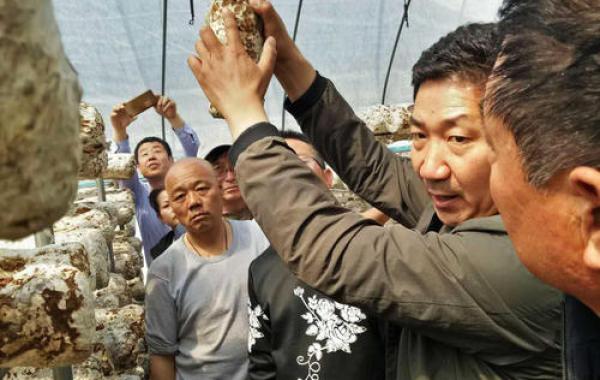
How can top dressing be effective in the late growth stage of edible fungi?
How is top dressing effective in the late stage of edible fungi?
-
Three-Stage Management of Edible Mushrooms Cultivated in Summer and Points to Note When Introducing Strains
Three Stages of Edible Mushroom Management in Summer Cultivation
-
Autumn cultivation of edible fungi requires passing five critical stages successfully, with a detailed explanation of planting methods
Autumn production of edible fungi requires passing "five stages"
-
Detailed Explanation of the Key Points of the Two-Stage Cultivation Technique for Straw Mushrooms
Straw mushroom, also known as orchid mushroom or bud-foot mushroom. It is rich in nutrients and delicious. In the hot summer, making soup with a few straw mushrooms gives a unique and distinctive flavor, with an endless aftertaste after eating, and it is deeply welcomed by consumers. The growing season for straw mushrooms is from June to September. It is a variety that grows quickly, has a short production period, and brings quick returns, producing mushrooms 8-10 days from spawning. Using the new two-stage cultivation technique, every 100 kg of raw material can produce 50 kg of fresh mushrooms in 40 days, with an output value of 300-400 yuan. The two-stage cultivation technique for straw mushrooms is based on the author's many years of production practice
-
How can you ensure a good mushroom harvest in the later stages of oyster mushroom cultivation?
There are many varieties of oyster mushrooms, and according to their fruiting temperature they are divided into four major categories, namely high-temperature type, wide-temperature type, medium-temperature type and low-temperature type. Oyster mushrooms cultivated in spring are generally of the wide-temperature type and high-temperature type; the fruiting temperature of wide-temperature varieties is 2-30°C, and that of high-temperature varieties is 10-32°C. In production, although the temperature meets the fruiting requirements, oyster mushrooms generally produce few mushrooms in the later stages, and the quality is also poor. In fact, if the later-stage management of spring-cultivated oyster mushrooms is strengthened, they can still produce as many good mushrooms as in the early stage. 1. Soaking. For spring-cultivated oyster mushroom bags, after 2-3 flushes of fruiting, the
-
How to remedy the lack of water in the substrate in the late stage of oyster mushroom production
The yield of the first flush of oyster mushrooms accounts for about 40% of the total yield. Generally, after harvesting the second flush, because the water in the substrate is almost used up, even if mushrooms can still appear, they are few, the fruiting bodies are thin and weak, the flesh is loose and dry, and the taste is poor. To increase the yield, the following methods can be used to replenish water and nutrient solution: (1) Standing-bag hole irrigation method: the soaking method requires a water container, but sometimes because the container is small or for other reasons it is inconvenient, so this method can be used. Stand the fungus bags upright on the floor of the mushroom house, pull up the edges of the plastic bags so that water can be retained after adding it, then
-
How to prevent and control miscellaneous bacteria contamination during the mycelial growth stage of oyster mushrooms
Recently many mushroom growers have called to consult: during the mycelial growth process of oyster mushroom bags, severe contamination by miscellaneous bacteria has occurred, especially with green mold and Chondrostereum sp. accounting for the majority. How should this be prevented and controlled? In response to this problem, based on investigation and research in recent years, the following causes and control methods have been summarized: 1. Moisture-damaged and contaminated substrate. Fresh, dry substrate that has been well managed in storage contains relatively fewer pathogens and is suitable for raw-material cultivation, but substrate that has been stored for a long time and has become damp and clumped will contain more pathogens. If it is used directly for raw-material cultivation without disinfection treatment, it is very likely to cause miscellaneous bacteria contamination.
-
Key Technical Points for Temperature Management During the Spawn-Running Stage of Oyster Mushrooms
When oyster mushroom mycelium grows thick and vigorous, the spawn-running success rate is high; especially in the sterilized-substrate cultivation process, the mycelium has a lower chance of being infected by contaminant microorganisms than other varieties. However, in the raw-material cultivation process, its temperature requirements during the mycelial growth stage are very strict. Therefore, correctly mastering the suitable spawn-running temperature is the key to ensuring the success of raw-material cultivation of oyster mushrooms. Oyster mushroom mycelium grows vigorously at 20°C-30°C and has strong resistance to contaminant microorganisms; even if occasional contamination occurs, the oyster mushroom mycelium can penetrate and consume it, and the spawn runs quickly, with the mycelium
-
How do you deal with a lack of water in the substrate during the later stage of oyster mushroom cultivation?
The first flush of oyster mushrooms accounts for about 40% of the total yield. Generally, after the second flush is harvested, because the water in the substrate is almost used up, even if mushrooms can still come out they are sparse, with thin and weak fruiting bodies, loose and dry flesh, and poor taste. To increase the yield, the following methods can be used to supplement water and nutrient solution: (1) The upright bag hole-irrigation method: the soaking method requires a water-holding container, but in some cases a small container or other reasons make it inconvenient, so this method can be used. Stand the fungus bags upright on the floor of the mushroom house, pull up the edges of the plastic bag so that water can be retained after watering, then
条件筛选