-

The spiderwort that looks like bamboo is Tradescantia zebrina; how do you care for and manage it in pots?
Today I recommend a plant that can be placed on a flower stand or the top of a cabinet - Tradescantia zebrina. Its leaves are also very distinctive: the undersides are purple, while the upper surface mixes purple, green and silver. At the same time, the plant is small and delicate, and it is fairly shade-tolerant. Placing it indoors can not only beautify the environment but also purify household air. In flower language, Tradescantia zebrina stands for simplicity, pure
-

How to Grow Tradescantia zebrina (Inch Plant) from the Spiderwort Family: Growing Methods and Winter Care Tips
Tradescantia zebrina, also called Tradescantia pendula, variegated spiderwort, inch plant, water inch plant, and variegated inch plant, is a perennial evergreen herbaceous plant in the spiderwort family (Commelinaceae) and the genus Tradescantia. The color distribution on the leaf surface resembles the surface of a watermelon, with purple-green in the middle and two silvery-white stripes on either side. Below
-
How to Grow and Care for Tradescantia pallida (Purple Heart) and Key Points, Watering, and Blooming Period
Tradescantia pallida is also called purple spiderwort and purple brocade grass. It belongs to the Commelinaceae family, Angiosperms phylum, Tradescantia genus, Commelinidae subclass, and is native to Mexico. It is generally used as a potted display, and is even more common as a household plant. So what are the growing methods and key points for Tradescantia pallida? How often
-
A Detailed Guide to the Latest Cultivation Methods for Spiderwort
Spiderwort, also known as purple spiderwort and purple-leaf spiderwort, is a perennial herbaceous plant of the genus Tradescantia in the Commelinaceae family. It is native to the tropical regions of the Americas and has been introduced and cultivated in China. Its plant form, flower buds and inflorescences are suitable for ornamental viewing, and it works well for mass planting in flower beds and along both sides of roads. It can also
-
Can Tradescantia zebrina be kept indoors? A detailed explanation of the differences from purple-leaf spiderwort
Tradescantia zebrina, also known as hanging spiderwort and water spiderwort, is a relatively common herbaceous plant outdoors. Because its leaves resemble bamboo and have patterns, it is deeply loved by plant enthusiasts, and many people like to keep a pot of it. So can Tradescantia zebrina be kept indoors? What is the difference from purple-leaf spiderwort? 1.
-
A Detailed Guide to the Propagation Methods and Growing Techniques of Spiderwort
Spiderwort, also known as purple heart tradescantia and purple-leaf plant, is a perennial herbaceous plant of the genus Tradescantia in the Commelinaceae family, native to the tropical regions of the Americas. It produces a better effect when planted in groups in flower beds and along both sides of roads, and can also be potted for indoor display or grown as a hanging plant. Propagation of spiderwort
-
What plant is the bridal veil spiderwort? Introduction and pictures
Many people like to grow spider plants; they not only purify the air but are also fairly easy to care for. So, do you know the variety called bridal veil spiderwort? Although its name resembles that of the spider plant, the two plants do not belong to the same genus at all - one is in the Commelinaceae family, and the other is in the Asparagaceae family.
-
How to grow the rosy spiderwort? Notes on sensible watering and correct fertilizing
Summary Soil: choose fertile, loose, acidic sandy soil, and try to repot and replace the soil once every 2 years. Environment: choose a spot with plenty of sunlight, avoid direct midday sun in summer, and if the temperature difference between day and night is large, move it indoors at night.
-
-
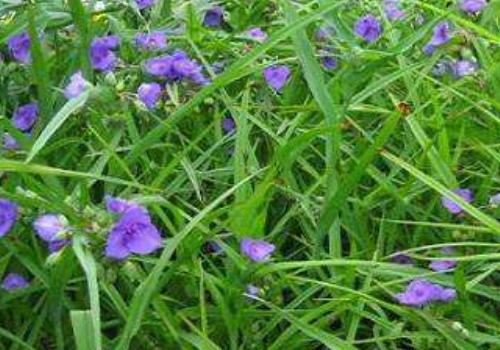
What are the methods for propagating and transplanting spiderwort (Tradescantia)?
Spiderwort is very attractive, with purple flowers. How do you propagate spiderwort by cuttings? How do you transplant it? How to propagate spiderwort by cuttings: preparation before taking cuttings. Spiderwort cuttings usually use healthy, pest-and disease-free stem tips as propagation material; cut the stems into sections 6-8 cm long.
条件筛选