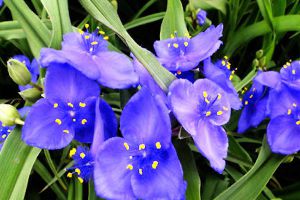
Spiderwort is a perennial herbaceous flowering plant that is easy to grow both in flower borders and in pots.
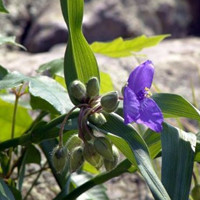
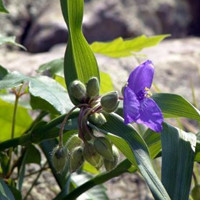
Spiderwort is a perennial herbaceous plant in the genus Tradescantia, family Commelinaceae, native to the Americas, and today it is fairly common in gardens and courtyards across our country. Its stems are upright or creeping, and the nodes readily produce roots; the leaves are slender, and the flowers are mostly blue-purple, with three crisp, elegant petals. A single flower often opens in the early morning and gradually closes and withers in the afternoon, with the ornamental period mainly in summer and autumn.
Among ordinary people, spiderwort is also often called purple spiderwort, American spiderwort and so on, with slight differences in naming from region to region. As for toxicity, it is generally believed that the sap of its stems and leaves is somewhat irritating and may cause itching or discomfort after skin contact, so it is best to wear gloves when pruning or dividing the plant and to wash your hands promptly afterward; if there are young children or pets at home, the plant should be placed out of easy reach. As long as it is not eaten by mistake and the sap is not touched for long periods, there is no problem with keeping it for normal display and enjoyment.
In terms of care, spiderwort is highly adaptable, likes a location with ample light, and can also tolerate partial shade; in the strong sun of summer it can be shaded appropriately. During the growing season, keep the potting soil moist but not waterlogged, and in winter simply pay attention to cold protection and warmth. Its propagation is very simple: cut a stem with nodes and insert it into moist soil, and it will quickly take root and survive, making it a flower that is loosely managed and easy for beginners.
In garden applications, spiderwort is often used for edging flower borders, as ground cover at the forest edge, or combined with rocks, and its blue-purple flowers can add a touch of coolness to summer; it is also very suitable for growing in pots on a balcony or windowsill. It has a long flowering period and is low-maintenance, making it a common herbaceous flower that combines ornamental value and practicality.