-
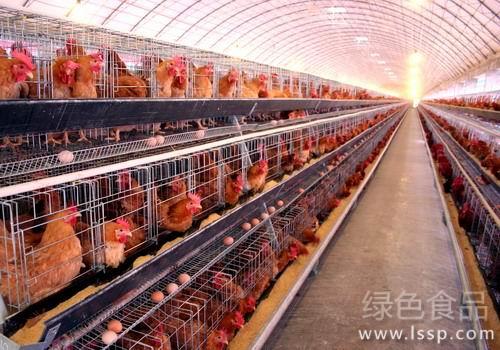
Calcium Supplementation Methods for Caged Laying Hens Producing Soft-Shelled and Thin-Shelled Eggs
Laying Hens Producing Soft and Thin Eggs Need Calcium Supplementation: Calcium Supplementation Methods for Caged Laying Hens
-

Identification of Symptoms and Prevention and Treatment Methods for Soft-Shelled Turtle Hemorrhagic Disease
Cause: Currently unknown. Symptoms: The diseased turtle's body turns black, the oral cavity turns red, and the plastron may or may not be red; it moves slowly and stops feeding, and in severe cases blood-tinged fluid seeps from the mouth and nose. Dissection shows: all internal organs and muscles are congested; the pharynx, neck, and intestines are blood-red; the liver is reddish-brown, sometimes accompanied by blood spots. The gallbladder is enlarged, the spleen and kidneys are red-black, and the lungs are black. Prevention and treatment: There are no effective treatment measures yet, so prevention can only be strengthened. 1) Thoroughly disinfect the breeding pond before disinfection, using "Yujunqing" at 7 jin per mu; 2) Before the turtles enter the pond
-
What are the basic functions of drugs used for soft-shelled turtles?
There are many functions and effects of drugs used for soft-shelled turtles, but to summarise, they mainly act in the following three ways: 1. Inhibiting or killing pathogens. At present, most drugs used for soft-shelled turtles have the effect of killing and inhibiting pathogens, such as antibacterial drugs like sulfonamides, furans, antibiotics and garlic, antifungal drugs like table salt, formalin, the Chinese herbal medicines gallnut and sweet flag, and antiparasitic drugs like copper sulfate, ammonia water and potassium permanganate. These drugs achieve the effect of killing pathogens through indirect means (
-
Detailed Explanation of the Key Technical Points for Cleaning and Disinfecting Soft-shelled Turtle Ponds
After 8 to 10 months of greenhouse culture of soft-shelled turtles, the indoor turtle ponds have accumulated various pathogenic organisms as well as organic residues such as leftover bait and feces, so cleaning and disinfecting the turtle ponds is extremely important. The sand in the ponds is best replaced; ponds where it cannot be replaced, or ponds without sand, should also be repeatedly rinsed and disinfected. About 10 days before use, release water to a depth of about 10 cm, and broadcast quicklime, strong chlorine powder, or chlorine dioxide over the entire pond to kill pathogens. For old greenhouses that have been used for many years of culture, it is best to also carry out spatial disinfection to prevent pathogens from spreading through the air. Specifically, solid formaldehyde (4 to 5 grams per cubic meter) can be used, placed
-
Scientific feeding is essential in soft-shelled turtle hatchling rearing, and mastering the method is key
affects the farming of adult soft-shelled turtles. Whether scientific feeding can be carried out is the technical key affecting the growth and quality of soft-shelled turtle hatchlings. For this reason, here is an introduction to scientific feeding in soft-shelled turtle hatchling rearing, for reference and application. As with farming other aquatic animals, feeding can follow the four-fixed principle, namely fixed quality, fixed quantity, fixed time and fixed location. However, the four-fixed contents of feeding in soft-shelled turtle hatchling rearing have their own characteristics. Because soft-shelled turtle hatchlings, during their growth process, not only need to accumulate energy and increase body weight, but also need to provide various nutrients and
-
What are the prevention and treatment methods for white plastron disease in soft-shelled turtles?
Cause: unknown, possibly caused by viruses, bacteria or feed-related factors. Symptoms: the body surface of the sick soft-shelled turtle is intact, the plastron is pale, showing a state of extreme anemia, most of the body is edematous, the liver is mostly earth-yellow and earth-gray, the muscles are pale and bloodless, and there is generally fluid accumulation in the abdominal cavity. Prevention and treatment: 1) The cause is unknown, so prevention is the main approach; 2) In the early stage of the disease, feed "Qiangke 103" or "Biebikang" for 3 to 6 consecutive days; 3) When the disease occurs, use "Mieduling" or "Yuyong Bomie" and
-
Propagation Method and Technique for Softwood Cuttings of Golden Privet
Softwood cuttings of golden privet. Golden privet (Ligustrum × vicaryi) is a small shrub of the genus Ligustrum in the family Oleaceae. Its young leaves are golden yellow, while the older leaves are green and glossy. It is highly adaptable and requires only extensive management, making it a commonly used tree species in landscaping today. A brief introduction to the softwood cutting propagation technique for golden privet is given below. 1. Site selection and land preparation: Choose a loose, fertile, flat plot with good drainage. Apply 125 kg of superphosphate per mu, deep plow 15 cm, then break up the soil and rake it level. Make raised beds 1.2 m wide with furrows 20 cm deep. 2. Cutting selection
-
Detailed Explanation of the Processing Technology and Production Method of Ginger Juice Soft Candy
This product sells well on the market because the soft candy carries the flavor of ginger. The processing technology is as follows: 1. Raw material processing: select fresh young ginger, remove rotten ginger, and peel it by manual scraping or rubbing; chop it and put it into a pulping machine to make a slurry. The amount of water added depends on whether the ginger is old or young; older ginger can have a little more water added, while young ginger should have a little less water added. 2. Juice extraction by filtration: use pressing or a cloth bag to remove the residue and obtain ginger juice. The ginger residue can be comprehensively utilized after drying. The ginger juice is heated for sterilization and set aside. 3. Gelling agent treatment: the soft candy uses
-
What are the prevention methods for soft rot in edible fungi?
1. Symptoms: When the disease occurs, white mycelium appears on the mushroom bed and spreads rapidly. If not controlled in time, it can spread to the entire mushroom bed. Under conditions of high humidity, it can completely "devour" the fruiting bodies, leaving only a mass of white mycelium visible; in the later stage, the white mycelium turns pinkish-red. 2. Occurrence characteristics: The soft rot pathogen is widely present in soil, forms colonies on the casing soil or the surface of the mushroom bodies, and produces spores within a short period. These spores spread through airflow, water droplets splashed during watering, and juices exuded from the mushroom bodies. It is prone to occur when the casing soil is too wet and the
-
Symptom Identification and Control Methods of Soft Rot in Edible Fungi
Damage symptoms: White bead-like mycelial networks first appear on the surface of the casing soil on the bed. If not treated promptly, they quickly spread and turn water-red. Infection of the fruiting body starts from the stipe and extends to the cap, initially appearing water-soaked, then gradually turning brown, softening, and eventually rotting. Classification: A fungal disease caused by Verticillium dendroides. Disease characteristics: The casing soil carries the pathogen, which spreads mainly through airflow and water droplets in the mushroom house. Control methods: Strictly disinfect the casing soil to cut off the source of infection. When it occurs locally, spray a 2%-5% formaldehyde solution or 800 times
条件筛选