-

How to Identify Snow Mountain Succulent? A Detailed Guide to Identification Methods
How to Identify Snow Mountain Succulent
-
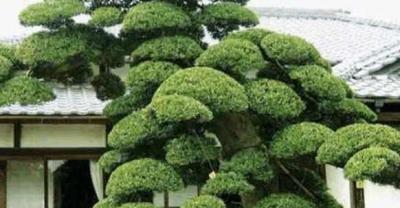
June Snow: A Naturally Elegant Flowering Tree Bonsai
June Snow (Serissa japonica) is one of the trees commonly used in Chinese bonsai. It features fine leaves, abundant flowers, dense branches, a thick trunk and exposed roots. Proper pruning and shaping can bring out its full beauty...
-

Symptoms of Spruce Snow Mold and Its Control Methods
Spruce snow mold is mainly distributed in some countries north of 40 degrees north latitude, where it damages tree species such as Japanese cedar, fir and spruce. In China, this disease has only been found damaging **spruce. Symptoms: after the above-ground parts of the whole plant and the needles are infected under the snow, they are covered with a grayish-brown mycelial layer, or the mycelium invades the interior of the host, causing the tree to become moldy and rot and to suffocate. In mild cases, the mycelial layer is cottony; in severe cases, it is felt-like. Its color is brown in the early stage, and white and grayish-brown when the snow is about to melt. When the disease is mild, the damage is distributed in clumps. When severe, the trees fall over in rows.
-
Symptom Identification and Control Methods for Spruce Snow Blight
[Distribution and Damage] Abroad, it is distributed in North America, Northern Europe and Central Asia, damaging Norway spruce (Picea abies), white spruce (P. glauca), black spruce (P. mariana), etc. In China, it is distributed in the Tianshan Mountains, the Altai Mountains, the western mountains of the Junggar Basin and the Kunlun Mountains. It damages Schrenk spruce (P. schrenkiana), Siberian spruce (P. obovata), Qinghai spruce (P. crassifolia) and Sichuan spruce (P. balfouriana).
-
How to prevent and control spruce snow blight? A detailed guide to practical methods
Snow blight damages spruce needles, turning diseased needles reddish-brown. Snow blight develops under snow; ascospores invade spruce needles covered by snow, mature each year from September to October, and then spread by wind and rain. Observations show that in young stands after artificial regeneration and reforestation, the dense planting of the past created a "hand-in-hand" situation, and once the disease breaks out it spreads especially severely; after half of a plant's needles are infected, lose their green color and turn reddish-brown, the entire plant dies. The uncrowned regeneration land at Tekes Forest Farm covers nearly 2666 hectares. In order to ensure the
-
Symptom Identification and Control Methods of Spruce Snow Mold
[Distribution and Damage] This disease occurs in North America, Northern Europe, Japan and other countries, damaging tree species such as fir (Abies), spruce (Picea), and Japanese cedar (Cryptomeria fortunei). In China**, it is distributed in the western Tianshan Mountains, the western Junggar Mountains, and the Altai Mountains and other forest areas. The main affected areas include Gongliu, Yining, Tacheng and other places. In severely affected nurseries, the annual loss rate is 33-62%. In artificially regenerated young forests, this disease is also very serious, especially when using small seedlings, weak seedlings, and diseased
-

June Snow bonsai care methods and picture appreciation
June Snow bonsai care and picture appreciation
-

What are the cultivation methods and precautions for Notocactus leninghausii (yellow snow light)?
Cultivation methods and precautions for Notocactus leninghausii
条件筛选