-
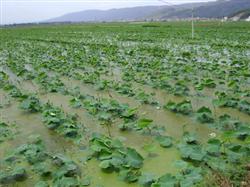
What is the difference between deep-water lotus root and shallow-water lotus root? Explained in one article
What is the difference between deep-water lotus root and shallow-water lotus root? Please give an introduction. Deep-water lotus root and shallow-water lotus root are different. According to the adaptability of lotus root to water level, it can be divided into two ecological types: shallow-water lotus root and deep-water lotus root. Shallow-water lotus root is suitable for a water level of 10-20 cm, with a maximum water depth tolerance of 30-50 cm. Deep-water lotus root is suitable for a water level of 30-50 cm, with a maximum water depth tolerance...
-
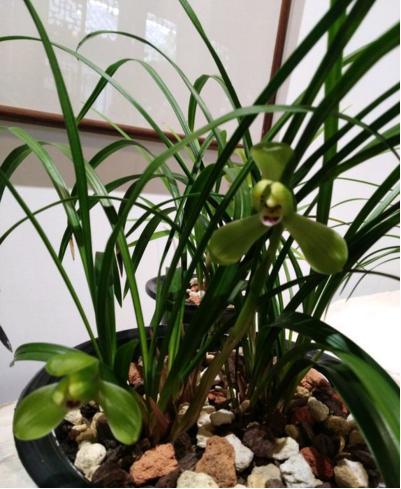
Whether orchids are planted deep or shallow is all up to your mood? Then you are being far too naive.
Many growers believe that planting orchids too deep will cause rot, and that it is better to leave the pseudobulb exposed or half-exposed, but what is the real situation? Based on my experience, this is actually not the case. Do growers perhaps have some misunderstanding about orchid planting...
-

It's the perfect time to repot clivia in early autumn: is deep planting or shallow planting better?
As autumn arrives, many gardening enthusiasts are preparing to repot their clivia (Clivia miniata) when the temperature is suitable, to promote better growth and flowering. Clivia is mostly repotted in spring and autumn. Autumn repotting is best done when the temperature is around 25 degrees...
-
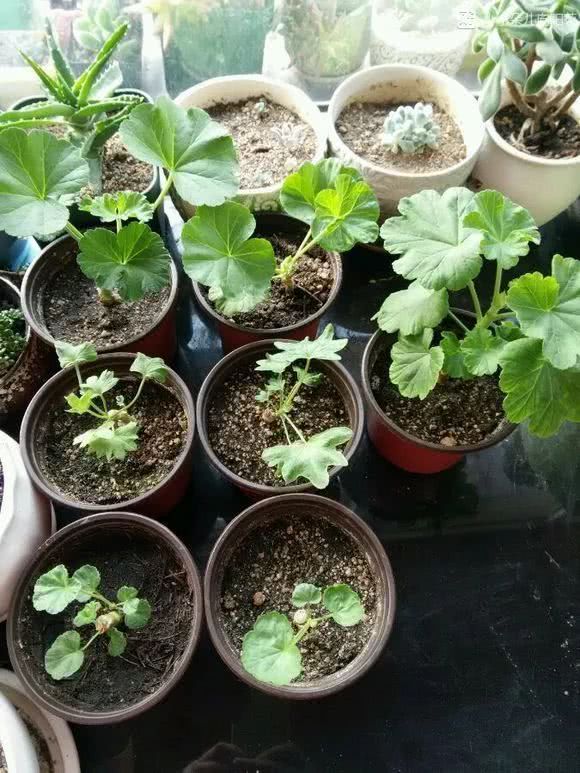
How deep should a cutting be inserted into the soil? Too deep and it rots easily, too shallow and it topples easily
Don't insert the cutting too deep just for the sake of stability. Inserting it too deep makes it prone to rot; even if it roots, a long stretch of stem covered in fine roots will make transplanting difficult, and may even restrict your choice of pot size later on. Because if the long roots are not trimmed...
-

Detailed Explanation of the No-Till Intercropping Model for Shallow-Water Lotus Root
Traditional one-crop-per-year cultivation of shallow-water lotus root fields has limited the improvement of economic returns because of the low utilization rates of land, temperature and light resources. In recent years, Suining County, Hunan Province, has vigorously promoted no-till three-dimensional planting models for shallow-water lotus root; generally each technique can increase returns by 300 yuan per mu, and the highest can reach 1,600 yuan. The 6 three-dimensional planting models are introduced below. Shallow-water lotus root - pak choi: after the shallow-water lotus root field has been drained for 3-5 days, evenly broadcast 0.5-0.6 kg per mu of cabbage seeds such as Siyue Man and Zao Shu No. 5; at the 3-leaf stage of the pak choi
-
How to cultivate lotus in shallow ponds using straw? Detailed explanation of the new technique
Lotus cultivation with straw in shallow ponds gives high yields, is easy to harvest, saves water and labor, and the planting area is expanding year by year, with an average yield of 4,000 kg of lotus roots per mu, more than 30% higher than ordinary shallow-pond lotus. 1. Choose suitable varieties. For planting stock, choose early-maturing varieties with thick, round roots, white skin, crisp and tender flesh, sweet taste, good quality and high yield, such as "Elian No. 4", "Elian No. 5", "Jinan White Lotus Root", etc. 2. Build the lotus pond. 1. Site selection and material preparation: The lotus pond should be located in a sunny place without shade from trees, such as wasteland at the edge of the village, abandoned homesteads,
-
Detailed Explanation of High-Efficiency Cultivation Techniques for Shallow-Water Lotus with Straw
High-efficiency cultivation of shallow-water lotus with straw has developed quite rapidly in Feixian County, Shandong Province over the past five years. In 2005, 8,870 lotus ponds were built, covering an area of more than 5,300 mu. The reason is that this technique has obvious advantages over traditional shallow-water lotus cultivation. Mainly, it has high yield and good benefits. The average yield per mu of shallow-water lotus cultivated with this technique is 4,923 kg, which is 1,242 kg more than the 3,681 kg of ordinary cultivation, an increase rate of 31%, and the quality is good with a high marketable rate, with a net increase in income of more than 1,800 yuan per mu. Analysis shows,
-
Detailed Explanation of Key Techniques for Straw-Based Cultivation of Lotus Root in Shallow Ponds
Straw-based cultivation of lotus root in shallow ponds gives high yields, is easy to harvest, saves water and labour, and the planting area is expanding year by year. The average yield is 4000 kg of lotus root per mu, more than 30% higher than that of ordinary shallow-pond lotus root. 1. Choosing suitable varieties. For seed lotus root, choose early-maturing varieties with thick, round rhizomes, white skin, crisp and tender flesh, sweet taste, good quality and high yield, such as 'Elian No. 4', 'Elian No. 5', 'Jinan White Lotus Root', etc. 2. Building the lotus pond 1. Site selection and material preparation: the lotus pond should be chosen in a sunny place without shade from trees, such as village-edge wasteland, abandoned house sites, disused pits and ponds, low-lying abandoned land, etc.
-
Shallow-water lotus root
1. Select superior seed lotus roots. For shallow-water lotus root, choose excellent varieties suitable for shallow-water cultivation as seed lotus roots, such as Hainan Zhou and Wulian No. 2. The seed lotus root should preferably be a whole lotus root with more than 3-4 nodes and with both daughter and grandchild lotus roots complete. The seed lotus root is required to be thick and strong, with vigorous buds, free of pests and diseases, and free of damage. 2. Select fertile clay loam fields. The product organ of the lotus root is formed in the underground soil; therefore, the lotus root field for planting shallow-water lotus root should be able to retain water, be rich in organic matter, and have a deep silt layer. Fertile clay loam is most suitable.
-
How should the water layer be regulated at different growth stages of shallow-water lotus root?
The suitable water level for shallow-water lotus root is 10-20 cm, and the maximum water depth it can tolerate is 50 cm. In cultivation, the water layer must be well regulated according to the different growth stages of shallow-water lotus root. The general principle of water layer management for shallow-water lotus root is shallow at the front, deep in the middle, and shallow at the back. After planting the lotus root, when the standing leaves appear, maintain a shallow water layer of 4-7 cm to increase soil temperature and promote sprouting. As the stems and leaves grow vigorously, gradually deepen the water layer to 12-15 cm. After the terminal leaves appear, the plant begins to form lotus root, and the water layer is gradually lowered to a depth of 4-7 cm to promote lotus root formation.
条件筛选