How deep should a cutting be inserted into the soil? Too deep and it rots easily, too shallow and it topples easily
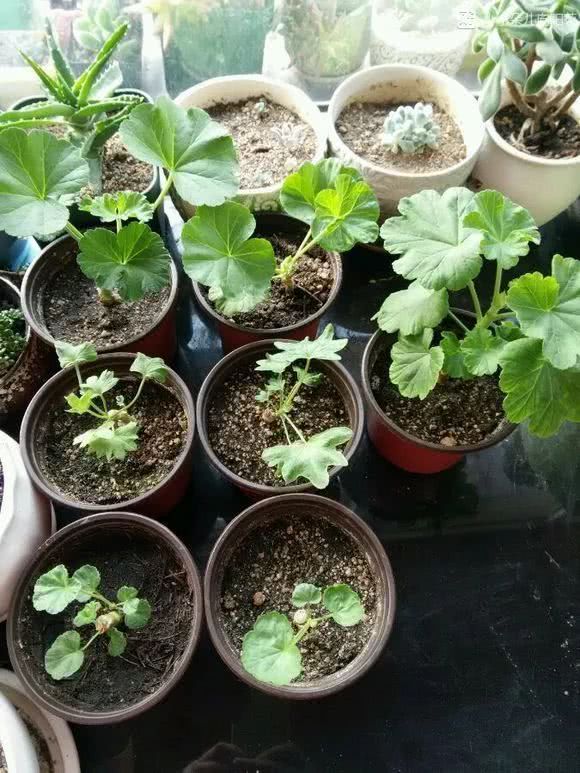
Don't insert the cutting too deep just for the sake of stability.
Inserting it too deep makes it prone to rot; even if it roots, a long stretch of stem covered in fine roots will make transplanting difficult, and may even restrict your choice of pot size later on.
Because if the long roots are not trimmed, you cannot use a shallow pot and can only plant it in a deep pot.
But if inserted too shallow, the slightest wind or disturbance can easily topple a stem that has not rooted at all, so what should you actually do?
Is there a way to get the best of both worlds? In fact, this is exactly the best-of-both-worlds cutting method that the editor-in-chief wants to share with fellow gardeners today, hahaha.
How to secure the cutting
1. Cut a fruit-packaging mesh bag to a suitable size and stretch it over the pot already filled with soil.
2. Then secure it to the outer rim of the pot with a thick rubber band or cord, and holes of a moderate size will appear.
3. Thread the cutting through a hole and insert it into the soil, so the cutting stands steady as if holding onto a railing. When it is time to transplant, just cut the mesh away; it is both eco-friendly and handy.
Cutting case study - small-leaf mulberry
Step 1
Cut a branch from a large tree.
Step 2
Cut it into small sections, and trim away most of the leaves as well, which reduces water evaporation.
Step 3
Insert straight or at an angle, so that the plants obtained later will have a variety of forms.
Cutting case study - Chinese elm (Ulmus parvifolia)
Step 1
Choose healthy branches.
Step 2
From the long branches, cut out smaller sections with a bit of shape.
Step 3
Insert them into a pot filled with the prepared soil, letting the cuttings lean slightly against one another to prevent them from falling over.
After all are inserted, lightly spray with a fine mist until the potting soil is thoroughly wet.
Step 4
Half a year after inserting the cuttings, take them out of the pot and you can see the root system has developed completely.
Step 5
After tidying up the overlong branches, leaves and roots, plant them separately into small growing pots.
With so much material, it is surely something to look forward to!
Combined with the thumb potted plants the editor-in-chief talked about, just thinking about it feels so promising, wahahaha...
Oh, right, don't rush,
Quite a few fellow gardeners have asked this question:
When taking cuttings, should the cut be made flat or at an angle?
Let's analyze it together: an angled cut has a larger area, so its water-absorbing capacity is greater too. Although it roots faster, the rooting is not very even and tends to concentrate below the slanted surface. A horizontal cut has a smaller water-absorbing area, but the new roots can spread around the entire cut, which is more helpful for later development.
In principle, rooting well is far more important than rooting fast.
With this analysis, fellow gardeners, you surely understand now!
Grow on the balcony
Alright, that's all for today. If fellow gardeners still have any questions you'd like the editor-in-chief to answer, leave a message in the comment section below.
I don't know whether the editor-in-chief explained it clearly and in detail. For fellow gardeners who didn't quite understand, the editor-in-chief has written an acrostic poem especially for you. It may not be well written, but it can help you find the editor-in-chief.
More wonderful articles are all in one acrostic poem:
A gentle breeze caresses, flowers always remain
Strolling in spirit, roaming the sunny south mountain
Seeking wonders and clever finds at Bronze Sparrow Terrace
Planting red and green, rising above the blue clouds
- Come take the challenge: a four-line acrostic-and-tail poem. Connect the first characters and connect the last characters to get an eight-character motto and summon the editor-in-chief's true self! When you come, remember to say: "Editor-in-chief, your secret has been cracked by me!"
Grow on the balcony, learning knows no end.