-
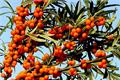
A Detailed Guide to the Benefits and Cultivation Methods of Russian Olive
The Benefits of Russian Olive and How to Grow It
-

Russian Ministry of Agriculture Hopes to Develop Grain Exports to the Asia-Pacific Region
Russian Ministry of Agriculture Hopes to Develop Grain Exports to the Asia-Pacific Region
-
Egypt's GASC buys 295,000 tonnes of Russian wheat
Egypt's GASC says it bought 295,000 tonnes of Russian wheat
-
In 2009, timber transport volume on the Amur River in the Russian Far East fell sharply year-on-year
In 2009, timber transport volume on the Amur River in the Russian Far East fell sharply year-on-year
-
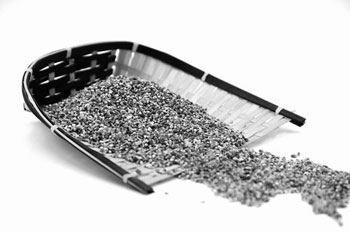
Russian rye successfully overwinters in Northeast China, introduction technology proves effective
Russian rye "overwinters" in Northeast China, our introduction technology succeeds
-

-
How Are Russian Olive Foods Developed and Utilized? A Full Explanation of Pathways and Value
Russian olive (Elaeagnus angustifolia L.), also known as Guixiang willow, silver willow, or Qilixiang, belongs to the Elaeagnaceae family, genus Elaeagnus. It is an evergreen shrub. Russian olive is light-demanding, cold-tolerant, highly resistant to wind-blown sand and saline-alkali conditions, grows fast, has wide uses, and holds high economic value. Russian olive is distributed in Shaanxi, Gansu, Inner Mongolia, Ningxia, **, Qinghai and other places; in ** it is found in the Taklamakan Desert and along the banks of various rivers, and it is also distributed in Yili, Toksun and other places in northern **. Russian olive is a "treasure tree" of desert saline-alkali land; its edible value and medicinal value are both very high, and it has great potential for development into green foods.
-
Identification and Control Methods of the Russian Olive Psyllid
Scientific name Trioza magnisetosa Log. Homoptera, Psyllidae. Hosts: Russian olive (Elaeagnus angustifolia), jujube. Damage characteristics: adults and nymphs pierce and suck the sap of young buds, tender twigs and leaves; infested young buds often die, infested leaves mostly curl toward the underside, and in severe cases the twigs and shoot tips die, weakening the tree's vigor, with heavy flower and fruit drop. Morphological characteristics: adult body length 2.5-3.4 mm, dark green to yellowish brown. Compound eyes large, protruding, reddish brown. Antennae filiform, 10 segments, the terminal 2 segments black
-
Russian experts discover a new type of fish feed additive
Russian fish farming experts have recently found that chitosan, a biopolymer extracted from the shells of marine crustaceans, can be used as a fish feed additive, making fish feed easier to transport; fish that eat feed containing chitosan become plumper and finer. Ordinary fish feed is processed into loose pellets, but during transport it easily crumbles from friction or squeezing, and once put into water it quickly swells and breaks apart from soaking, causing waste. Therefore, when processing fish feed, adhesive ingredients need to be added to strengthen
-
Identification and Control Methods for the Russian Wheat Aphid
Scientific name Diuraphis noxia (Mordvilko), order Homoptera, family Aphididae. Synonym Brachycolus noxius. Also known as the Russian wheat aphid. Distribution in **. In addition, the Liaohe, Yellow River, Huaihe and Haihe river basins are all suitable areas for this insect. Abroad it is mainly distributed in Ukraine, Central Asia, North Africa, Eastern Europe, Nepal, South Africa, Mexico, the United States and Canada. It is a worldwide major pest of wheat. It is a domestic quarantine target. Hosts: wheat, barley, rye, oats, wild oats, brome
条件筛选