Russian rye successfully overwinters in Northeast China, introduction technology proves effective
Original title: Rye that "overwinters" in Northeast China
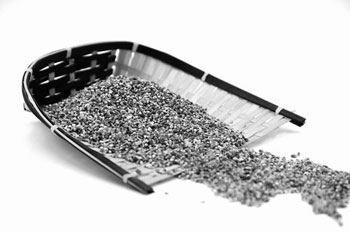
Rye
Rye in a wheat field. Image source: Baidu Images
Every winter, ordinary crops cannot "overwinter" and grow in China's Northeast and Northwest regions because they cannot withstand the severe cold weather, which severely restricts winter cultivation.
In order to open up a path for crops to "overwinter" in China, for many years the Baicheng Academy of Agricultural Sciences in Jilin Province, China and the Northeast Regional Agricultural Research Institute of the Russian Academy of Agricultural Sciences in Kirov, Russia have carried out long-term cooperation, jointly conducting research on the breeding and cultivation technology of winter rye.
It is reported that the Baicheng Academy of Agricultural Sciences introduced winter rye from Russia with cold resistance, drought resistance and barren-soil tolerance. After more than 10 years of dedicated research, it has now mastered all the cultivation techniques. On the slightly alkaline soil of Baicheng, winter rye successfully "overwintered" and turned green again, becoming a major scientific research achievement in China's agricultural research field and providing a brand-new option for adjusting the agricultural planting structure in Jilin Province and even in high-latitude regions across the country.
"After mastering this cultivation technology, safe 'overwintering' can basically be achieved in the Baicheng area, and demonstration and extension planting can be carried out," Guo Laichun, vice president of the Baicheng Academy of Agricultural Sciences in Jilin Province, said in an interview with a reporter from China Science Daily.
The important status of winter rye
Worldwide, among the various edible grain crops, winter rye ranks below wheat, rice and corn. But in some countries of Northern and Central Europe, winter rye occupies a pivotal position.
For example, under Russia's special geographical conditions, winter rye is the second-largest grain crop after wheat, occupying a very important dominant position, with strong adaptability and stable yields.
Grain is an important factor in ensuring food security for any country. To guarantee the normal life of Russians, 1 ton of grain needs to be produced per person each year (for producing bread, milk, meat products, seed reserves, stockpiling and export), so the production of rye becomes particularly important.
It is understood that rye is a special crop mainly grown in the northwestern part of the Eastern Hemisphere, divided into winter and spring types. In recent years, the variety tested and demonstrated by the Baicheng Academy of Agricultural Sciences has been winter rye.
At present, the main countries producing rye worldwide are Russia, Poland, Germany, Belarus and Ukraine. The rye produced by these countries accounts for 90% of the world's total rye output, and rye is also the staple food for the populations of these countries.
"Winter rye has high nutritional value. The common Russian specialty black bread (khleb), kvass beverages and so on are all made with winter rye as the main raw material," Guo Laichun said, calling winter rye a "very valuable crop."
At present, winter rye has been designated by Russia as a strategic crop, which shows its special nature and importance.
Overcoming technical difficulties
Rye is a cultivated crop belonging to the genus Secale in the grass family (Poaceae). The plant consists of roots, stems, spikes and leaves, and is a cross-pollinated plant.
In fact, winter rye does not have high requirements for cultivation conditions and can grow in poor soils (such as sandy loam, even peat land and heavy loam). Rye adapts better than other grains to acidic soil or saline-alkali land conditions. Of course, it grows better in fertile, well-aerated soil that has been subjected to simple mechanical tillage.
Winter rye has stronger cold resistance than ordinary winter wheat. It can tiller at -20°C, and shows a dormant state under even lower temperature conditions. "At present, the winter rye introduced through cooperation with Russia can withstand low temperatures down to -21°C and has strong cold resistance, which is an advantage other crops do not have," Wang Chunlong, deputy director of the Oat Research Institute of the Baicheng Academy of Agricultural Sciences, said in an interview with a reporter from China Science Daily.
This is also one of the main reasons they introduced winter rye.
"At the beginning, we just had a try-and-see attitude," Guo Laichun said. When this variety was introduced, they explored bit by bit and carried out related technical research in light of the actual local soil and climate conditions in Northeast China, such as how to cultivate, when to sow, later-stage density, fertilizer dosage and so on. "Now we can basically master the complete technology."
Guo Laichun explained that when introducing a new crop, variety adaptability experiments are needed and several varieties must be compared, from growth vigor and field performance to the final yield, in order to gain an in-depth understanding of the variety.
Sun Xiaochen, a technician who has long been engaged in field management work at the Baicheng Academy of Agricultural Sciences, described the cultivation of winter rye in China as "truly not easy" in an interview with a reporter from China Science Daily.
In Sun Xiaochen's view, one very difficult step is that before the freeze, a layer of "quilt" must be placed over the crop, separating the air from the cold, so that the strong wind cannot penetrate. "In this way, it can basically make it through the entire winter intact. When spring comes the following year, as the temperature and humidity rise, it naturally sprouts."
He took part in the entire process of winter rye from sowing to harvest. "For a field grain crop to achieve complete 'overwintering' under such low winter temperatures in Northeast China is a very bold attempt, and it also fills a gap."
In addition, because of its well-developed root system, rye can fully absorb moisture from the soil in spring, reducing the impact of drought during growth.
According to Wang Chunlong, because the Baicheng area is dry with little rain, receives little snowfall in winter, and has low snow cover on the surface, the surface temperature is far below the low-temperature limit that winter rye can withstand for "overwintering" growth, so they selected 5 rye variety resources suitable for planting in the Baicheng area.
Among them, after years of "overwintering" acclimation and screening trials on the originally introduced varieties Falensky 4 and Vyatka 2, two new varieties capable of "overwintering" in Baicheng have been successfully bred, and supporting cultivation techniques have been developed. Sowing takes place in mid-September each year; before the freeze-up at the end of October the plants develop to 3-5 tillers; they turn green from late March to early April the following year; they enter the heading stage in early June; and they are harvested in mid-to-late July, with a yield of more than 4500 kg per hectare.
Huge development prospects
Nature has endowed winter rye with multiple outstanding qualities: it has fairly high edible value and a wide variety of uses.
At present, the economic value of winter rye is reflected in many aspects, the most common being food processing with winter rye as a production raw material. The rye foods produced can reduce the probability of modern urban populations suffering from diseases of affluence, such as diabetes, high blood pressure, high blood lipids and obesity.
"Northern European countries generally have a dietary habit of eating rye. At present, more and more Northern Europeans are suffering from diseases of affluence, and their conclusion is that they consume less rye food than before, so many Northern European countries as well as Japan in Asia and other countries have begun to pay renewed attention to rye foods," Wang Chunlong said.
It is understood that the countries that import relatively large amounts of rye include: Japan, Bulgaria, Lithuania, Poland, Finland, Norway and so on.