-

Russia's Far East expands agricultural cooperation with China
Xinhua News Agency, Vladivostok, Sept. 3 (Reporters Zhu Yushu, Wu Gang) Russia's Ministry of Far East Development and relevant Chinese enterprises signed an agreement on Sept. 3 during the first Eastern Economic Forum to establish the Russian Far East Agro-Industrial Development Fund, in order to expand cooperation between the Russian Far East and China in the agricultural
-
China-Russia largest land port's fruit and vegetable exports exceeded $200 million last year
[ Introduction China Vegetable Network ] The reporter learned from the government of the Inner Mongolia Autonomous Region that in 2015, the Manzhouli port, the largest land port between China and Russia, exported a total of 390,800 tons of fruits and vegetables, with a value of $205 million. According to the introduction, in 2015 the fruit export volume at Manzhouli port totaled
-
Harbin carrots sold far to Thailand, Vietnam and Russia in 2015
Another large truck drove in, and after being loaded with 40 tons of pearl onions it will head for Guangxi, where the pearl onions will be repackaged before being shipped to Thailand and Vietnam. After the onset of winter, exports of pearl onions from Taiping Village, Lalin Town, Wuchang City, have hardly stopped. Reporters learned from the Harbin Municipal Agricultural Commission that last year Har
-
Selling Russian-Grown Grain Back Home Is the Right Way to Push Agricultural Transformation
Since land in Russia is almost as cheap as cabbage, why have fewer than 20 Chinese companies engaged in cross-border farming there to date? During the interview, the reporter found the answer to this question. In fact, some experience can be replicated, but not every company can copy other kinds of experience.
-
China plans to supply fruits and vegetables to Russia; 10% of Shandong's output value could meet Russia's entire national demand
Staff at a logistics center in the Russia-China border region distributing fruits and vegetables from China (RT website) Reference News Network reported on September 26 that an article titled "China Ready to Provide Fruits and Vegetables to Russia" published in the Russian newspaper Izvestia on September 24 stated that Chi-
-
China's fruit and vegetable exports to Russia expected to surge 80%, cold chain equipment sees opportunities
According to China Daily, Russia's embargo on a range of food products from the EU, Australia, Canada, Norway and the United States will boost China's fruit and vegetable exports to Russia, with the export scale expected to increase by 80% this year, reaching 3 billion yuan. In addition
-
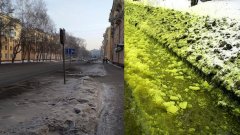
Green snow in Russia is a harm caused by environmental pollution
Have you ever seen green snow? Normally, the snow we see is white, but recently the Russian city of Pervouralsk has repeatedly seen green snowflakes, and this is caused by environmental pollution, which has deepened residents' concerns about pollution, poor waste management, and the possible effects of nearby factory activity
-
How many years does it take for Russian No. 8 large cherry to bear fruit?
Russian No. 8, also known as Hanxiang, is a new large cherry sapling introduced from Russia by Zhang Diangao, former director of the Fruit Tree Bureau of Wafangdian City, Dalian, Liaoning Province, and it bears fruit earlier than ordinary cherry trees. So, how many years does Russian No. 8 take to bear fruit? 1. How many years does Russian No. 8 take to bear fruit
-
Is the large Russian olive an evergreen tree or a deciduous tree?
Russian olive is also known as Qilixiang, Xiangliu, etc. Its petioles are slender and silvery white; the fruit is oval and pink; the flesh is milky white and mealy. So is the large Russian olive an evergreen tree or a deciduous tree? 1. Is the large Russian olive an evergreen tree or a deciduous tree? The large Russian olive is deciduous
-
Detailed Guide to Russian Comfrey Cultivation Techniques
Russian comfrey is not choosy about soil and can be grown on idle land. Deep plow the planting plot to more than 20 cm and apply sufficient base fertilizer, then cut the young buds on the root pieces lengthwise, plant one plant per root, with a plant-to-row spacing of 40 cm by 50 cm. After each cutting, apply a topdressing once, and in dry
条件筛选