-

Management methods for roses during hot and rainy seasons
The reason potted roses die in summer is mostly because the potting soil was not mixed well, the pots were not repotted and the soil was not changed in spring, and the nutrients in the original potting soil were largely depleted. As a result, the roses cannot withstand the high temperatures and die. In the high-temperature summer season, roses are almost in a semi-dormant state. Some people see that roses do not bloom or bloom little and think it is due to insufficient fertility, so they apply more fertilizer and concentrated fertilizer. In addition, the high summer temperatures accelerate the fermentation of the fertilizer, and the rose roots are burned. After repotting and changing the soil, place it in a cool place for about a week before resuming normal
-
What are the care tips for making roses bloom more?
"One branch has just faded, another blooms in beauty; spring's work is never idle." Roses bloom in all four seasons, vying in splendor without pause, with emerald branches and red buds, especially endearing. Roses love fertilizer and water, and plenty of sunlight. To make roses bloom more, you must understand their habits and put effort into their management. Roses have large and numerous flowers and need a lot of fertilizer, so it is best to apply plenty of fertilizer, and sufficient organic fertilizer should be applied before budding. For potted roses, they should be repotted once in early spring. The potting soil formula is: loam 5, leaf mold 2, decomposed manure 2, sandy soil 1, plus a small amount of rapeseed cake, mixed evenly. After that, every 10
-
How to care for roses? Master these four key points
The rose is a plant that loves sunlight very much; if there is not enough light, it is very difficult to get it to bloom every month. To make roses bloom year-round, you must grasp the following four keys. (1) Sunlight must be sufficient: the place where roses are planted must be both well ventilated and able to receive more than half a day of sunlight; this is the primary condition for them to bloom in profusion. (2) They must be pruned often: even if the sunlight conditions are good, roses will not grow well if they are not pruned for a long time. The pruning method is: after December each year, when the rose leaves fall, prune once; after May, each time a round of flowers finishes blooming, cut away 2/3 or 1/2 of the branch that has bloomed, so there will be more chances for new flower buds to regenerate. The wounds caused by pruning should be sealed promptly with healing and antiseptic membrane to prevent the wounds from drying and cracking and from damage by pests and diseases, and to promote the rapid growth of callus tissue.
-

-

-

What are the common pests of open-ground roses? Understand them in one article
Roses are flowers prone to many pests. Before carrying out control, you must first understand the symptoms of the pest damage and identify which pest it is; second, you need to understand the timing and patterns of the pest's occurrence so as to treat the right cause. Here we introduce the 4 most common pests. Aphids Aphids gather on the buds, tender leaves, and flower buds of roses to suck...
-
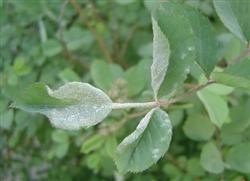
How to Control Powdery Mildew on Cut Roses
Powdery mildew is one of the most important diseases of roses, damaging leaves, tender shoots, flower buds and flower stalks. The control methods are as follows: strengthen cultivation management and promptly remove diseased plant debris; prune promptly to improve ventilation and light conditions; do not apply too much nitrogen fertilizer, and appropriately increase phosphorus and potassium fertilizer. Chemical control: when disease occurs during the growing period, spray 15%...
-

How do you grow roses so they bloom into beautiful flowers?
To make roses grow strong and healthy, even non-professionals can do a lot of helpful work: 1. Find ways to give the roses good light. Photosynthesis is the source of growth and vigor. 2. Always maintain good air circulation around the roses; do not plant them too densely, and do not let weeds affect their air circulation....
-
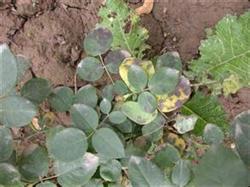
What are the common diseases of roses? A detailed guide to prevention and control methods
Symptoms: In the early stage of the disease, small purple-brown spots appear on the leaves, which later expand into nearly circular dark brown spots, often with a radial yellow halo at the edges. In severe cases, the spots merge, and the leaves wither and drop, especially in summer and autumn, causing massive leaf loss, leaving the lower part of the plant as bare stems. After young shoots are infected, dark brown streaks appear, slightly sunken, causing the young...
-
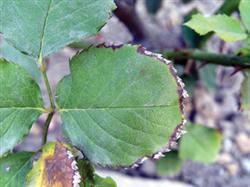
How to Identify and Control Black Spot on Roses? A Detailed Guide to Practical Methods
This disease occurs commonly and causes serious damage, resulting in heavy leaf drop in roses and enormous losses. The pathogen is a fungus of the genus Actinonema in the subphylum Deuteromycotina. 1. Symptom identification: At the initial stage of the disease, brown radial lesions appear on the leaf surface, which gradually expand into circular or nearly circular lesions with a diameter of 4-12 mm; in severe cases...
条件筛选