-

Why should the roots of Schisandra chinensis be pruned before transplanting?
The benefit of pruning the root hairs of Schisandra chinensis seedlings before planting is: after the roots are cut, the seedlings can be stimulated and encouraged to generate and grow new roots. The length of the roots left after cutting is generally best kept between 10-12cm; seedlings with roots shorter than 10cm should also be trimmed so as to promote the growth of new roots.
-
Key Technical Points for Planting Birchleaf Pear Rootstock Seedlings in the Rainy Season
Birchleaf pear (Pyrus betulifolia) is an excellent rootstock for grafting pear cultivars, being drought-resistant, cold-resistant and tolerant of poor soil. It is generally planted in spring and autumn, but in remote mountainous areas short of water, the difficulty of transporting water and spring drought often affect the survival rate of planting. Fruit growers in our region have experience with planting birchleaf pear rootstock seedlings in the rainy season, which gives a high survival rate, rapid orchard establishment and low cost. The specific methods are as follows. 1 Plant after the continuous rainy season arrives, when the underground water content is close to saturation; planting in the rain or rushing to plant before the rain is best. 2 Dig up birchleaf pear sucker seedlings from nearby hillsides; generally a seedling diameter of 0
-
How are potato roots distributed? Understand it in one article
The roots of potatoes grown from tubers are fibrous roots, with no taproot; potatoes grown from seed have a primary root and lateral roots, and here we mainly discuss the fibrous root system. Potatoes are a shallow-rooted crop, with most of the root system distributed within 40 cm below the soil surface, generally not exceeding 70 cm, and in sandy soil the roots can reach more than 1 m deep. The root system of early-maturing varieties is generally less developed than that of late-maturing varieties, and early-maturing varieties have a shallower root distribution, while late-maturing varieties have a wide and deep distribution.
-
Detailed Explanation of the Growth, Development and Functions of Rice Roots
After the seeds are pre-germinated, they sprout and grow roots. At first, only one root grows, called the seminal root (primary root), which develops from the radicle of the seed. The fibrous roots that later grow from the root primordia at the stem nodes are called adventitious roots. The coleoptile node and the incomplete leaf node produce about 5 roots, the first, second and third leaf nodes produce about 10 roots each, and the nodes above the fourth leaf position produce about 10 to 20 roots each. This is because the leaves increase in size in sequence from bottom to top, so the nutrients supplied for root growth increase in sequence, and the number of roots produced also increases. The nodes of the aboveground part generally do not produce roots. The nutrients produced by the leaves are
-
Schisandra chinensis asexual propagation and seedling raising: Rootstock method for green-branch cleft grafting
For the cultivation of rootstocks for green-branch cleft grafting, refer to open-field direct seeding for seedling raising. If the rootstocks are not dug out before winter arrives, pruning must be carried out before the ground freezes. Leave 3 to 4 buds on each rootstock and cut at about 5 cm, then water thoroughly with winter-protection water to prevent freeze damage and drying out. If the rootstock seedlings are to be planted out the following year, the seedlings can be dug out and stored in cellars or trenches, which is more beneficial for rootstock seedling management. When planting out the following year, they also need to be cut back to 3 to 4 buds to establish the trunk. Rootstock seedlings that overwinter in place should be irrigated promptly after the ground thaws the following year and given a topdressing of quick-acting nitrogen fertilizer to promote new shoot growth. Keep 1 to
-
Detailed Explanation of the Cultivation Method for Exposed Roots in Goji Berry Bonsai
Goji berry has strong sprouting ability and adaptability, prefers low temperatures and is not afraid of severe cold; it sprouts early, sheds leaves late, and its fruit does not drop, giving it a long ornamental period; each year in spring and autumn it produces new leaves twice, blooms twice, and sets fruit twice. Moreover, it is small and dense, with small but abundant flowers and numerous bright red fruit, and its fruit is also a fine tonic for strengthening the body. Therefore, it is a very popular material for small bonsai. However, thick goji berry trunks are hard to obtain, so roots are often used in place of trunks to make bonsai, but its roots are mostly single and rarely branch. This makes it difficult to create a small, perfect goji berry bonsai with exposed hanging roots and claws. In recent years, the author
-
Producing Rhododendrons for Landscaping: Topiary Is the Direction, Don't Use Wild-Collected Rootstock
Regarding the phenomenon of some nursery growers using wild rhododendrons as rootstock to cultivate topiary rhododendrons for landscaping projects, Li Yong, secretary-general of the Rhododendron Branch of the China Flower Association, recently stated: topiary is currently an effective way to increase the added value of landscaping rhododendrons, but the practice of using wild-collected rootstock for grafting is not advocated. It is understood that although there are not many nurseries in China mainly growing rhododendrons for landscaping projects, many places in the south have already achieved year-round supply. Therefore, in the absence of disasters, the domestic supply of landscaping rhododendrons is currently basically saturated
-
Master the correct method when earthing up ginger to avoid damaging the roots
Ginger needs to be earthed up several times during its growth period. It is understood that the mechanical earthing-up machine used locally in Anqiu causes more serious root damage to ginger than manual earthing up, because the furrow bottom formed by the earthing-up machine is about 20 cm wide and the ridge height is 40 cm, while manual earthing up with a hoe leaves a furrow bottom of about 10 cm and a ridge height of around 35 cm. "When the earthing-up method cannot be changed, excessive root damage can be avoided by adjusting the growth direction of the underground ginger tubers, that is, when sowing the seed ginger, deliberately place the seed ginger perpendicular to the planting row, so that the daughter ginger and granddaughter ginger are also perpendicular to the planting row. By the time of earthing up, the entire ginger tuber is then perpendicular to the planting row, while the fleshy roots, lateral roots and fibrous roots caused by earthing up extend along the direction of the planting row, so they will not be damaged too much during earthing up. If the underground seed ginger is sown parallel to the planting row, too many roots will be damaged during earthing up." said Liu Shinian of Qianyulin, Linghe Town, Anqiu City.
-
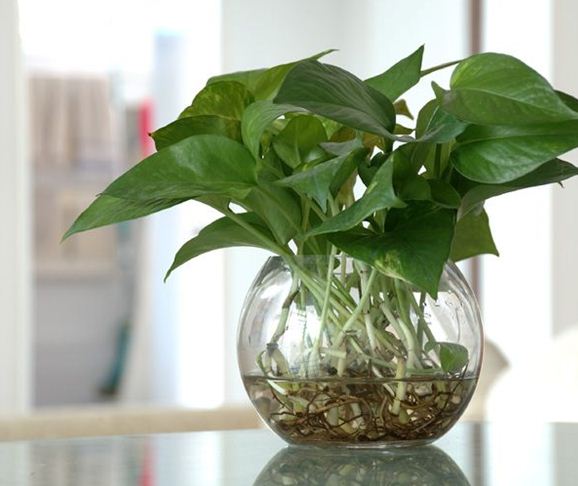
What to Do When the Roots of Hydroponic Pothos Turn Black? Causes and Solutions
Hydroponic pothos is a very common cultivation method, from large professional hydroponic planters to a small container with just a few pothos cuttings stuck in it. But some flower lovers see the roots of their hydroponic pothos turning black and do not know what the problem is. It is quite normal for the roots of hydroponic pothos to turn black
-
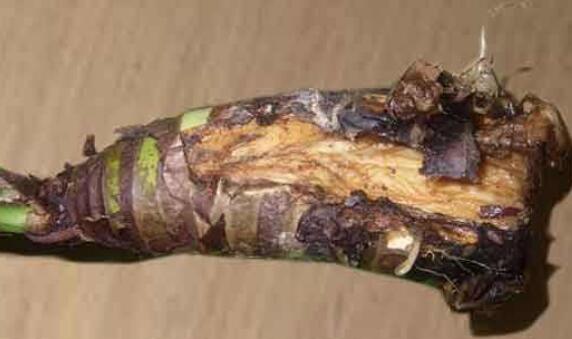
What to Do When Alocasia macrorrhizos (Giant Taro) Roots Rot? Detailed Care Methods
When growing Alocasia macrorrhizos, many plant lovers run into all sorts of problems, such as yellowing leaves, rotting leaves, and rotting roots, which are a real headache to look at. As for what to do when the leaves of Alocasia macrorrhizos turn yellow, that was already covered separately, so what do you do when Alocasia macrorrhizos roots rot? Actually, once you find the cause, it is quite easy to fix.
条件筛选