-

Morphological Characteristics and Control Techniques of the Rice Root Leaf Beetle
The rice root leaf beetle, also known as the rice root golden flower beetle, belongs to the order Coleoptera, family Chrysomelidae. The adult is about 6 mm long; the dorsal surface of the body and the antennae are greenish brown with a metallic sheen, and the ventral surface bears dense, thick silvery hairs. The lower half of the femur of each leg is swollen, and the femur of the hind leg has a tooth-like spine near its apex. The elytra bear several parallel longitudinal grooves made up of punctures. Eggs are laid in masses and covered with a white, transparent gelatinous substance. The eggs are long oval, slightly flattened, about 0.8 mm long, initially milky white and later turning pale yellow. The larva is about 9 mm long, spindle-shaped, white and slightly curved, with 3 pairs of thoracic legs
-
How should the water layer be regulated at different growth stages of shallow-water lotus root?
The suitable water level for shallow-water lotus root is 10-20 cm, and the maximum water depth it can tolerate is 50 cm. In cultivation, the water layer must be well regulated according to the different growth stages of shallow-water lotus root. The general principle of water layer management for shallow-water lotus root is shallow at the front, deep in the middle, and shallow at the back. After planting the lotus root, when the standing leaves appear, maintain a shallow water layer of 4-7 cm to increase soil temperature and promote sprouting. As the stems and leaves grow vigorously, gradually deepen the water layer to 12-15 cm. After the terminal leaves appear, the plant begins to form lotus root, and the water layer is gradually lowered to a depth of 4-7 cm to promote lotus root formation.
-
Technical Key Points of Lotus Root Field Rotation and Crop Succession Cultivation Models
Lotus root is an important aquatic vegetable in China and also an important export-oriented vegetable for earning foreign exchange. It is widely cultivated in areas south of the Huang-Huai region, especially in the Yangtze River Basin and areas further south. It not only plays an important role in increasing farmers' income and improving agricultural efficiency, but also has important value in improving and beautifying the environment, and in wetland protection and utilization. Centering on lotus root and carrying out good rotation and crop succession is important for fully improving land utilization rate and economic benefits per unit area, reducing disease and pest damage, reducing pesticide use, improving soil and enhancing soil fertility.
-
Licorice root
[Production area distribution] Licorice: mainly produced in Inner Mongolia, Gansu, and **. Also produced in Northeast China, Hebei, Shanxi and other places. Glycyrrhiza inflata and Glycyrrhiza glabra: mainly produced in ** and Gansu. [Medicinal material characteristics] Licorice: the root is cylindrical, 25-100cm long, 0.6-3.5cm in diameter. The surface is reddish-brown or grayish-brown, with prominent longitudinal wrinkles, furrows, lenticels and sparse fine root scars. The texture is solid, the fracture is slightly fibrous, yellow-white, powdery, the cambium ring is obvious, the rays are radial,
-
Symptoms and Control Methods of Licorice Root Rot
Latin scientific name: Rhizoctonia solani Kuhn. Damage symptoms: Infected plants develop yellowed, withered leaves; the stem base and main root all turn reddish-brown and dry-rotted, with longitudinal cracks or red streaks on them; lateral roots are rotted or very few; diseased plants are easily pulled out of the soil; the vascular bundles of the main root turn brown; when humidity is high, pink mold grows on the roots. Morphological characteristics of the pathogen: generally caused by nematodes and Pythium species. Classification: called Rhizoctonia solani, a fungus of the subphylum Deuteromycotina. Disease occurrence characteristics: Fusarium is a soil-inhabiting fungus, in the soil
-
Detailed Guide to Harvesting and Processing Licorice Root (Part Two)
For seed propagation, harvest after 3 to 4 years; for rhizome and division propagation, harvest after 2 to 3 years. Digging can be done from late autumn to early winter and before spring sprouting. Those dug in autumn are the best, with a high glycyrrhizic acid content and a firm texture. After the licorice is dug out, clean off the soil, remove the stem base, branches and fibrous roots, cut into sections of appropriate length, sun-dry until half dry, tie into small bundles, then sun-dry until completely dry.
-
What are the methods for processing lotus root? A detailed guide
Lotus root is delicious, crisp and juicy, and can be eaten in many different ways. Here are several recommended processing methods: 1. Sweet and sour lotus root slices. Selection of raw materials: choose 50 kg of fresh lotus root that is thick and tender, 2.5 kg of salt, 20 kg of white sugar, and 15 kg of vinegar. Production process: cut the peeled lotus root into thin slices 1 cm thick, boil them thoroughly in water, then soak them in cold water for 6 hours and drain. Put the white sugar and vinegar into a pot together and bring to a boil. After cooling, pour over the lotus root slices and soak for 3 to 4 days, turning the container twice during this time, and it is done. The finished product is crisp and tastes sweet and sour.
-
What are the basic facts about lotus root? A comprehensive guide
Lotus root is divided into three parts: the lotus head, the lotus body, and the rear section. The lotus head is the terminal bud of the swollen rhizome, possessing leaf buds and mixed buds, and is wrapped in a bud sheath to overwinter; the lotus body is the swollen rhizome of the 2nd to 3rd node near the lotus head, and is the main part of the product organ; the rear section is the last, slender rhizome node. According to the utilization value of the product organ, it can be divided into three types: lotus root lotus, seed lotus, and flower lotus. According to adaptability to water depth, it can be divided into shallow-water lotus root and deep-water lotus root. Shallow-water lotus root is suitable for cultivation in shallow ponds or paddy fields with a water depth of 30-50cm, and most are early-maturing varieties,
-
How to prevent and treat root rot in rhododendrons? These methods you need to master
Root rot is a serious threat to rhododendrons. Although its incidence rate is not high, the mortality rate after infection is very high, so the prevention and treatment of root rot must be taken seriously in the cultivation and management of rhododendrons. Root rot is a soil-borne disease caused by Fusarium fungi, mostly occurring at the root and stem parts of rhododendrons, because these parts are often moist with insufficient sunlight, and the Deuteromycetes Fusarium fungi are highly active there. Once they invade the cortex, rot soon follows, with water-soaked brown spots and soft rot appearing on the roots, followed by decay and peeling of the bark, the xylem turning dark brown
-
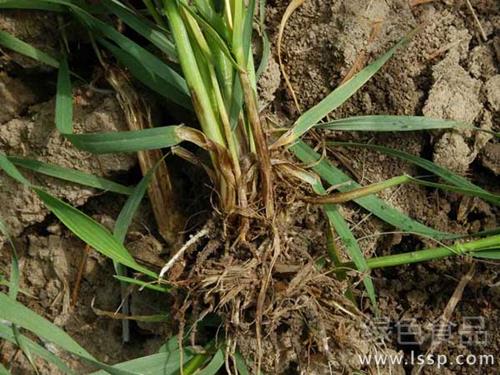
How to prevent and control wheat root rot? Identification of symptoms of root rot, stem blight and yellow leaves, and medication
How to prevent and control wheat root rot when roots rot, stems wither and leaves turn yellow
条件筛选