-
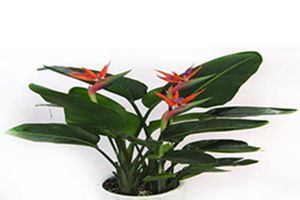
How to Remedy Fading Color in Guzmania (Bromeliad) Flowers
If its flowers are not deeply colored, it may be because the light is insufficient, so it should be moved immediately to a bright, indirect light area to receive sunlight, and it should normally be given plenty of light. If it is caused by a lack of fertilizer, then a specialized leaf fertilizer should be added. If it is caused by improper watering methods, then water should be poured from the top, so that it can use its water-storing layer to hold enough water and supply it to the flowers.
-
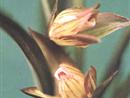
What plant is the 'Fulun Hongjian' bromeliad? Introduction to its cultivar characteristics
This cultivar is a floral-type Chun Jian orchid (Cymbidium goeringii cultivar group), with red fulun (variegated edging) flowers, produced in Mingshan County, Sichuan Province. Both the sepals and the petals are bordered with broad red fulun edges. The sepal edges have purplish-red fulun edging, while the petal edges have pink fulun edging. A same-flower, different-color fulun pattern like this is extremely rare. Its leaves are thick and sturdy, the leaf texture is coarse and hard, the leaf surface is folded down the middle, the marginal teeth are coarse and sharp, and the leaf veins are raised and exposed...
-
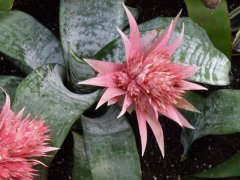
What Are Bromeliad Flowers? Introduction to Pink Pineapple, Guzmania, and Neoregelia
Below we introduce several different bromeliad flowers. Which one will you like? There is also growing information, so take a look as well. Whichever one you like, you can also grow it. Pink pineapple, this is the most popular among bromeliad flowers, especially Aechmea fascia
-
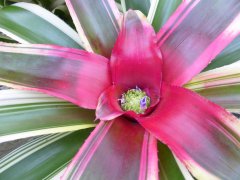
How to grow bromeliads? Master the care methods and watering tips after blooming
How do you plant bromeliads, do you know? Do you also want to grow a nice pot of bromeliads yourself? Then read the introduction below and see how bromeliads are grown. Bromeliads belong to the Bromeliaceae family, and most originate in the tropical rainforests of Central and South America. In total
-
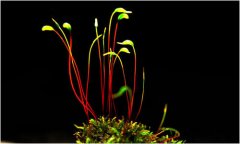
What kind of plant is funaria hygrometrica, and does it bloom and produce seeds?
Funaria hygrometrica is a type of moss plant. This kind of plant reproduces by spores, so it does not bloom and has no seeds. Funaria hygrometrica is currently a relatively popular plant on the market, used to make micro-landscapes. The structure of funaria hygrometrica is rootless, with stems and leaves.
-

How long does a bromeliad (Guzmania) live? The latest answer is here
The lifespan of the bromeliad (Guzmania) is not very long; under normal circumstances, it has a lifespan of 3-4 years, and after it blooms, the plant will gradually wither and die. So during its growing period, you need to do a good job with moisture retention, ventilation and temperature control, and after it blooms, new
-
What are the causes of soybean green-stem syndrome and its prevention methods
Soybean green-stem syndrome is a phenomenon that occurs when soybeans enter the maturity stage, and it can seriously affect soybean yield and quality. So what causes soybean green-stem syndrome? How should it be prevented? Follow the editor to learn about the causes of soybean green-stem syndrome and
-
What are the latest benefits of bromeliads?
Do you know what benefits bromeliads have? Bromeliads are perennial herbaceous plants, belonging to the same genus as the edible pineapple. Bromeliads are non-toxic and are highly ornamental flowering and foliage plants, especially suitable for growing indoors. Let's take a look at bromeliads below.
-
The Latest Detailed Guide to the Flower Language and Legends of the Bromeliad
The bromeliad is a plant of the genus Billbergia in the family Bromeliaceae. It is a very beautiful indoor potted flower that is both ornamental for its flowers and its foliage. With its unique rosette-shaped plant form, bright spike-like inflorescences, and long flowering period, it has gradually become the darling of the Lunar New Year flower market. Below, let us take a look together.
-
When does the bromeliad bloom?
The blooming of bromeliads has no fixed season; it is generally related to growth time and care. As long as the growth time is more than 8 months (different varieties have different time requirements, ranging from 8 months to several years), and the plant is robust and large enough (including dead old leaves, it should have more than 20 leaves)
条件筛选