-

The right way to repot, water and fertilize Phalaenopsis in autumn
After raising a Phalaenopsis for more than half a year, the potting medium seems a bit compacted, and you want to repot it but are afraid of killing it; you are also unsure about watering and fertilizing, afraid of root rot if you give too much and afraid it won't bloom if you give too little. In fact, autumn is exactly the "critical period" for Phalaenopsis. If you find the right methods for repotting, watering and fertilizing, you will see a pot full of flowers by the end of the year. You can absolutely repot a Phalaenopsis in autumn
-

What kind of pot is best for growing Phalaenopsis orchids? Choosing the right pot is key
When choosing a pot for a Phalaenopsis orchid, you need to match its growing habits, take daily care convenience into account, and show a careful attentiveness to the plant. The truly suitable pot is never one fixed style, but a choice that finds a gentle balance between breathability, drainage and beauty. Aerial roots are the Phalaenopsis orchid's most special "
-

A romantic secret lies within the bulbs of the giant allium (Allium giganteum), a striking touch that brightens all four seasons
The first time you see a giant allium in a garden, you are always moved by that "purple firework" rising out of nowhere - slender stems holding up plump flower globes, with sunlight filtering through the translucent petals, blending into a soft yet passionate glow. The story of the giant allium begins with a round, plump bulb. Unlike tulips and hyacinths, which are
-

During peak chikungunya season, mosquito prevention brooks no delay! These 4 "natural mosquito-repelling guardians" - just place the right green plants at home and mosquitoes will retreat! Retreat! Retreat!
As soon as summer arrives, mosquitoes seem to shift into double speed, buzzing around people, not only leaving itchy bites all over but, more frustratingly, they may also carry various viruses, such as chikungunya fever, which has been frequently mentioned lately. The disease sounds tongue-twisting, but when it strikes it is truly brutal - persistent high fever, joint pain as if your body is being taken apart, just thinking
-

Is it easy for soil-grown plants to die when converted to water culture? Pick the right species and they are easy to keep
Switching familiar soil-grown plants into hydroponic containers and watching the roots spread out in a clear glass bottle is a joy for many plant lovers. But changing environments is like a test for plants, and some people think soil-to-hydroponic conversion easily kills plants; in fact, the key is to understand the rules by which plants adapt to a hydroponic environment. When converting soil-grown plants to hydroponics
-
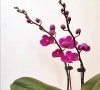
Getting the tightness of Phalaenopsis potting medium right matters: should you pack sphagnum moss tightly when planting?
Always getting root rot when growing Phalaenopsis? Today I will show you step by step how to adjust the tightness according to the type of potting medium, so the roots can breathe freely and not rot. With Phalaenopsis potting media (sphagnum moss, bark, pine cones, etc.), if it is too loose, the roots cannot grip the medium and cannot absorb water and nutrients; if it is too tight, it is like covering the nose, suffocating the roots and causing root rot.
-

What Happens If You Use Too Much Sphagnum Moss for Phalaenopsis? How Much Is Just Right?
Many flower lovers know that Phalaenopsis needs sphagnum moss, but how much is actually appropriate? And what problems arise if you use too much? Today let's talk about these super practical gardening tips! Sphagnum moss has extremely strong water absorption. Use too much and the pot becomes like a "big reservoir." Phalaenopsis roots, like us humans, need to breathe! When there is too much sphagnum moss, it stays wet for a long time after watering, and the roots sit in a soggy environment, which easily leads to suffocated roots and root rot.
-

Should You Water a Phalaenopsis Right After Bringing It Home? Watering Methods and Care Tips
Every time I browse a flower market and see Phalaenopsis (moth orchids), I can't tear myself away - pink ones, white ones, spotted ones, all stunningly beautiful! But once I get them home, I'm stumped: should I water them right away? How should I care for them so they keep blooming for months? Don't rush to water a newly purchased Phalaenopsis! Why? Because the ones we buy at flower markets and flower shops
-

What to do when the sphagnum moss of a Phalaenopsis orchid is too dry? I'll teach you the right way to water
Anyone who has grown Phalaenopsis orchids has surely run into this headache - the sphagnum moss dries up like dead grass, feels rock hard when pinched, and crumbles at a touch! Don't panic. Today I'll teach you step by step how to save your "thirsty" Phalaenopsis and make it fresh and lively again! If you find the sphagnum moss has dried out completely, never just grab a watering can and drench it! Sphagnum moss that has been dry for too long
-

The right way to get your Phalaenopsis orchid through summer: where is the best place to put it in summer
In summer, Phalaenopsis orchids either get yellow leaves with scorched edges or develop root rot and stall in their growth. Actually, it is all because you have not found the right spot. Today I will walk you through, step by step, how to find the right spot for your Phalaenopsis orchid in summer. The golden spot - a north-facing balcony or windowsill: in summer this is practically a natural air-conditioned room tailor-made for Phalaenopsis orchids! There is no harsh direct sun at noon, only gentle
条件筛选