-
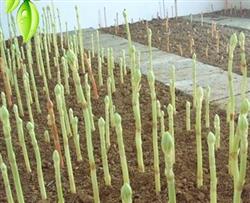
Detailed Explanation of the New Ridge-Trench Cultivation Technique for Gastrodia elata
1. Sexual reproduction ① "First cultivate the fungal bed method": From March to April each year, use Armillaria mellea spawn to cultivate new fungal wood, and in May to June use germination-promoting fungal spawn mixed with Gastrodia elata seeds for sowing. In November, harvest the sexually produced seed corms, and in November of the following year harvest the commercial corms. This method gives stable and high yields with significant economic benefits. ② "Two fungi and one seed mixed planting method": From May each year...
-

Occurrence and Damage Characteristics of the Bridgeworm Pest on Lingzhi
The bridgeworm (Noctuidea) belongs to the family Geometridae. The lingzhi bridgeworm of this family (name to be determined) is an important pest damaging lingzhi. 1. Morphology and habits: The adult is 12 mm long with a wingspan of 25-28 mm, a small grayish-black moth. The antennae are filiform; the forewings are triangular with 8 black spots along the outer margin and one larger black spot in the middle of the costal margin; the hindwings are grayish-white. The egg is flat and round, 0.6-0.7 mm long and 0.4-0.5 mm wide, milky white initially and grayish-green before hatching. The mature larva is 22-25 mm long,
-
Method for ridge cultivation of Gastrodia elata in plastic greenhouses
Cultivating Gastrodia elata in ridges inside plastic greenhouses can be done on either a large or small scale, with low investment, high returns, and savings in labor, effort, and arable land. It requires no fertilizer, no pesticide spraying, and no weeding, and delivers significant economic benefits. The technique is described below: 1. Site selection: It is advisable to choose a shady slope or a gentle slope with half shade and half sun, sandy soil with good permeability, and slightly acidic or neutral soil with a pH of 5.5-6.0 for building the site. 2. Greenhouse construction: Follow the construction method for vegetable greenhouses, facing north and south, with the size determined by the scale of Gastrodia elata cultivation, generally 8 m wide and the length depending on the terrain
-
How should reishi mushroom bridge worms be prevented and controlled?
The reishi mushroom bridge worm (scientific name to be determined) belongs to the order Lepidoptera, family Geometridae. This pest damages reishi mushroom fruiting bodies. Young larvae feed on the surface and edges of the cap, causing pits and notches. After the 3rd instar, they can bore directly into the interior of the fruiting body and excrete large amounts of frass, which not only contaminates the mushroom bodies but also encourages the proliferation of weeds such as green mold, harming reishi mushroom growth and reducing yield and quality. (1) Morphological characteristics. Adult: body length 12 mm, wingspan 25-28 mm, body grayish black; antennae filiform, outer margin of forewing with 8 small black spots, a larger black spot in the middle of the costal margin,
-
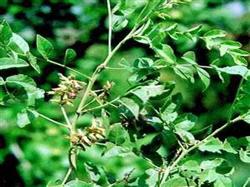
Detailed Explanation of Licorice Plastic Mulch Ridge-Furrow Cultivation Techniques
1. Site selection range. Licorice has strong adaptability and can grow in most soils, but slightly alkaline or alkaline sandy loam with a pH of 7.2--8.5 is most suitable. 2. Crop rotation selection. Licorice is a perennial herbaceous plant of the genus Glycyrrhiza in the Fabaceae family. The previous crop should preferably be a grass-family crop; legume crops should be avoided. 3. Land preparation and fertilization...
条件筛选