-

What kind of rice is Donglan black rice? Introduction to its origin and characteristics
Basic information: Black rice is called "Hou Mo" in the Zhuang language. It gets its name because the husk and the grains are purple-black both inside and out. This rice is produced in Donglan County, Guangxi, so it is also called "Donglan black rice". Donglan black rice is a rare rice variety developed through long-term selection by farming families from wild black rice in the high-cold mountainous areas of Donglan County. It has a cultivation history of more than 400 years and is a treasure among grains. It contains as many as 18 amino acids, 8 of which are essential to the human body, with the highest levels of threonine and lysine. Its crude protein, crude fat, sulfur
-
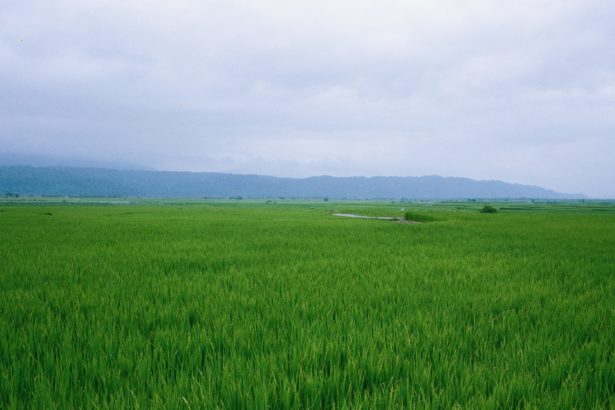
Rice multicultural practice: Four key elements for local sake brewing need breakthroughs
Li Jianwei / Heart of Sake 03: Let local sake brewing become a practice of rice multiculturalism! Four key elements need breakthroughs
-

Egg prices rise because last year's floods reduced laying hens, not because of an epidemic; no need to panic-buy
The egg shortage has nothing to do with an epidemic, so don't rush to stock up on eggs! Last year's floods reduced the number of laying hens, and the price of one egg has risen by 0.3 yuan
-

Methods to Improve the Germination Rate in Licorice Cultivation
Methods to Improve the Germination Rate of Licorice
-

What propagation methods does licorice have? A detailed explanation of common methods
What propagation methods does licorice have
-

What are the pest and disease control methods for licorice?
Pest and disease control methods for licorice
-
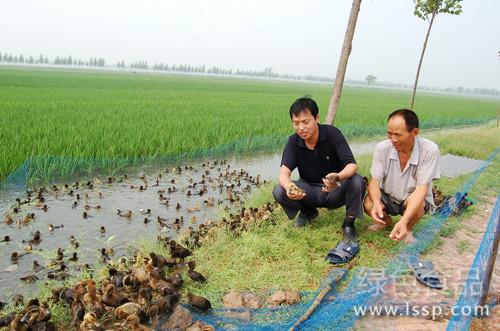
Rice Harvest and Fat Ducks: Key Technical Points of the Rice-Duck Symbiosis Model
Rice Harvest and Fat Ducks: Key Technical Points of the Rice-Duck Symbiosis Model
-
Application methods of Shangnong Iprobenfos for controlling rice blast
Shangnong Iprobenfos is a systemic fungicide with a pre-harvest interval of more than 20 days and low toxicity to humans and livestock. Its formulation is a 40% emulsifiable concentrate. Shangnong Iprobenfos is mainly used to control rice neck blast, and is also effective against rice sheath blight (small sclerotium disease), small grain sclerotium disease, rice sheath blight, and planthoppers, and also has insecticidal and lodging-resistant effects. Application methods: To control rice blast, sheath blight, and small sclerotium disease, dilute 600-1200 times with water and spray. Precautions: (1) This agent is also a cotton defoliant, so when applying
-
What to Do When Rice Seedlings Suffer Fertilizer Burn? Master the Correct Remedial Methods
Blindly increasing the amount of chemical fertilizer applied will cause various physiological disorders in rice seedlings, making growth and development abnormal after transplanting. Applying excessive amounts of undecomposed organic fertilizer will also cause poor growth of rice. This kind of physiological disorder caused by excessive fertilizer application is "fertilizer burn." 1. Causes of fertilizer burn There are many causes of fertilizer burn in rice seedlings, which can be summarized into three: First, improper fertilization methods. For example, applying ammonia water or ammonium bicarbonate under high temperature at noon, the volatilized ammonia gas causes fumigation damage to rice plants.
-
Detailed Introduction to Biological Water-Saving Technology in Rice
Biological water-saving technology refers to the use of a plant's own physiological and genetic potential to obtain more output under the same water conditions. Although it is difficult to research and remains underdeveloped, it requires little input and yields high benefits in practice. Using the large amount of germplasm resources obtained over many years, rice breeders have developed a number of strongly drought-resistant varieties through intervarietal hybridization, systematic selection, and introduction and evaluation, and have applied genetic engineering to the breeding of new varieties, continuously providing high-quality, strongly drought-resistant new hybrid rice combinations and new varieties with greater biological potential for water-saving cultivation.
条件筛选