-
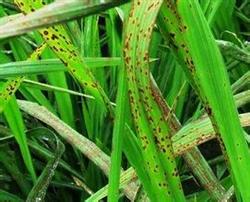
Identifying Zinc Deficiency Symptoms in Rice and Techniques for Skillfully Applying Zinc Fertilizer in Paddy Fields
Zinc is one of the essential trace elements for the growth and development of rice. Zinc deficiency in rice shows obvious symptoms. When rice is deficient in zinc, chlorotic yellow-white spots first appear in the midrib area of the lower leaves, with reddish-brown spots and irregular patches forming on them, which then gradually expand into reddish-brown streaks, turning reddish-brown and drying from the leaf tip downward, and from...
-
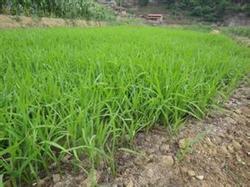
Key Field Management Techniques After Transplanting Dry-Raised Rice Seedlings to the Paddy Field
1. Prepare the field carefully so that the field is level and the soil is puddled, with not even a inch of water exposing the mud. 2. Fertilization principle: apply a heavy basal fertilizer and skillfully apply panicle-grain fertilizer. Apply no less than 1500 kg of farmyard manure per mu. When harrowing the field, apply phosphate and potassium fertilizers plus 70% of the nitrogen fertilizer as a one-time basal application, 20% of the nitrogen fertilizer as tillering fertilizer, and 10% as panicle fertilizer (apply 5-10 days before heading). ...
-

Rice paddy field conditioner is a new type of fertilizer
Nong brand rice paddy field conditioner is a new type of fertilizer developed by the Soil and Fertilizer Institute of the Liaoning Academy of Agricultural Sciences. It is rich in more than 10 major, secondary and trace elements required for rice growth, seedling strengthening, seedling revival and tillering, and is also rich in free acids, with a strong function of adjusting the acidity of rice paddy soil, and can prevent the occurrence of old seedlings, yellow seedlings and stiff seedlings in rice. It can strengthen seedlings, provide rice with sufficient major, secondary and trace elements, organic nutrition, etc., make the plants grow robustly, promote high yield, loosen the soil, improve the soil microenvironment, and make the root system grow vigorously,
-
Red rice paddy has been successfully cultivated in Hefei
After large-scale demonstration planting in Tongcheng, Huaining, Qianshan and other cities and counties, the new two-line hybrid rice (red rice) variety Wandao 129, independently bred by the Anqing Agricultural Science Research Institute, was recently examined and approved by the provincial crop variety approval committee; 9 of all 12 evaluation indicators reached the Ministry-issued first-grade high-quality rice standard, and it was decided to permit its promotion and planting as double-season late rice in the areas along the river and south of the river in our province. The newly bred red rice Wandao 129, also known as Peiliangyou 98, is a new rice variety that the Anqing Agricultural Science Research Institute began focusing on breeding in 1999
-
Detailed Explanation of Rice Paddy Soil Types and Nutrient Status in Sanming City
Our city has relatively abundant land resources, with a total land area of 34.44 million mu, of which cultivated land area is 2,563,100 mu, accounting for 7.4% of the total land area (of which paddy field area is 2,441,900 mu, accounting for 7.1% of the total land area, and agricultural land is 121,200 mu, accounting for 0.3% of the total land area). Due to differences in distribution terrain, paddy soils can be divided into four types: plain fields, sloping terraced fields, mountain valley fields, and streamside fields, with a ratio of 4.6:5:6.2:1 among them. Plain fields are dominated by hydromorphic
条件筛选