-

Detailed Explanation of High-Yield Cultivation Techniques for American Boltless Garlic
In 1998, Dawangzhuang Village, Yaogezhuang Town, Gaomi City, together with Weifang Changjiang Agricultural Products Development Co., Ltd., jointly introduced American boltless garlic and conducted high-yield, high-quality cultivation trials. Through 4a of production practice, they developed a set of high-yield, high-quality cultivation techniques suited to this variety. I. Characteristics: American boltless garlic does not bolt, or the bolt is extremely thin and weak. Plant height is 68.4cm, stem diameter 1.8cm, leaf length 47.2cm, leaf width 3.9cm, with a total of 11 leaves. The bulb has a total of 15 cloves and belongs to
-
Control Methods for the Giant African Snail on Impatiens
The giant African snail on impatiens, scientific name Achattna fulica Ferussac, synonyms A. couroupa Lesson, A. fulica Tiyon, order Stylommatophora, family Achatinidae, also known as the African snail. Native to the coastal regions of East Africa, it was introduced to Guangdong, Guangxi, Yunnan, Fujian, Hainan, Taiwan, China and other places in China in the 1830s. Its hosts include impatiens and many other flowers, as well as vegetables and fruit trees. Its damage characteristics: it is an omnivorous pest, and young snails are mostly
-
Can African violets tolerate strong direct sunlight?
The native environment of the African violet is beneath large trees on high mountains, where the climate is stable and shady, and sunlight only reaches the leaves after being filtered through the foliage. Therefore, when growing African violets, you must take their own characteristics into account and must not treat them like ordinary flowering plants. Most flowering plants need more than 4 hours of direct sunlight each day in order to bloom. But the African violet is a rare exception: if you place it in a window with direct sunlight, the result is either yellowed, withered leaves or a blooming season with no flowers. Because the Af
-
Characteristics and Types of African Violets Explained
African violets prefer a warm, humid, well-ventilated, semi-shaded environment; they dislike high temperatures and fear strong light. The suitable growing temperature is 18-24°C; in winter the temperature must not drop below 10°C, and in summer it must not exceed 30°C, with relative humidity of 40%-79%. The plant is short and forms a rosette shape; the leaves are thick and fleshy like velvet; the flowering period is long, and the flower color is mainly blue-purple, which is how the common name "violet" came about. They are easy to propagate and are a popular indoor potted ornamental plant worldwide. Through hybridization, their horticultural varieties have continued to increase, now numbering more than 2,000
-
Noteworthy specific germplasm of wild apricot (Prunus sibirica) in Chaoyang, Liaoning
Abstract: We surveyed apricot germplasm resources in Chaoyang City, Liaoning Province, and identified 11 specific germplasms, including 3 kernel-use germplasms, 4 landscaping germplasms, and 4 germplasms pending further identification. These new germplasms not only enrich the apricot germplasm resources of Liaoning Province, but also lay a material foundation for breeding new cultivars. Keywords: apricot germplasm, kernel use, landscaping. Chaoyang City, Liaoning Province is one of the main apricot production areas in China, with a long history of apricot cultivation. In the past, local wild apricots were mostly propagated by seed, and the genetic differences of wild apricot at the three levels of individual, stand and provenance were fully differentiated and accumulated.
-
The American Snake Plum is a premium variety among plums.
The American Snake Plum was introduced from California, USA in 1999, and in the same year was planted by the introducing experts and professors at the Shaanxi Ruixue base. After 4 years of observation of its fruiting performance, it is generally regarded as an excellent mid-to-late-maturing variety with exceptionally superior quality, good productivity, strong adaptability, and fruit that stores well. The Snake Plum fruit is relatively large and round-spherical. The average single fruit weight is 139 grams, and the largest fruit weight is 210.2 grams. The skin is bright red to purplish red, with bloom. The flesh is pale yellow, gradually turning red from the outside inward as it ripens, and the color is extremely beautiful. The flesh is crisp
-
What is the American pepino melon? An introduction to its variety characteristics
The pepino melon fruit is large (single fruit weight 100-250 grams), with the largest reaching 500 grams. The flesh is tender and refreshing, with extremely high nutritional value and great market promotion value. The pepino melon is a herbaceous plant with extremely strong adaptability, unaffected by region and climate. It can be planted on barren hills, in courtyards, and in open fields, and can also be intercropped with other crops. It can be planted and harvested in all four seasons. From sowing to harvest takes only two months, with a yield of up to 5000 kg per mu. The market retail price is 5-10 yuan/kg. Its fruit can be processed into canned goods, jam, preserved fruit, etc. This is undoubtedly another very large potential market among new high-yield fruits.
-
New Black Sweet Potato Variety: Introduction to the American Ultra-Short-Vine Black Sweet Potato
1. Characteristics: ① Excellent appearance: The tubers are long and cylindrical, with a single tuber weighing 300-800 grams, and the largest around 1000 grams. It sets many tubers evenly, with 4-8 tubers per plant. The tuber surface is purple-black, glossy, and attractive. ② Excellent quality: Its nutrient content is significantly higher than other tuber crops. Its lysine, potassium, manganese, and zinc contents are 5-8 times higher than ordinary sweet potatoes, and in particular, its content of the anti-cancer substances iodine and selenium is more than 20 times higher than other sweet potatoes, ranking first among foods. For this reason, it is hailed in the United States as a "green health food." ③ Excellent eating quality: When cooked, it is sweet, fragrant, and palatable.
-
How to Grow North American Jerusalem Artichoke? A Detailed Guide to Cultivation Techniques
North American Jerusalem artichoke is a perennial herb, with "daisy" above ground and "tuber" below ground, oblong-ovate leaves, capitulum inflorescences, blooming in autumn, and spindle-shaped tubers. The yield of stems and leaves is 5000-10000 kg per mu, with relatively high nutritional value; it is called high-quality "protein daisy" and can be used as feed. The tuber yield is 3000-5000 kg per mu. It can be used as a vegetable or coarse grain, and can also be used to make starch and alcohol. Jerusalem artichoke is also a kind of ornamental flower; its abundant blooms can beautify the environment. Compared with forage grasses grown solely for stems and leaves, such as grain amaranth and compass plant, it has greater usefulness, higher value, and wide adaptability
-
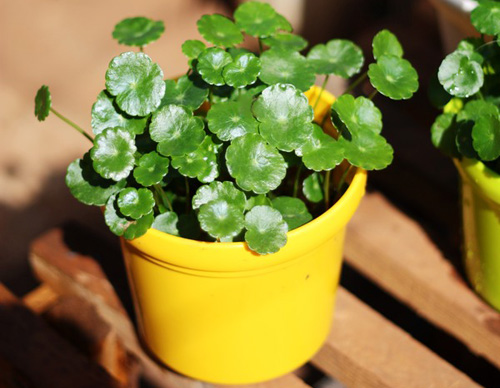
A Detailed Guide to the Cultivation and Care of Hydrocotyle vulgaris (Copper Coin Grass, South American Pennywort)
Hydrocotyle vulgaris (Copper Coin Grass, South American Pennywort) Scientific name: hydrocotyle vulgaris. Common names: common pennywort, golden lotus, water coin, copper coin grass. Morphological features: a perennial emergent or hygrophytic herb with a trailing habit, 5-15 cm tall. It often roots at the nodes, and the stem tips are brown.
条件筛选