-

Efficient Cultivation Techniques for Heath (Erica) and Control of Major Pests and Diseases
Recently, many flower growers have asked our editor how to grow heath (Erica). There are about seven hundred species of heath worldwide, most of which originate from South Africa, earning it the title "Queen of South African Endemics." Below, we introduce a set of cultivation techniques for the propagation of 'Senhua' heath and the control of pests and diseases.
-

Large-scale Cultivation Techniques for the Bulbous Flower Ornithogalum arabicum (South African Star of Bethlehem)
How do you grow Ornithogalum arabicum? It has the advantages of simple cultivation, low labor input, quick results and remarkable economic returns. In recent years, Yuanjiang County, Yunnan, has been carrying out bulb propagation and cut flower cultivation of this plant. Below, an expert introduces the cultivation situation of Ornithogalum arabicum in Yuanjiang County, Yunnan, as follows.
-

Cultivation Management and Pest and Disease Control Techniques for the African Tulip Tree
The African tulip tree is an exceptionally beautiful plant, and many places want to introduce it for ornamental landscaping applications. Today, the editors at Huinong Network bring you the propagation and pest and disease control cultivation techniques for the African tulip tree.
-

A detailed guide to African jasmine propagation methods, easily learn propagation techniques
Cutting propagation 1. Timing The cutting time should be chosen from April to October, but it is best in June-July, when rainfall is more abundant and rooting is faster. 2. Substrate The most common is soil culture, and the substrate is best acidic fertile soil, preferably made from peat soil, sandy loam, vermiculite or yellow subsoil
-
African Jasmine (Pseuderanthemum carruthersii) Growing Methods and Precautions
1. Soil The soil requirements for growing African Jasmine differ between the south and the north: in southern regions, the planting site requires loose, fertile, well-drained sandy loam. For potted African Jasmine in the north, a mix of plenty of leaf mold, river sand, composted organic fertilizer, and fermented sawdust can be used. During the growing period, loosen the soil every month.
-
Reasons Why African Jasmine Does Not Bloom and How to Fix It
1. Lack of light. African jasmine likes sunlight. If it is grown in a place without light for a long time, the leaves of African jasmine may become sparse, with few flowers or even no flowers at all. To fix this, move the pot to a place with plenty of sunlight for care. 2. Temperature too low. African jasmine likes to grow in a warm environment.
-
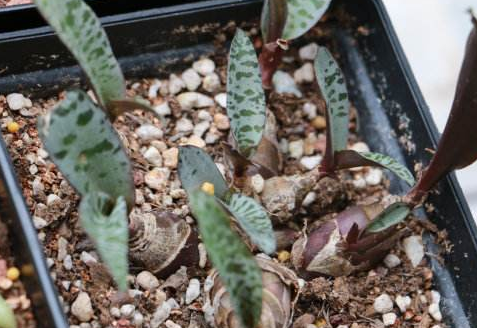
What are the propagation methods for the African false hosta (Ledebouria petiolata)?
Division For African false hosta (Ledebouria petiolata), division can be done at any time except winter; usually the plant is separated at the bulb, the old and withered leaves are trimmed off, and the divisions are planted elsewhere. Sowing African false hosta (Ledebouria petiolata) can be done in spring, summer and autumn; generally a soft brush is used to help with pollination, and once the seeds are ripe they are harvested and grown in a seedbed, with a moderate amount of thin fertilizer applied during the growing period.
-
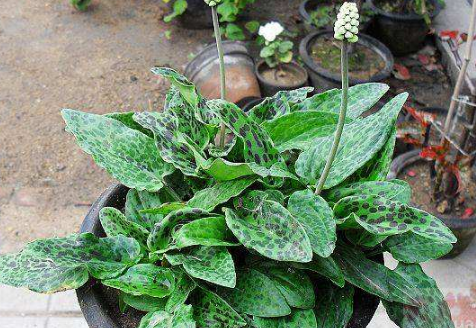
How to Grow and Care for the African False Hosta (Ledebouria kirkii)
1. Light The African False Hosta loves light, and its growth is closely tied to how much light it receives. Plants grown in ample light stay adorably compact and short, while a lack of light makes them leggy and hurts their ornamental value. If you notice new leaves coming in wider and larger than the old ones, with paler color, that is a sign the plant needs a lot more light.
-
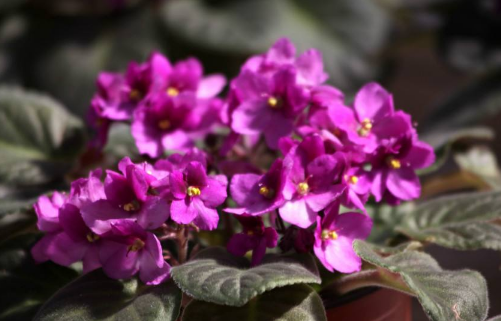
A Detailed Guide to Growing African Violets from Seed
Sowing time: either spring or autumn works; for greenhouse cultivation, autumn sowing in September to October gives a higher germination rate. Soil: African violet seeds are very small, so the potting soil for sowing must also be fine; after sowing, do not cover with soil, just press flat. Temperature: the optimal growing temperature for African violets is about 18-26°C
-
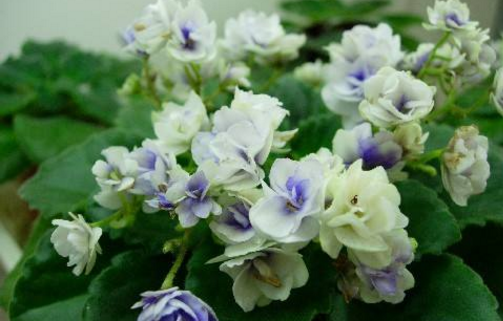
How to grow and care for African violets
Temperature African violets very much like to grow in a warm environment. Their optimal growing temperature is between 16-24°C; from April to October the temperature should be kept between 18-24°C, while from October to April of the following year it should be maintained between 12-16°C. African violets do not like hot weather
条件筛选