-
Reasons for Yellowing Orchid Leaves and How to Fix Them
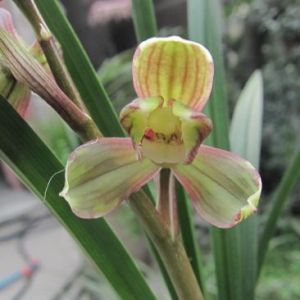
A new fine variety of Sichuan-grown Chunlan Jianlan (Cymbidium goeringii 'Jianlan') with plum-petal form, a red-flowered Chunlan Jianlan with plain tongue and plum petals; the most striking feature of "Bashan Shenyun" is that the front half of the flower's lip is plain!
-
What are the reasons the Four Seasons Orchid (Cymbidium ensifolium) is so deeply loved
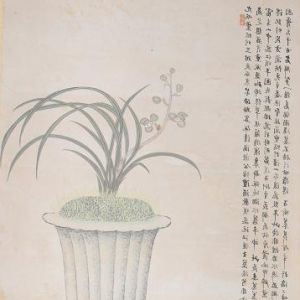
This variety has been lost. Chihui, produced in the mountains of Fuyang. The red pistil tip is flat and round like a longan, and the arranged pistil heads look like lotus seeds growing upside down. The petals are as thick as coins, and like coins, they shatter upon hitting the ground. The leaves are broad and short, and it flourishes when given fertilizer. In Jiajun, Fang Lanhai entrusted the old orchid grower Zhang Shenglin to purchase it from a mountain household, and it flowered again for several years. This variety is neither plum nor narcissus; all five petals and the lip are round, truly a wonder of a thousand years...
-
What is the reason behind the orchid trading frenzy?
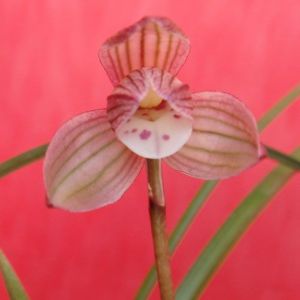
The red lantern was discovered in Yunlong in the mid-1990s.
-

Reasons and solutions for yellowing leaves in Cymbidium ensifolium
Cymbidium ensifolium should not be watered too frequently, nor should a rigid interval be set. Water only when the potting soil is about 80% dry. Generally, after the surface soil dries, use a tool (such as a bamboo skewer) to turn over about 5 cm of the potting soil. If it is dry, water; if it is still moist, no watering is needed. Note that if Cymbidium ensifolium is cared for outdoors and...
-
Reasons and Solutions for Blackening Leaves on Guzmania (Guzmania lingulata)
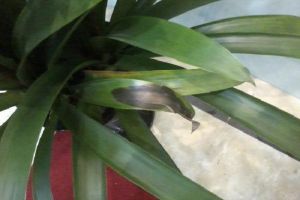
This flower should be placed in a semi-shaded area; whether kept at home or in the workplace, it is very good for our mood. Many friends say that after growing this flower for a long time, for some unknown reason, its leaves have actually turned black. What exactly is going on, and how should it be handled?
-
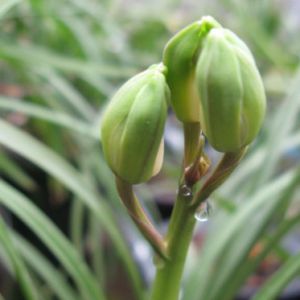
What Causes Honeydew on Orchids? Reasons and Solutions
The importance of the "life dew" beneath the pedicel of orchid flowers. Anji Menghu says, "The 'life dew' is not that mystical; its scientific name is 'ant-guard honey.' By the time Cymbidium faberi blooms, it is already mid-spring, and insects in the mountains are highly active. To reproduce and keep its flowers from being gnawed, the orchid secretes nectar to guide ants to occupy the flower scape, keeping insects away...
-
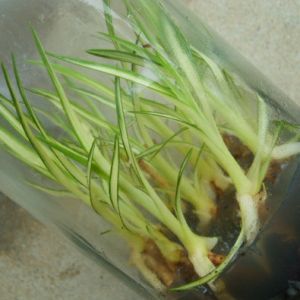
What are the reasons tissue-cultured orchid plantlets are not good
Besides being difficult to grow, tissue-cultured orchid plantlets also have a low survival rate. The low survival rate is related to the special propagation method used for tissue-cultured plantlets: the heavy use of hormones and chemical nutrients leaves the orchid plantlets in poor physical condition, frail and unable to withstand the slightest stress, and poorly adapted to the growing environment after being taken out of the flask, so they tend to sulk, neither dying nor thriving. If they are genuine tissue-cultured orchids, the flowers they produce should be the same as before, unless the wrong goods were sent. In short, tissue-cultured plantlets in the weak-plantlet stage are generally not suitable for growing at home, because these tissue-cultured plantlets themselves have low dry-matter content, poor disease resistance, a low survival rate in home cultivation, and a long cultivation cycle; many unscrupulous traders often pass off ordinary varieties as rare varieties to make money, because tissue-cultured plantlets make it hard to distinguish the characteristics of each variety (they look basically the same); if you want to introduce rare orchid tissue-cultured plantlets, it is advisable to do so at agricultural and forestry research institutes that carry out orchid tissue culture, where quality and variety are guaranteed.
-
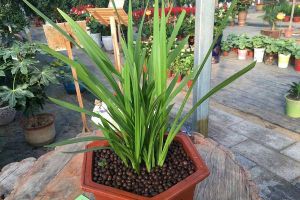
Reasons and solutions for yellowing leaves on a Dream Fragrance Orchid
The biggest fear for indoor plants is problems, especially with the leaves: yellowing, wilting, curling, spots, and so on. Today, the editor will share with you the reasons and solutions for yellowing leaves on a Dream Fragrance Orchid. If your Dream Fragrance Orchid's leaves have also turned yellow, you can refer to this.
-
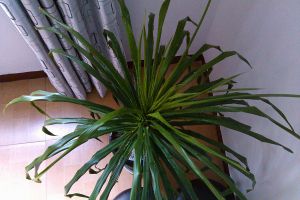
Reasons for Curled Leaves on Dracaena and How to Fix Them
Dracaena is also known as bamboo ginseng, bucai tree, and other names. It is an excellent indoor foliage plant, suitable for placement in any spot to decorate the home. At the same time, it is also a very precious medicinal herb - the well-known Yunnan red medicine "dragon's blood" (xuejie) refers to it. Today let's look at the reasons for its curled leaves and how to solve them.
-
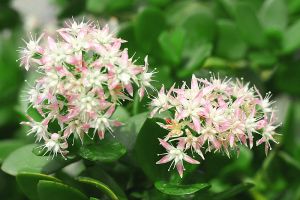
Reasons for shriveled leaves on the jade plant and how to fix them
Its leaves have an emerald green color and are very glossy, making them very pleasing to look at. It also has small flowers, white or white-pink. However, its flowers are not very common, and it is the leaves that are the most ornamental. So when its leaves shrivel, it must be very troubling. So what should we do?
条件筛选