-

Why do rabbits eat their own soft feces?
During the raising of domestic rabbits, we see that the hard fecal pellets they excrete are formed through a second round of digestion. Domestic rabbits eat grass and feed during the day, and at night or before dawn they excrete soft feces, and as soon as the soft feces are excreted, they immediately eat them; only through the second round of digestion and absorption do the residues form hard fecal pellets that are excreted from the body. When domestic rabbits eat the soft feces they have excreted at night, it is not a coprophagia habit caused by a lack of some nutrient in their body, but rather a normal physiological phenomenon. This instinct of domestic rabbits has two major benefits: first, it can keep the rabbit hutches and rabbit farms
-
4 Things to Note When Introducing Pet Rabbits
As the pet rabbit market grows increasingly prosperous, more and more people are introducing pet rabbits, but all kinds of problems have followed. Some people spend a lot of money to buy so-called pet rabbit breeding stock, only to find that when the breeding season arrives, the rabbits do not come into heat. After inquiring carefully, they learn that the rabbits have been sterilized and simply cannot reproduce, so half a year has been wasted for nothing. Some buy rabbits home but the rabbits cannot survive at all, because no breeding techniques were provided, and they just feed them like ordinary rabbits. The result is that the sudden change in living conditions, combined with the abrupt switch in feed, causes the young rabbits to fall ill and die one after another.
-
Special attention must be paid to preventing coccidiosis when raising rabbits in summer
Rabbit coccidiosis is one of the most common and most harmful diseases of domestic rabbits. Rabbit coccidia are single-celled protozoa that parasitize the liver, bile duct epithelial cells, and intestinal epithelial cells of rabbits. When coccidia parasitize the body, the rabbit becomes emaciated, anemic, has rough fur, and its development stalls, ultimately leading to death. This disease has no obvious seasonality and can infect and cause illness throughout the year, but it occurs more frequently in the hot and humid seasons of summer and autumn, and its distribution and prevalence are extremely widespread. To prevent coccidiosis: 1. Maintain the sanitation of the rabbit hutch, frequently disinfect the cages and
-
Feeding and Management Methods for Keeping Caged Rabbits Safe Through the Summer
Heat dissipation and temperature control: Plant some vine-type plants such as melons, beans, grapes, and pumpkins around the rabbit hutch to prevent direct sunlight, and you can also apply a layer of lime slurry to the inner and outer walls of the rabbit hutch so that direct sunlight does not reach the rabbit cages; open-air rabbit hutches should have a shade canopy set up, with doors and windows opened to allow air convection; for wool rabbits, the wool should be cut short along with the hair on the head and face, and the rabbit cages should not be too crowded; when the room temperature exceeds 30°C, sprinkle some cool water every 2-3 hours, or use a new brick, soak it in cool water for several minutes, and once it has absorbed enough water (no longer bubbling), place it in the rabbit cage,
-
Why do rabbits eat their own soft droppings?
In the process of raising domestic rabbits, we see that the hard fecal pellets they excrete are formed through a second round of digestion. Domestic rabbits eat grass and feed during the day, and excrete soft droppings at night or before dawn, and as soon as the soft droppings are excreted, they immediately eat them, and only through the second round of digestion and absorption are the residues formed into hard fecal pellets and excreted from the body. When domestic rabbits eat the soft droppings they excrete at night, it is not coprophagia caused by a lack of some nutrient in their body, but a normal physiological phenomenon. This instinct of domestic rabbits has two major benefits: first, it can keep the rabbit hutch and rabbit farm
-
What are the prevention and treatment methods for Clostridium perfringens diarrhea in rabbits?
The disease is an acute intestinal infectious disease of rabbits caused by Clostridium perfringens type A, characterized by severe diarrhea, foul-smelling excreta and rapid death. Etiology The pathogen is Clostridium perfringens type A. Epidemiology Except for suckling young rabbits, domestic rabbits of different ages, breeds and sexes are all susceptible to this pathogen. The incidence is highest in young rabbits aged 1 month to 3 months. Infection occurs mainly through the digestive tract or damaged mucosa. Predisposing factors include improper feeding and management, shortage of green feed, low crude fiber content,
-
Rabbits Have Particular Water Needs: A Full Breakdown of Scientific Watering Methods
As the saying goes, "Better to lack a handful of grass than a mouthful of water," which fully illustrates the importance of drinking water for rabbits. So, what exactly does water do for a rabbit's growth, what happens after a rabbit is short of water, and how do you give rabbits water scientifically? 1. The role of water in rabbit growth. In the various tissues of a rabbit's body, water accounts for 70%, and in the blood it can reach 80%; the water content of bones, muscles and internal organs is 45%-75%. Not only is water indispensable for the digestion, transport and absorption of nutrients from all kinds of feed, the excretion of waste products and toxins produced by metabolism is also inseparable from water.
-
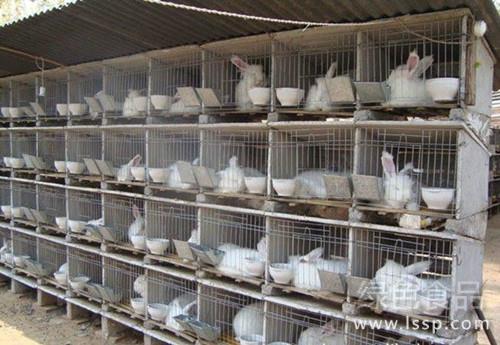
Seven key elements of fattening domestic rabbits, which can effectively improve meat quality and increase output
Fattening can improve meat quality and increase output: the seven key elements of fattening domestic rabbits
-
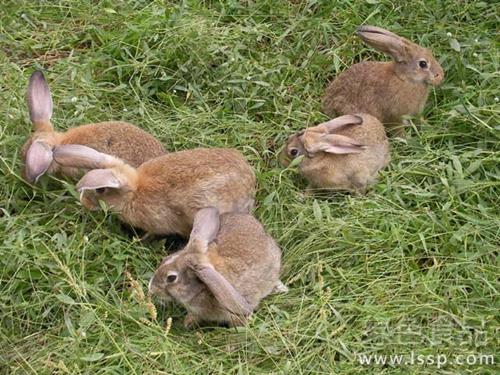
How to prevent and treat cold, pneumonia, diarrhea, mange and constipation in domestic rabbits in winter
Prevention and treatment of common diseases of domestic rabbits in winter: cold, pneumonia, diarrhea, mange and constipation
-
What are the key points and methods for feeding rabbits concentrated feed?
Concentrated feed includes energy-based grain feed ingredients such as corn, barley, wheat, sorghum, wheat bran, and fine rice bran, as well as feed ingredients with high protein content such as soybean meal, rapeseed cake, fish meal, silkworm pupae, and blood meal. Their common characteristics are low crude fiber content, low moisture content, and high nutritional value. To increase the weight gain rate of meat rabbits, make wool rabbits produce more wool, and make Rex rabbits produce more high-grade fur, concentrated feed is indispensable. The principle of using concentrated feed is to follow the nutritional needs of different types of rabbits, according to different regions and different
条件筛选