-

Cultivation Techniques for Sweet Clover and Methods for Feeding It to Rabbits
Sweet clover (scented sweet clover, pennyroyal-like melilot) is an annual or biennial herbaceous plant of the genus Melilotus in the Fabaceae family. This herb has relatively high nutritional value, a fine and tender texture, and is green and succulent, making it a good feed for livestock. 1. Site Selection and Land Preparation 1. Site selection: Choose a site with few weeds from the previous crop, preferably a plot that has been plowed year after year. 2. Land preparation: Careful land preparation is required, with 1500 kg of organic base fertilizer applied per mu and 20 kg of superphosphate as seed fertilizer. 2. Sowing and Management 1. Sowing: Use 1.5-2.5
-
How to tell a rabbit's age? Practical tips to help you judge
Check the incisors and claws. A rabbit's incisors and claws change with age. Young rabbits have white, short incisors that are neatly aligned; older rabbits have dull yellow, thick and long incisors that are unevenly aligned, sometimes with damage. White rabbits have small toes, with a red base and a white tip. In a 1-year-old rabbit, the red and white sections of the toes are equal in length; under 1 year old, the red is longer than the white; over 1 year old, the white is longer than the red. For colored rabbits, you can distinguish by the length and degree of curvature of the toenails. Young rabbits' nails are shorter, straight and flat, hidden in the foot fur. Check the eyes. Young rabbits have bright eyes
-
What are the key points for identifying healthy rabbits versus sick rabbits?
1 Observing demeanor: A healthy domestic rabbit has bright, spirited eyes, is active and alert, and responds quickly. It rests lying flat or on its side; when awake its eyes are fully open, when dozing its eyes are half-closed, and when sleeping its eyes are fully closed. At the slightest disturbance, it immediately raises its ears and lifts its head. If a rabbit is found to respond slowly and have dull eyes, it is sick. 2 Testing appetite: A healthy rabbit has a strong appetite, eats a lot and quickly, and chews vigorously. Before food is even added, it grabs the cage door with its front paws, jumps, and eagerly seeks food. If a rabbit is found not eating feed or moving very slowly, wanting to eat but not eating, this indicates illness,
-
Detailed Explanation of Prevention and Treatment Techniques for Heatstroke in Rabbits
1. Etiology This disease mostly occurs in the hot summer weather, and is most common in wool rabbits. Domestic rabbits have underdeveloped sweat glands and dissipate body heat very slowly through the body surface. Wool rabbits whose wool has not been sheared have even more difficulty dissipating heat. When the external temperature is above 33°C, heat dissipation mainly relies on increasing respiratory rate to regulate body temperature. According to measurements, when the temperature reaches as high as 35°C, the respiratory rate of domestic rabbits surges from an average of more than 40 times per minute to more than 200 times. During high-temperature periods, if the rabbit hutch is poorly ventilated, overcrowded, or during long-distance transport, the body heat of wool rabbits cannot be dissipated in time, which will cause heatstroke. Rabbits of all ages can
-
Prevention and Treatment of Infectious Stomatitis in Rabbits
I. Onset Symptoms Sick rabbits have difficulty eating and chewing, with reduced appetite or complete refusal to eat, followed by indigestion, diarrhea, and dehydration; body temperature rises to 40-41°C, the rabbits become depressed and gradually emaciated, and die of exhaustion after 5-10 days. II. Prevention and Treatment Measures Strengthen feeding management at ordinary times, and regularly disinfect rabbit houses, rabbit cages, and equipment with 0.5% peracetic acid or 2% sodium hydroxide solution. If sick rabbits with drooling saliva are found, they should be isolated promptly for observation and treatment. Healthy rabbits can be fed concentrate mixed with 5 grams of sulfadimidine per kilogram for prevention.
-
What are the considerations when formulating feed for rabbits
Pay attention to selecting ingredients according to local conditions. The selected raw materials must not only meet the nutritional needs of domestic rabbits, but also suit local conditions, using locally available forage as much as possible. Pay attention to feed diversity. Combining a variety of feeds can play a role in nutritional complementation. Pay attention to seasonal differences. In most regions of China, green succulent feed is scarce in winter and spring, and domestic rabbits are prone to vitamin deficiency, so supplementation should be noted. Pay attention to feed palatability. Domestic rabbits like bitter lettuce, alfalfa (Medicago sativa), and soybean, and dislike forage with a musty or fishy smell. Be economical and practical. Fish meal
-
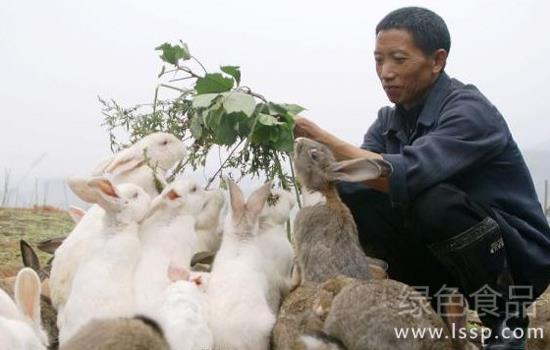
Using Herbs Instead of Drugs to Prevent Disease in Rabbits: Nutritious and Free of Side Effects
Nutritious and Free of Side Effects: Using Herbs Instead of Drugs to Prevent Disease in Rabbits
-
Feeding concentrate to rabbits requires care: master the scientific feeding method
Concentrates include energy-based feed ingredients such as corn, barley, wheat, sorghum, wheat bran and fine rice bran, as well as feed ingredients with high protein content such as soybean meal, rapeseed cake, fish meal, silkworm pupae and blood meal. Their common characteristics are low crude fiber content, low moisture content and high nutritional value. To increase the weight gain rate of meat rabbits, make wool rabbits produce more wool and rex rabbits produce more high-grade fur, concentrates are indispensable. The principle for using concentrates is to follow the nutritional needs of different types of rabbits and, according to the different regions and different
-
How should baby rabbits be raised so they can grow up healthily?
Getting enough colostrum. A newborn kit has no fur on its body surface, its eyes are tightly shut, its ears are closed, its ability to regulate body temperature is very poor, and its digestive organs are not yet fully developed. The colostrum secreted by the doe during the first 1-2 days after kindling contains large amounts of antibodies and trace elements, and also has a mild laxative effect, which helps promote the growth of the kits and helps them pass all their meconium. Therefore, if the kits can get enough colostrum in time and sleep well, their normal growth and development can be ensured. Some does, especially first-time does, do not have a strong mothering instinct and do not nurse their kits after kindling. In this case, the doe should be restrained
-
How to treat rabbit mange? Try these treatment methods
Rabbit mange is a highly contagious external parasitic disease caused by sarcoptic mites and psoroptic mites. It can occur all year round, but it occurs most frequently and spreads fastest in winter and spring. This disease is also known as scabies, lime foot, and dry claw disease. I. Clinical symptoms Sarcoptic mites cause foot mange and body mange. Rabbits often rub against cages and other objects due to severe itching, scratch with their claws, bite with their mouths, and their hair falls out. After the skin rash and blisters rupture, scabs form, subcutaneous lymph fluid seeps out, the scabs gradually thicken, and the skin becomes cracked. In affected rabbits, the disease generally starts from the mouth, feet, lips, nose, area around the eyes, ear tips, and other parts
条件筛选