-

A Complete Guide to Safe Winter Care Tips for Pet Rabbits
Beijing's winter is cold and dry. If you have a cute pet rabbit at home, you need to take extra care of it. In this season, rabbits at home easily get sick from a small oversight. So taking more measures to help them get through the winter smoothly is imperative. China Financial Ceremony Pet rabbits are prone to diseases in winter ★Colds If you find that your rabbit's body temperature suddenly rises, or its eyes become dull as if tears are welling up, or it coughs, has a runny nose, or is panting, it could
-
How can wool rabbits grow more fur? These seventeen methods are worth trying
1. For each rabbit, use 0.5 g of sulfur, 1 g of silkworm droppings, 1 g of Smilax glabra, and 0.1 g of trace elements daily. Mix and crush them, then mix evenly with the feed and feed the rabbits. Generally, wool can be clipped 7-10 days earlier. 2. After wool rabbits are shorn, inject 250 mg of vitamin B12 intramuscularly per rabbit per day for 2-3 consecutive days; or orally administer compound vitamin B1 tablets (each tablet contains 3 mg of B1, 1.5 mg of B2, 0.2 mg of B6, and 2 mg of calcium pantothenate), using 1/4 tablet per rabbit per day
-
Five Considerations for Formulating Rabbit Feed
Select ingredients according to local conditions. The selected raw materials must not only meet the nutritional needs of domestic rabbits, but also be adapted to local conditions, using locally available forage as much as possible. Pay attention to the diversity of feed. Combining multiple feeds can play a role in nutritional complementation. Pay attention to seasonal differences. In most areas of China, green fodder is scarce in winter and spring, and domestic rabbits are prone to vitamin deficiency, so supplementation should be noted. Pay attention to the palatability of feed. Domestic rabbits like bitter chicory, alfalfa (Medicago sativa), and soybean, and refuse moldy-smelling and fishy-smelling forage. Pay attention to the
-
Rabbit Rearing Methods and Breeding Techniques
Size: total body length 40-45cm. Origin: native to south of central Europe. Diet: herbivorous. Although they are all commonly called rabbits, what general pet shops sell are domestic rabbits improved from wild European rabbits through selective breeding. There are many breeds; the most familiar to the public is the all-white Japanese White breed. In recent years, rabbits of other coat colors have gradually increased on the market and are also very popular. There is also a breed called the mini rabbit; in fact, it is not a true mini rabbit, but a cross between small rabbits such as the Dutch breed and the Belgian breed and the white Japanese rabbit.
-
Winter prevention methods for rabbit Bordetella bronchiseptica disease
Rabbit Bordetella bronchiseptica disease, also called rabbit bronchial septic Bordetella bronchiseptica disease, is a common respiratory infectious disease of rabbits caused by Bordetella bronchiseptica. The disease is characterized by chronic rhinitis, bronchopneumonia and pharyngitis. This disease occurs frequently in autumn and winter and early spring. It is mainly spread through the air and infects via the respiratory tract. The incidence rate is high in young rabbits, and there are fatal cases. Adult rabbits are less commonly affected. This bacterium contaminates 64.4% of group-raised rabbits and 20% of free-range rabbits. Under natural conditions, this bacterium is parasitic in the upper respiratory tract of many kinds of mammals, often causing mutual infection of chronic respiratory diseases.
-

How to grow a rabbit's foot fern? Detailed guide to cultivation methods and precautions
The rabbit's foot fern (Davallia fejeensis) has a certain formaldehyde-absorbing effect. How to grow a rabbit's foot fern? Cultivation precautions: How to grow a rabbit's foot fern: 1. When growing a rabbit's foot fern, you can choose a pot according to your ornamental needs - a tall pot or a hanging basket will both work, and you can also choose some unique pots, such as a specially made tree-fern pot or a piece of rotten wood.
-
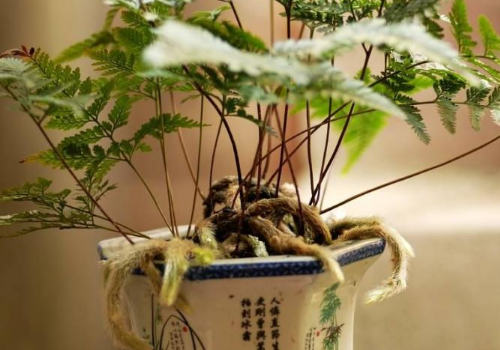
Can the Rabbit's Foot Fern be kept indoors in a bedroom? Introduction to hydroponic methods
The market price of the Rabbit's Foot Fern is not as expensive as other plants; it is still quite affordable. Can the Rabbit's Foot Fern be kept indoors in a bedroom? Can it be grown hydroponically? Can the Rabbit's Foot Fern be kept indoors in a bedroom: The Rabbit's Foot Fern can be kept indoors in a bedroom and is harmless to the human body. The Rabbit's Foot Fern can be placed on coffee tables, next to printers, and in other such places
-
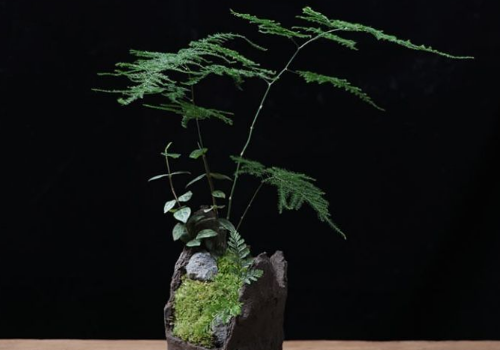
What is the use of keeping a rabbit's foot fern indoors, and why do its leaves turn yellow and wither
The cultivation method of the rabbit's foot fern is actually not difficult. What is the use of keeping a rabbit's foot fern indoors? Why do its leaves turn yellow and wither: What is the use of keeping a rabbit's foot fern indoors: Most green plants have the effect of purifying the air, and the rabbit's foot fern is no exception, though its effect is not particularly greater. Its leaf shape is graceful, its form is elegant
-
Rex Rabbit Spring and Summer Breeding: Key Points for Managing Newborn and Young Rabbits
Spring and Summer Rex Rabbit Breeding: Management of Newborn and Young Rabbits
-
Chinese rabbit meat gains recognition in the EU market
Chinese rabbit meat wins recognition in the EU market
条件筛选