-

Grass Species for Cattle, Sheep, Pigs, Rabbits and Geese and Their Cultivation Techniques
1. Growing grass to feed cattle: Mexican corn, alfalfa (Medicago sativa), tall fescue (Festuca arundinacea), napier grass (Pennisetum), Sudan grass (Sorghum sudanense) and others may be chosen; succulent leafy forage grasses with a high crude fiber content should not be planted. Mexican corn is suitable for planting in areas with annual rainfall of more than 800 mm and a frost-free period of more than 180 days. When the plant height reaches 1.5 m, it can be cut once a month. The dry matter of the forage contains 9.5% crude protein, 2.6% crude fat and 27.3% crude fiber. The stems and leaves are tender, crisp and juicy, sweet in taste and highly palatable, and are also suitable for silage or for curing into hay.
-
Silkworm droppings are effective as rabbit feed and worth trying for rabbit farmers
Silkworm droppings have high nutritional value, with a crude protein content of 15.4%, second only to wheat bran and higher than rice bran and green grass, making them excellent livestock and poultry feed. Feeding silkworm droppings to livestock and poultry often yields very good results. 1. Feeding silkworm droppings to pigs can save large amounts of concentrated feed; pigs gain weight quickly per unit of time and have a high market rate. After sows eat silkworm droppings, milk secretion increases. 2. Feeding silkworm droppings to sheep increases milk secretion and wool yield, with sheep wool length reaching more than 14 cm. 3. Feeding silkworm droppings to cattle makes farm cattle hardy and improves their constitution. 4.
-
Symptoms and Prevention and Treatment Methods of Bordetella bronchiseptica Infection in Rabbits
[Pathogen] Bordetella bronchiseptica, an oval to rod-shaped pleomorphic small bacillus, Gram-negative, often showing bipolar staining. [Epidemiological characteristics] This disease occurs mostly in spring and autumn when the climate changes easily, and infection mainly occurs through the respiratory tract. The pathogen often parasitizes the respiratory tract of domestic rabbits, so when the body's resistance is reduced due to factors such as sudden climate changes, colds, and parasitic diseases, or when other predisposing factors such as dust and strong irritating gases make the upper respiratory tract mucosa vulnerable, the disease is easily triggered. The rhinitis type is often endemic
-
Etiological Analysis of Moldy Forage Poisoning in Rabbits During the Rainy Season
Entering the rainy and humid season, especially in the month, readers from various places call frequently for consultation, rabbit diseases occur frequently, and losses are continuous. The symptoms are mainly listlessness, trembling, paralysis, limpness, drooling, diarrhea, and so on. The disease looks similar to heatstroke, and before death it also resembles coccidiosis. However, comprehensive analysis shows that it is actually caused by mold poisoning. Because the onset is acute, death is fast, losses are heavy, and the scope of danger is wide, this article is written as a warning. 1. Etiological analysis: In the month, with abundant rain, high temperature, and muggy humidity, if forage is stored improperly, it is very easy to heat up, ferment, and become moldy, producing fungal toxins, especially aflatoxin.
-
What are the key points of freezing technology for frozen rabbit
1. Freezing facilities Currently, frozen rabbit processing in China mostly uses mechanized or semi-mechanized operations, and its process level and hygiene standards have reached international levels. The freezing processing rooms mainly include cooling rooms, cold storage rooms and freezing rooms, etc. In medium-sized frozen rabbit meat processing plants, since the slaughtering room is generally located on the top floor of the building, the meat cooling room should also be located on the top floor so as to be connected to the slaughtering room, followed in sequence by the cold storage room and the freezing room, while the freezing room should be located on the ground floor so that it can be directly shipped or used for temporary storage by other processing rooms
-
There is more to feeding rabbits than meets the eye: do these five checks for scientific feeding
First, check the rabbit's size. An adult rabbit weighing about 3.5 kg needs 150-200 g of feed per day; a young rabbit weighing about 1.75 kg needs 100-150 g of feed per day. The feed should be of a moisture level that it forms a ball when gently squeezed and falls apart when the hand is released. Second, check whether the rabbit is fat or thin. For a fat rabbit, appropriately reduce the amount of concentrate feed and increase green feed or roughage; for a thin rabbit, supplement nutrition and feed more concentrate, and you can also feed some soaked soybeans, or mash bean dregs, mix them with boiling water, and stir them into the feed to give to the rabbit. Third, check whether the droppings are dry or wet. If the rabbit's drop
-
How to identify a sick rabbit? Three methods to help you tell
First, look: A sick rabbit is listless, emaciated, with bones showing, a ruffled and lusterless coat, and does not shed fur according to the molting season. A healthy domestic rabbit has a strong appetite and eats quickly; a sick rabbit has a poor appetite, eats slowly or refuses food. The droppings of a healthy domestic rabbit are pellet-shaped, oval, uniform in size, with a round, smooth surface. If dry, hard, small droppings appear, it indicates constipation, and more green, succulent feed should be given; if the droppings are tadpole-shaped or soft and loose, this indicates indigestion, and charcoal powder, yeast tablets, etc. should be added to the feed; if the droppings are piled up and
-
Symptoms and Prevention and Treatment Methods of Rabbit Rotavirus Disease
It is a digestive tract infectious disease of young rabbits caused by rotavirus and characterized by severe diarrhea. It occurs mostly in 2-6 week old rabbits, with the highest morbidity and mortality in 4-6 week old rabbits, while adult rabbits are mostly subclinically infected. Symptoms: The incubation period is 1-3 days, with elevated body temperature, lethargy, severe diarrhea, semi-liquid or watery thin feces, brown, grayish white or light green and accompanied by mucus or blood, dehydration and emaciation, and death in 2-4 days. Lesions: Diffuse hemorrhage of the small and large intestinal mucosa, the intestinal mucosa sloughs easily, and the contents are thin and gray
-
How to prevent and treat rabbit ear mange? A comprehensive introduction to practical methods
Symptoms: Sick rabbits have reduced appetite, gradually lose weight, constantly shake their heads, scratch their ears with their feet, and are restless and agitated. Inside the external ear canal there is dry yellow crust, which fills the entire ear. A few rabbits show head tilt, and finally develop convulsions and die. Diagnosis: Based on the symptoms, a diagnosis of rabbit ear mange can be confirmed. Prevention and treatment measures: 1. Treatment: ① Isolate and treat sick rabbits promptly when found, and strictly disinfect cages and equipment by spraying with 1-2% trichlorfon solution. ② Use Chongkexing liniment to apply inside the ear canal, every
-
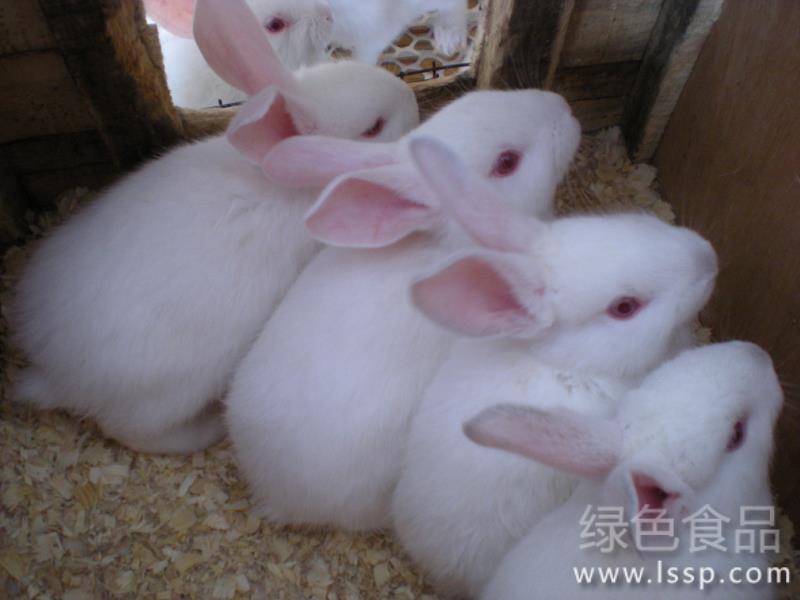
Angora rabbits cannot tolerate high summer temperatures; how can summer management be done well?
Summer heat is unsuitable for Angora rabbits; how can summer management of Angora rabbits be done well
条件筛选