-

How to prevent and treat rabbit bloat? A detailed guide to practical prevention and treatment measures
Rabbit bloat is a digestive disorder caused by gas accumulation in the rabbit's gastrointestinal tract. It occurs mostly in young rabbits, and has shown an upward trend in recent years. 1. Causes: it is generally caused by rabbits overeating large amounts of feed, leading to accumulation of food in the stomach; insufficient exercise also makes it more likely; it can be triggered by gastrointestinal diseases themselves; sudden weather changes, chilling and cold of the rabbit's abdomen can also easily lead to secondary cases. 2. Symptoms: affected rabbits are depressed, squat motionless, feel cold all over (huddling together), and prefer to lie prone; the abdominal circumference is enlarged, with abdominal pain, constant groaning, teeth grinding, and a drum-like sound on tapping, breathing
-
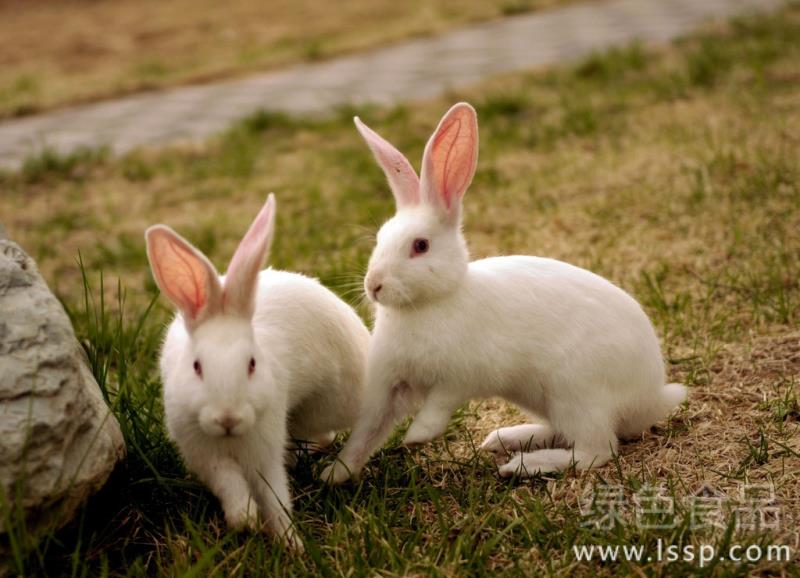
5 contraindications for immune injection in domestic rabbits; only reasonable immunization brings healthy rabbits
Reasonable immunization brings healthy rabbits: 5 contraindications for immune injection
-
How Many Times Should You Actually Disinfect a Rabbitry? A Detailed Explanation of the Correct Frequency
The disinfection theory in books says, "Twice a week in summer, once a week the rest of the year." I think this disinfection practice involves far too many rounds. The purpose of disinfection is to kill harmful bacteria; my approach is once every half month in summer, and once a month the rest of the time. If you disinfect frequently, the aim is to kill harmful bacteria, but the result is that you kill all the beneficial bacteria too. Also, after we finish disinfecting, we sling the sprayer on our backs, turn around and leave the rabbit shed, leaving the rabbits in their cages reluctantly "inhaling the chemicals," and side effects are very likely to occur. Based on what I have observed
-
Preliminary Processing Methods and Key Technical Points for Raw Rabbit Hides
After tanning, rabbit hides can be made into collars, hats, children's coats and clothing, etc. They are both lightweight and attractive, and are very popular. Below are some commonly used preliminary processing methods for raw rabbit hides. When selecting rabbit hides, the first step in deciding whether to keep the hide of a slaughtered rabbit is to look and then to feel. First, look at the size of the rabbit and whether the fur is glossy. Hides from malnourished or diseased rabbits should not be used; hides with sparse, messy fur should not be used; hides from rabbits that are too small should not be used. Choose hides whose coat hair is glossy. Second, feel whether the hair sheds and whether the hide is thick and feels good. If the hair sheds,
-
How can female rabbits produce more offspring? Sharing practical methods
Producing more female rabbits is an effective way to improve breeding efficiency. So how can you get more female rabbits? Relevant research shows that the mating time of the female rabbit is the key to determining the sex of the future kits. Experience shows that when a male rabbit that has already mated the previous day is mated with a female rabbit on the 2nd day of estrus, most of the kits born are female rabbits; if a male rabbit that has not mated within the 3rd day is mated with a female rabbit on the 3rd day of estrus, most of the kits born are male rabbits. Experiments show that with the former mating method, 9 litters of kits were produced, with 68 surviving, of which 57 were female rabbits
-
Which rabbit breeds are good to raise? A brief introduction to several excellent rabbit breeds
1. Rex rabbit: Originating from the Cologne region of France, it is the world's most famous short-haired fur-type rabbit. Because its fur is short and smooth, with guard hairs (coarse hairs) not protruding above the downy surface, making it look especially beautiful, it is called "Rexrabbit" abroad, meaning king of rabbits, and is translated into Chinese as "Rex rabbit". Because its fur resembles otter fur, it is commonly called "otter rabbit" in China. Its coat comes in more than ten colors, including white, black, blue, yellow, gray, coffee, chinchilla blue, and Californian
-
How to tell a rabbit's age? A few practical methods
Judging by the eyes: young rabbits have bright eyes and are active; older rabbits have a dull look in their eyes and move slowly. Judging by the incisors and claws: a domestic rabbit's incisors and claws change with age. Young rabbits have white, short incisors that are neatly arranged; older rabbits have dark yellow, thick and long incisors that are not neatly arranged and are sometimes damaged. White domestic rabbits have small toes with red at the base and white at the tips. In a 1-year-old rabbit, the red and white sections of the toes are equal in length; in rabbits under 1 year old, the red is longer than the white; in rabbits over 1 year old, the white is longer than the red. For colored domestic rabbits, you can distinguish by the length and degree of curvature of the toenails. Young rabbits' are shorter, straight and flat, and hidden in the foot fur.
-
What are the effective fattening methods for commercial rabbits?
Fattening rabbits is the last stage of rabbit production. Its purpose is to produce good rabbit meat and rabbit skins. The fattening of domestic rabbits works best after the skeletal growth and development is complete. The feeding and management of domestic rabbit fattening must meet the following five key points: 1. Concentrate feed point. After the skeletal growth and development of domestic rabbits is complete, the weight gained during fattening is mainly muscle and fat. During fattening, concentrate feed should be the main component, especially feeds rich in carbohydrates, such as sweet potato, potato, taro, radish, etc. And green fodder should be appropriately included.
-
Symptoms and Prevention and Treatment Methods of Rabbit Treponematosis
Pathogen Rabbit Treponema is a slender spiral-shaped microorganism, Gram-negative, but stains poorly. Fixing smears of exudate or lymph from the affected area and staining with Giemsa gives good results. Tissue sections can be stained using the Warthin method. Dark-field microscopy can clearly observe the morphology and movement of Treponema, thus allowing a definitive diagnosis of the disease. Epidemic characteristics This disease occurs only in domestic rabbits and wild rabbits, and the pathogen mainly exists in the tissues of the affected area. Contaminated bedding, equipment, and feed are the media of transmission. It is mainly transmitted through the genital tract during mating, so it is mostly seen in adult rabbits, and very rarely in young rabbits. The incidence rate in breeding-age female rabbits is higher than in male rabbits, and the incidence rate in free-range rabbits is higher than in caged rabbits. When this disease spreads within a rabbit population, the incidence rate is high, but almost none die.
-
Summer rabbit-raising tips: how to raise rabbits well in hot weather
Summer has high temperatures and high humidity, which easily cause many adverse effects on rabbit production. Such as heat stress, decreased feed intake, slowed weight gain, reproductive disorders, etc. To minimize the adverse effects, the following measures are recommended: 1. Vigorously focus on heat prevention and cooling. Plant trees, forage grass, or some vine-type plants in the open space in front of the rabbit house; this can both shade and cool and green the environment. If the planting season has been missed, a shade shed 3-4 m high can be built. When the temperature inside the rabbit cage reaches 30°C, sprinkling water on the ground can also be used to cool it down, but when the house is humid, ventilation must be strengthened
条件筛选